This geometry leaves the ion without a permanent dipole moment, meaning it normally emits no electromagnetic radiation while spinning.
This minute change generates a tiny electrical moment. It permits faint light emissions known as forbidden transitions. These describe weak transitions that do not occur according to standard spectral rules rather than violating the laws of physics.
The signal remained undetected for nearly 40 years due to its extreme faintness.
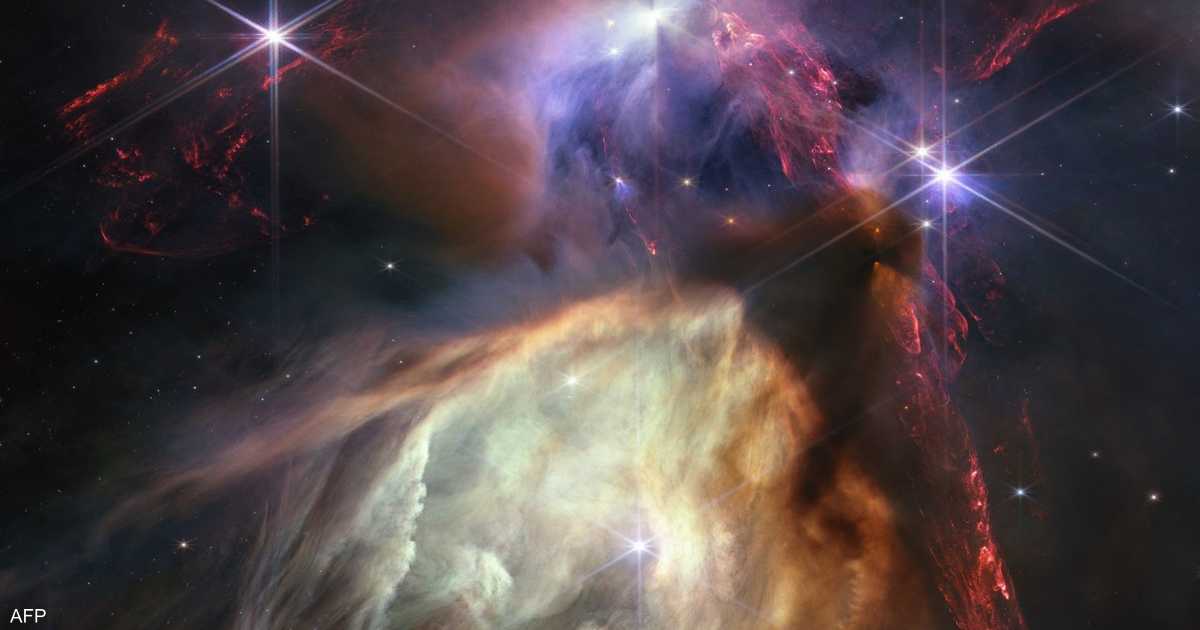
The James Webb Space Telescope finally captured the emission using its Mid-Infrared Instrument, known as MIRI.
Observing Star-Forming Region Herbig-Haro 168
Herbig-Haro objects form when jets fired by newborn stars slam into surrounding gas and dust.
The telescope allowed researchers to identify 26 distinct spectral lines from the trihydrogen cation.
Each line surpassed a strength of five sigma in at least one observation area.

The strongest spectral line reached a statistical significance of 72 sigma.
David Neufeld of Johns Hopkins University led the research team.
The findings were accepted for publication in the journal The Astrophysical Journal Letters.
Spectral Lines Reveal Cosmic Chemistry and Gas Dynamics
Existing models failed to fully explain the signal intensity. They underestimated the recorded emissions by a factor between five and six.
These spectral lines will help researchers examine ionization rates within hot gases surrounding nascent stars. They will also help understand chemical reactions taking place in space. This monitoring grants scientists an instrument to investigate cosmic chemistry and hot gas dynamics around stars undergoing formation.