The stories just kept flooding
in, said Dr. Heather Burris, a neonatologist at the Children’s Hospital of Philadelphia, describing the accounts from colleagues about families declining the standard vitamin K shot for their newborns.
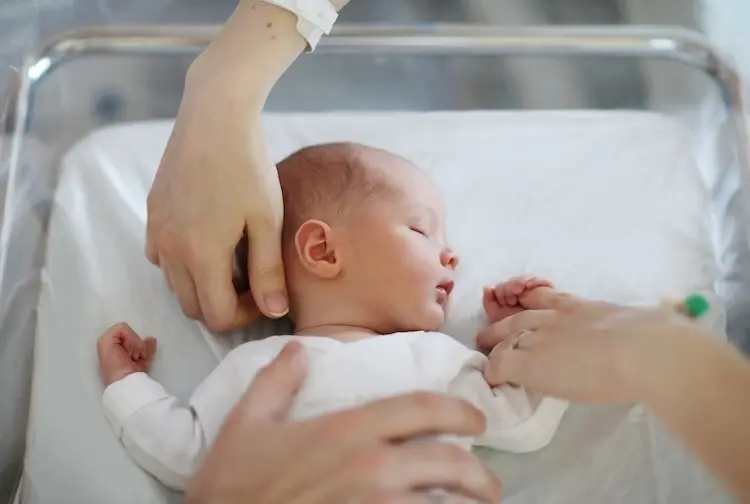
New research reveals that this trend is driving a resurgence of life-threatening bleeding disorders in infants across the United States.
Vitamin K Injection Refusal Rates More than Doubled
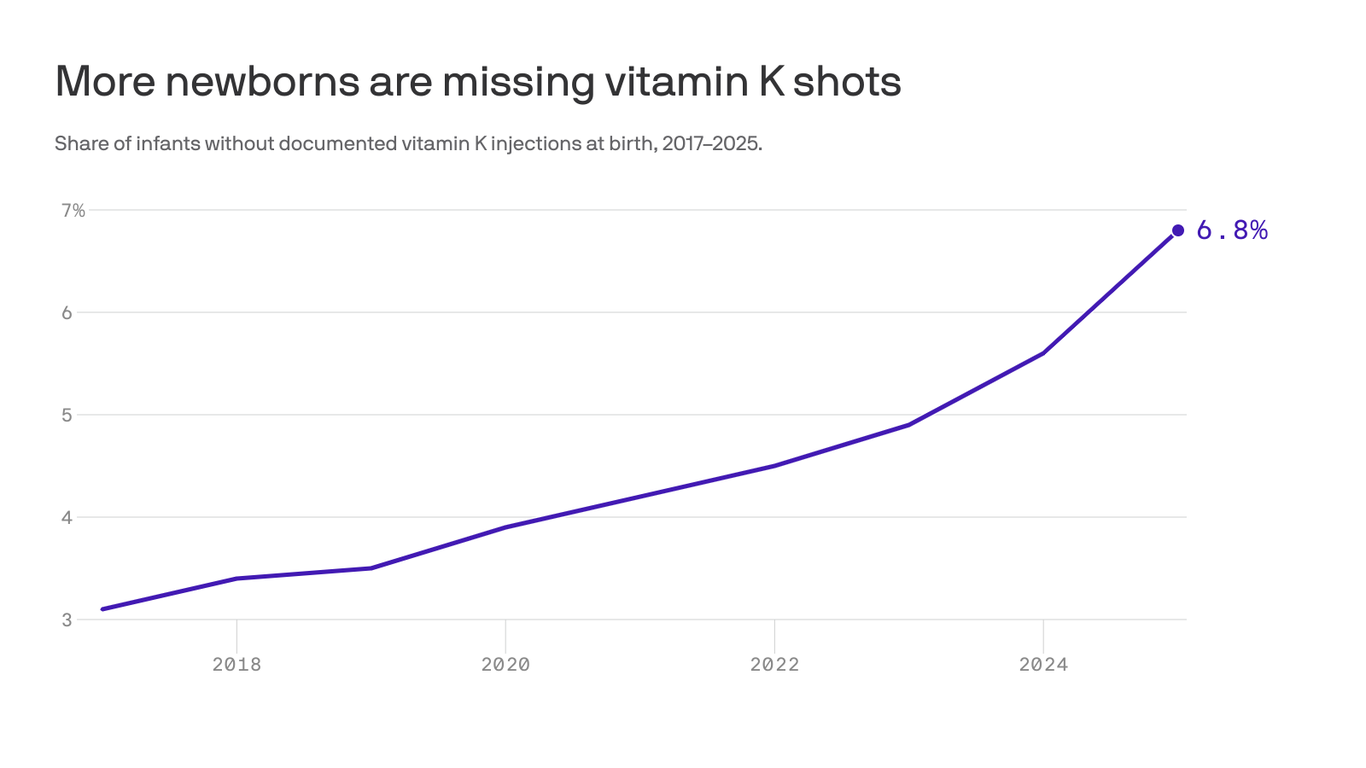
Medical records from more than 5.2 million infants born in the U.S. between 2017 and 2025 show that the percentage of newborns who do not receive the prophylactic intramuscular vitamin K injection more than doubled, rising from 3.1% to 6.8%, according to a comprehensive cohort study published in JAMA.
A separate study of 11 million infants published in JAMA Pediatrics identified an even sharper increase in complications, with rates of vitamin K deficiency (VKD) and vitamin K deficiency bleeding (VKDB) climbing by 216% and 347%, respectively.
Researchers suggest that the prophylactic treatment, which has been recommended by the American Academy of Pediatrics since 1961, has become a victim of its own success,
as the rarity of severe bleeding cases leads many parents to underestimate the risk.
Dr. Elizabeth Wolf, a pediatrician at the University of Michigan Health and the study’s lead author, noted that the research confirms real-life consequences to the trend. We found that the answer is undeniably yes, with the rates of VKD and VKDB multiplying over the course of our study,
she stated.

Infants Face Higher Risks of Brain Bleeds Without Treatment
Newborns are naturally deficient in vitamin K, a nutrient essential for blood clotting, because it transfers poorly across the placenta and is found in low levels in breast milk.
Without the injection, infants are at risk for late-onset VKDB, which can strike suddenly between two weeks and six months of age. According to Dr. Debra Langlois, a pediatrician at University of Michigan Health, the decision to opt out or delay the treatment risks devastating consequences such as brain bleeds.
The data highlights the severity of these cases:
- Infants who do not receive the shot have a 47% higher risk of any bleeding event in the first six months of life.
- Approximately 20% of babies who develop late VKDB die, and 30% to 60% suffer from intracranial hemorrhages.
- Among survivors, roughly 40% experience long-term neurological damage, including seizures or permanent cognitive impairment.
One study estimated that there is one additional bleeding event for every 114 newborns who skip the injection. Dr. Kevin Dysart, an attending neonatologist at the Children’s Hospital of Philadelphia, observed that the excess risk among infants without vitamin K was striking and present in every year of the study.

Eroding Public Health Trust Drives Increasing Refusals
The increase in refusals is occurring against the backdrop of eroding trust in public health in the wake of the COVID-19 pandemic, increasing vaccine hesitancy, and growing parental unease about interventions in newborns,
according to the JAMA Pediatrics study. While the injection is a vitamin supplement and not a vaccine, clinicians report that misinformation about its safety is circulating on social media.
Dr. Steven Woolf of Virginia Commonwealth University expressed concern over the shift. We’ve gone generations without seeing this kind of increase in complications,
he said. It’s very disheartening to see that progress in public health rolling back.
Medical societies are now urging delivery teams to initiate evidence-based conversations during prenatal visits to ensure parents are fully informed of the risks before birth.
Refusal of the intramuscular vitamin K dose increased from 3.1% to 6.8% between 2017 and 2025 across health systems nationwide. To gather this data, investigators utilized Cosmos, an expansive repository of electronic health records from facilities sharing uniform software, which includes over 2,300 hospitals and 50,000 outpatient locations.
In the study of 11 million infants, researchers in Richmond, Virginia, examined records through the Kenneth and Dianne Wright Center for Clinical and Translational Research, alongside Darya Shokouhi Niaki, Pharm.D., of the VCU School of Public Health’s Department of Biostatistics. Across the nine years of data analyzed, 2,151 infants were diagnosed with vitamin K deficiency and 5,217 with vitamin K-deficient bleeding.
For babies who received the vitamin K shot, the rate of bleeding by 6 months increased from 136.6 to 221.8 per 10,000 infants. During the same period, the frequency of bleeding events within the first six months of life among infants who did not get the injection climbed from 225.3 to 394.0 per 10,000 newborns.
According to Cathleen Ballance, M.D., MPH, Pediatric Hospitalist and Vice Chair of Quality & Safety, infants who forgo this simple, safe injection face an 81-fold higher risk of developing this potentially lethal condition.
The Centers for Disease Control and Prevention, the American Academy of Pediatrics, and the World Health Organization call for giving the shot to all newborns. However, clinical bodies—including the American Academy of Pediatrics—have recommended the intramuscular injection.