Columbus, Ohio: A Weekend Study in Midwestern Resurgence
For decades, the standard narrative of the American Midwest was one of industrial contraction and population flight. Yet, Columbus, Ohio, stands as a notable exception to that regional trend. With a metropolitan population now exceeding two million, the city has maintained a steady growth trajectory that defies the stagnation often associated with its neighbors.
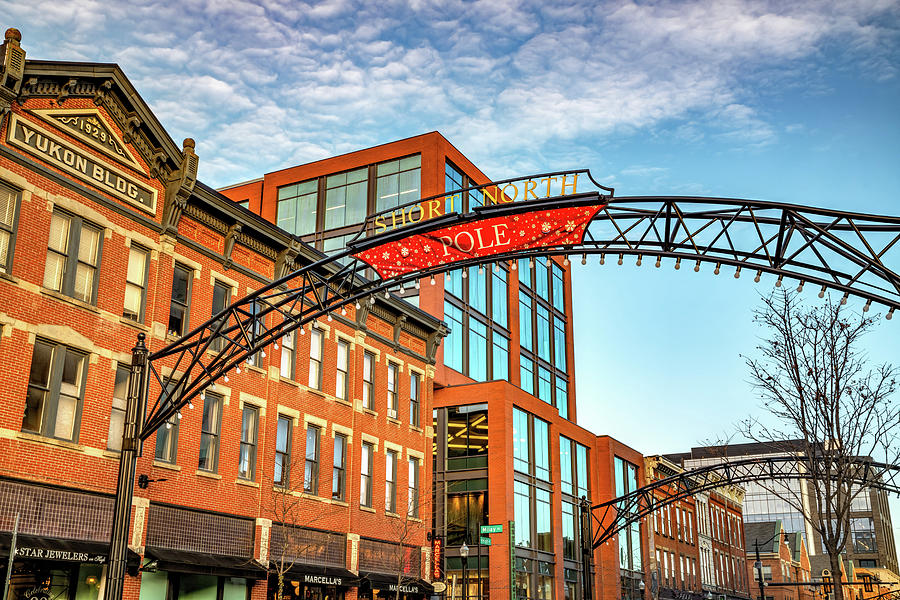
The city’s evolution is best observed on foot, particularly in areas like the Short North Arts District. Here, the infrastructure serves as a physical manifestation of this growth. Travelers find a dense concentration of independent retailers, galleries, and hospitality venues, all connected by the illuminated arches that span High Street. This is not a city that relies on a single major attraction; rather, it functions through the connectivity of its neighborhoods.
The Economic Engine of Local Identity
The success of Columbus’s food scene—and its broader retail environment—is characterized by the scaling of small, locally rooted ventures into larger, recognizable brands. The North Market, founded in 1876, acts as the primary anchor for this ecosystem. It serves as a living laboratory for local entrepreneurs, a tradition best exemplified by the origins of Jeni’s Splendid Ice Creams. What began as a small-scale operation within the market eventually scaled into a nationally recognized enterprise without stripping away its local provenance.
This model of “growth through identity” is echoed by companies like Cookie Bouquets, which has been operating in the city since 1983. By transforming the traditional cookie into an event-based gift, the company maintained its local roots while adapting to a wider market. This phenomenon reveals a crucial insight: the city’s economic resilience is built on the survival of independent businesses that prioritize craft over mass-market efficiency.
Historic Preservation as Urban Strategy
While the Short North represents the modern, arts-driven side of the city, German Village offers a different strategic approach to development: the preservation of 19th-century architecture. The presence of cultural institutions such as The Book Loft—a 32-room bookstore that occupies a maze-like historic layout—demonstrates how legacy assets can be utilized to drive modern foot traffic.
The key to enjoying German Village is resisting the urge to sample everything. One pastry and a leisurely walk through the neighborhood often create a more memorable experience than racing between bakeries.
This approach to urban design—favoring slow, pedestrian-oriented exploration—is supported by the city’s compact geographic footprint. Because the primary districts are clustered near the downtown core, many travelers find they need a car only occasionally during their stay.

The Sustainability of the “Sweet” Economy
Columbus has successfully diversified its offerings. By integrating public recreational spaces like the Scioto Mile with culinary destinations, the city has created a balanced environment.
Beyond the food and the storefronts, institutions such as the Columbus Museum of Art and the Franklin Park Conservatory provide the cultural ballast necessary to sustain long-term tourism. These sites ensure that the city is not merely a weekend destination for dining, but a legitimate hub for regional cultural engagement. As the city continues to expand, the challenge will be to maintain this delicate balance between rapid growth and the preservation of the small-scale, authentic character that has driven its recent success.
Ultimately, Columbus succeeds because it treats its urban fabric as a cohesive story. The market leads to the gallery, and the gallery leads to the park. It is a city that has learned how to grow by looking inward, valuing its own history and local talent as the primary drivers of its future.