Darryl Reeves and the Iron Legacy of New Orleans
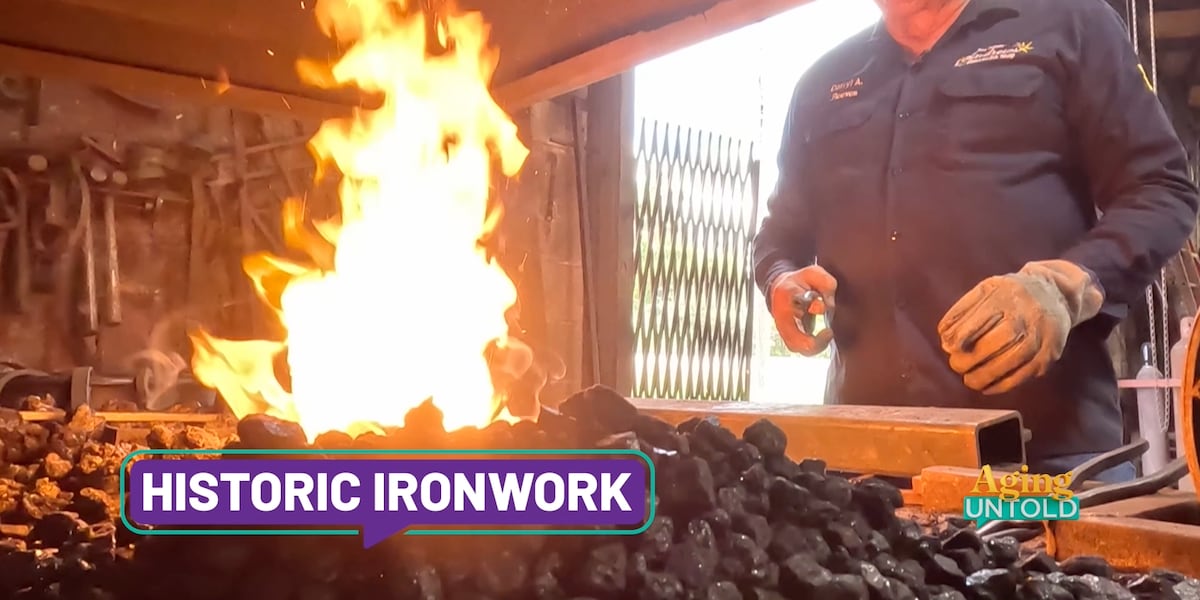
“How many people get to beat on metal, especially if you’re frustrated with something and get it out? How many people do that?” Darryl Reeves finds a rhythmic, cathartic purpose in the heavy labor of the forge. Reeves is one of the few who still carry on the tradition of New Orleans ironwork in a city defined by its ornate balconies, gates, and fences.
The architecture of New Orleans acts as a historical record, with ironwork that has weathered fires and hurricanes. For Reeves, the craft is a family inheritance. Though he recalls being shooed away from his grandfather’s shop as a young boy, the sights and sounds of the trade—the sparks, the rhythmic striking of metal—left an indelible mark on him. Today, he transforms raw metal into functional art, creating what he needs, including his ironworking tools, from iron hinges to hand-forged designs like metal leaves.
Restoring the Cabildo with 1790s Plans
Reeves’ work goes beyond mere fabrication; it is an act of historical preservation. He has restored historic ironwork throughout New Orleans, including the fence in front of the Cabildo. When approaching these projects, Reeves often relies on plans dating back to the 1790s.
“That’s learning from the past. That’s given a conversation with the person that actually fabricated it,” Reeves said.
This commitment to historical accuracy ensures that the visual identity of New Orleans remains intact. The city’s iron aesthetic is a physical testament to a confluence of cultures, blending Spanish, West African, and French influences that have converged in the region over several centuries.
Training the Next Generation of Blacksmiths
The future of this demanding craft rests with a younger generation, represented by Reeves’ apprentice, Karina Roca. Roca, who moved to New Orleans from Boston, first set her sights on the shop after seeing a PBS program on Darryl Reeves over 10 years ago at this point. Now five years into her time in the blacksmith shop, she balances her practical work in the shop with a master’s degree in historic preservation at Tulane.
For Roca, the shop is more than a workplace; it is a vital node in the city’s cultural infrastructure. “It works in so many ways to kind of keep this aesthetic of New Orleans alive,” Roca noted. “It’s very Spanish. It’s very West African. It’s very French. So it’s sort of this symbol, this beacon of a space where all of these cultures have come together for centuries now.”
The Economic and Cultural Stakes
The preservation of such craftsmanship is rarely just about aesthetics. In a city where tourism and historic districts serve as the backbone of the local economy, the ability to maintain and repair authentic architectural features is a critical economic necessity. Without specialized artisans like Reeves and his apprentice, the city risks losing the physical character that draws millions to its streets. While mass-produced, modern alternatives exist, they often fail to replicate the durability and cultural resonance of hand-forged iron.
Reeves makes what he needs, including his ironworking tools, a practice that highlights the self-reliance inherent in the blacksmithing tradition. By passing these skills to Roca, he ensures that the conversation with the craftsmen of the 18th century does not end with his own retirement. The shop remains a quiet, glowing center of activity, preserving the spirit of New Orleans one hand-forged piece at a time.