Senate Republicans are poised to block multiple senior Trump administration nominees and resist defense funding requests as deep policy disputes divide the party in the waning weeks of the congressional majority.
Senate Republicans Block Pentagon Nominees
Austin Dahmer and Alex Velez-Green, nominated over a year ago for senior positions in the Pentagon’s policy office, lack sufficient support from Republican senators to advance before Democrats assume control of Congress in January. Tensions over America’s foreign military commitments and Pentagon policy chief Elbridge Colby caused the stalled confirmations.
The Pentagon decided to remove an Army brigade from Romania, and pushback intensified. House Armed Services Committee Chairman Mike Rogers said Colby misled him regarding the withdrawal. Colby denied the allegation.
Thom Tillis Blocks Nominations
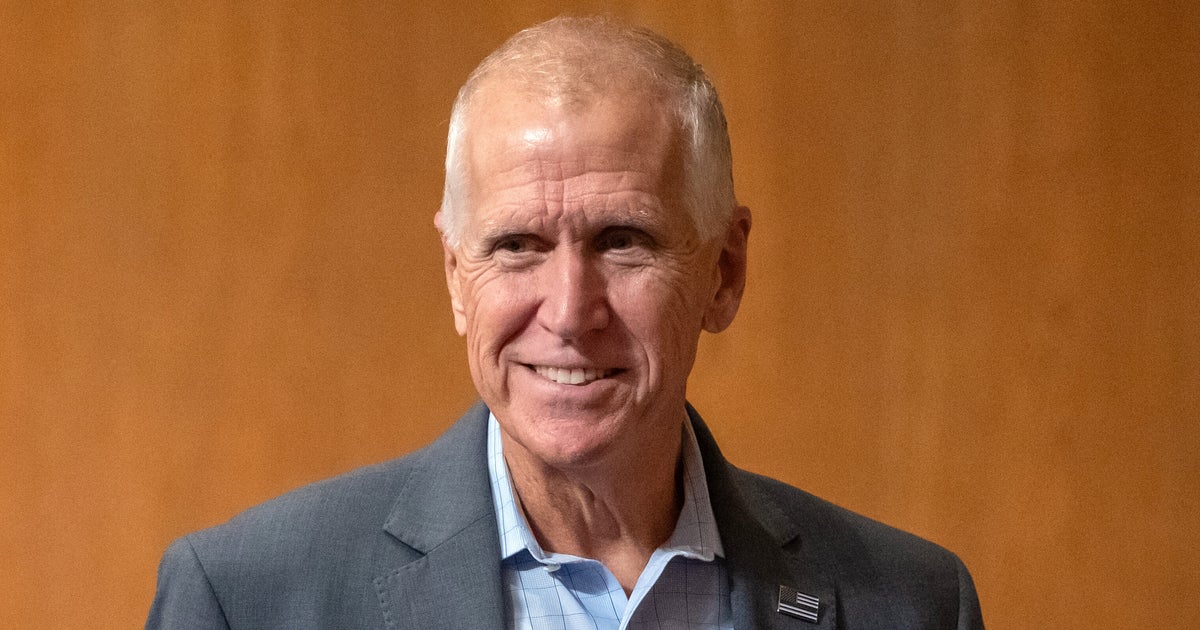
Republican Senator Thom Representing N.C. has personally blocked two of President Donald Trump’s most contentious candidates from winning confirmation. Over the past 24 hours, Tillis put a hold on Eric Ueland’s nomination to lead the Government Accountability Office and Michael LoSapio’s nomination to lead the Cybersecurity and Infrastructure Security Agency. A Senate hold doesn't kill a nomination outright; it shows that a senator has objections. Tillis’s office did not respond to repeated requests for comment.
Having decided to retire last year following a clash with Trump over the One Big Beautiful Bill, the North Carolina Republican’s term concludes in January. Seven states are suing Trump and Vought for doing this with billions of dollars.

By selecting Ueland—an OMB ally—for the 15-year GAO post, Trump was placing him in charge of the independent watchdog agency tasked with keeping OMB accountable just as OMB appears to be violating laws. Sen. Gary Peters (D-Mich.) said nominating Ueland to this job was like Trump trying to “install a fox in the henhouse.”
Opposition Mounts Against Defense Choices
Defense Secretary Pete Hegseth’s preferred candidate to lead the Army, Gen. Chris LaNeve, faces Republican resistance, including opposition from retiring Sen. Joni Ernst. Hegseth recommended Sean Parnell, the Pentagon’s chief spokesperson, to serve as Army secretary and head the service as its top civilian leader, though Republican senators voiced opposition due to his attitude toward the media and allegations of spousal abuse.
The administration’s nominee to lead the Navy, acting Secretary Hung Cao, encountered sharp bipartisan pushback during his confirmation hearing over proposals to replace modern electromagnetic aircraft carrier launch systems with older technology. Cao faces hurdles securing the necessary 60 Senate votes for a waiver from federal rules requiring retired military personnel to wait at least seven years before assuming a senior civilian post at the Pentagon.
Returning to steam is a nonstarter and everybody needs to understand that.
Sen. Roger Wicker, R-Miss
Outside the Department of Defense, other high-level picks met roadblocks. Sen. Thom Tillis placed holds on Eric Ueland’s nomination to lead the Government Accountability Office and Michael LoSapio’s nomination to head the Cybersecurity and Infrastructure Security Agency. Ueland faced bipartisan criticism from lawmakers who viewed him as too partisan for the independent watchdog agency.
LoSapio drew heavy questioning from Democrats over the events of January 6, 2021, after testifying before the Senate Homeland Security and Governmental Affairs Committee that the U.S. Capitol was not attacked. When pressed by Sen. Richard Blumenthal about whether the Capitol was attacked that day, LoSapio said he did not know, claiming he was not involved in politics.
Lawmakers Debate Defense Funding
Top Pentagon officials pressed lawmakers to pass an additional $350 billion in defense funding through a party-line process before the congressional majority shifts.
Tillis, first elected to the Senate in 2014 after serving as Speaker of the North Carolina House from 2011 to 2015, became the state’s senior senator when Richard Burr retired in 2023. He chairs the Senate Armed Services Subcommittee on Personnel and the Judiciary Subcommittee on Intellectual Property.

A moderate Republican, he voted for the Bipartisan Safer Communities Act and the Respect for Marriage Act, initially opposed Trump’s border wall emergency declaration, and voted against the One Big Beautiful Bill Act. He announced in June 2025 that he would not seek a third term.
The lame-duck session advances toward a December transition. Senate leaders plan to package vote-ready nominations while leaving contentious nominees behind. White House spokesperson Olivia Wales urged Congress to confirm remaining nominees without delay.