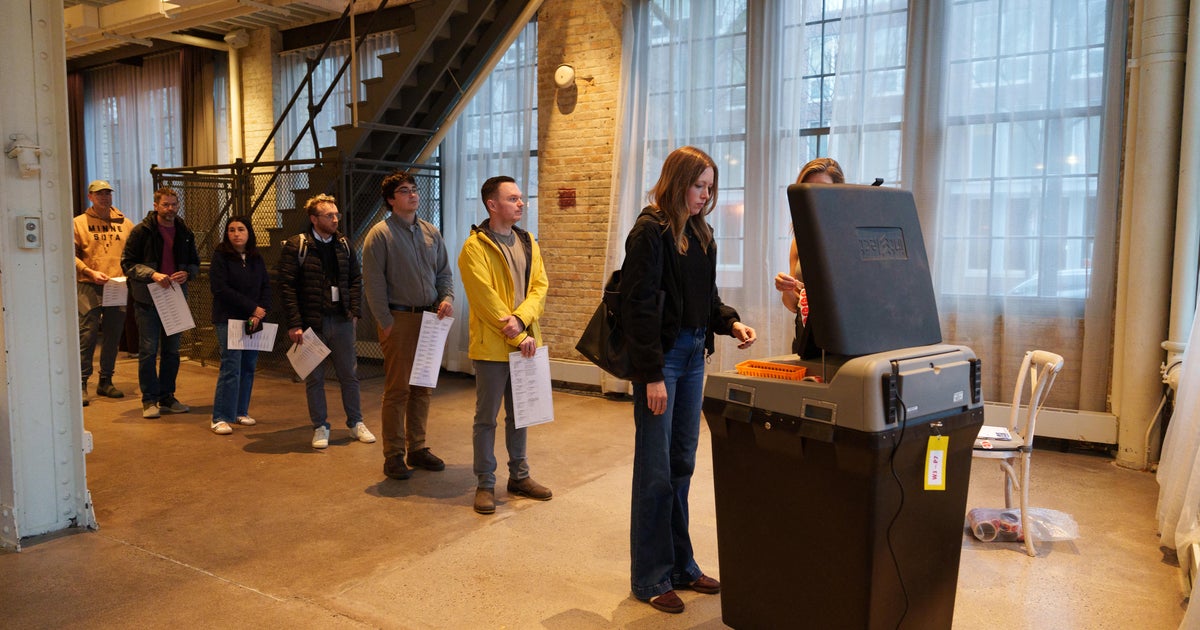
Early voting has officially wrapped across Tennessee, setting the stage for a high-stakes state and federal general election on Tuesday, November 3, 2026, WSMV reported. Voters across the Volunteer State are preparing to cast decisive ballots in a packed lineup of contests that will reshape executive leadership, congressional representation, and local governance.
The November 3 general election will determine who holds seats in the governor’s office, the U.S. Senate, the U.S. House of Representatives, and the Tennessee General Assembly, alongside municipal races in select communities. WSMV reported that Republican, Democratic, and Independent candidates all feature prominently across the ballot as the state transitions from its extensive early voting period straight into Election Day.
The Statewide and Federal Contests on the Ballot
Congressional races across the state’s newly drawn districts add another layer of competitive intensity to the federal ballot.
The 9th District ballot showcases Republican Brent Taylor, Democrat Justin J. Pearson, and independent challengers Dennis Clark and Michelle Davis Head.
Legislative Races and Constitutional Amendments
Voters are also deciding outcomes for odd-numbered Tennessee Senate districts and the entire Tennessee House of Representatives, alongside municipal and county offices. Beyond candidate races, the ballot includes three major constitutional amendments proposed for voter approval.
Amendment No. 1 would alter Article I, Section 15 of the state constitution to allow courts to deny bail before trial under specific circumstances, such as capital offenses, acts of terrorism, second-degree murder, aggravated rape of a child, aggravated rape, grave torture, and any crime where a convicted person must serve at least 85 percent of their sentence. Judges would be required to document their reasoning on the record.
Amendment No. 2 proposes changing Article II, Section 28 of the state constitution to ban the Tennessee Legislature from levying a state property tax on real, personal, or mixed property. While local governments currently set their own property tax rates, Tennessee does not levy a state-level property tax.
Amendment No. 3 seeks to clarify and expand rights for crime victims under Article I, Section 35 of the constitution. The proposal introduces new protections regarding fair treatment, parole process participation, harassment protection, minimum sentence notifications, and public safety considerations before a convicted criminal’s release.
Voters Prepare for Election Day Logistics
With early voting having run from October 14 through October 29 following the October 5 voter registration deadline, attention now focuses squarely on Election Day. The Tennessee Secretary of State maintains the online hub GoVoteTN.gov and a free mobile application to help voters locate their polling places, verify registration status, and review sample ballots.
Registered voters must present a valid government-issued photo ID at the polls. Acceptable forms include a Tennessee driver’s license, a state-issued photo ID, or a federal government-issued photo ID, even if expired.
Voter turnout on November 3 compared to early voting totals, and the local and statewide results, will determine the balance of power in Nashville and Washington.