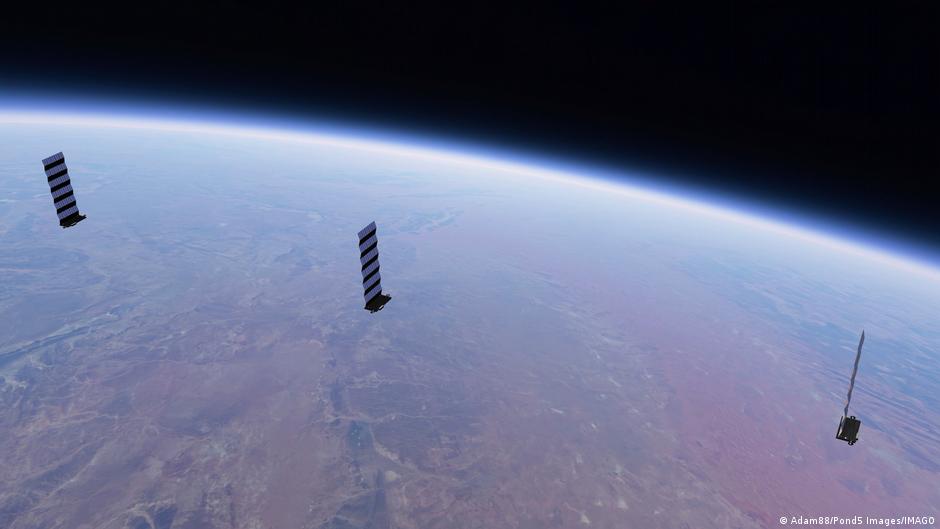
Following sudden restrictions on military communications over Ukraine, satellite terminals designed for defense operations dropped below operating speeds necessary for intercepting jet-powered drones, drawing sharp finger-pointing between Kyiv, Washington, and SpaceX while European officials confront their heavy reliance on American space infrastructure.
Terminals Drop Below Speeds Needed for Drone Interception
Ukrainian officials reported that Starshield, the military-grade version of Elon Musk’s satellite network, experienced sudden technical limitations that curbed terminal speeds to between 110 and 160 kilometers per hour. According to Ukrainian leadership, the throttling directly crippled aerial interception missions against incoming explosive drones.
Starshield systems are owned and controlled by the US government. Any limits on speed or usage are decided by the US military and ultimately POTUS.Starlink is a commercial service owned and controlled by SpaceX. Usage of Starlink is limited to civilian or defensive activities…
The restriction touched off an immediate diplomatic storm across capitals. US Treasury Secretary Scott Bessent rebuked Ukrainian President Volodymyr Zelenskyy during an appearance on television, calling accusations that Washington deliberately slowed the network extremely reckless and insisting that neither President Donald Trump nor his cabinet authorized the slowdown.
The restriction followed months of heavy reliance on commercial satellite connectivity that began in February 2022, when Mykhailo Fedorov, then serving as Ukraine’s deputy prime minister and minister of digital transformation, publicly appealed to Elon Musk for terminals after a full-scale Russian invasion commenced.
As the conflict evolved, the distinction between civilian and military systems became pronounced. While the standard Starlink network serves consumer and institutional broadband needs globally through thousands of low-Earth orbit satellites launched since May 2019, SpaceX established Starshield as an independent business unit in December 2022 specifically to meet the high-security demands of the Pentagon and allied governments.
Any speed or usage restrictions are decided by the US military, and ultimately, the US president.
Meanwhile, Bogdan Sas, a partner, emphasized that unexpected outages present dangers of relying on a single technical architecture controlled entirely from abroad.
Missile Shortages Compound Air Defense Challenges
The speed caps arrived as Ukrainian forces attempted to counter persistent aerial strikes. Ukrainian military operators discovered that when moving faster than 161 kilometers per hour, tactical terminals lost connection to the satellite constellation, rendering fast-moving interceptor drones unable to relay live video feeds or maintain real-time guidance.
Starshield Restrictions Disrupt Ukraine's Drone OperationsUkraine's military is reporting disrupted drone missions after new restrictions affected Starshield satellite connectivity, highlighting the risks of relying on external communications infrastructure during critical… pic.twitter.com/tzfaSirhOB
President Zelenskyy pointed out that testing the same equipment outside Ukraine yielded entirely different results.
Beyond communication nodes, the country also faced severe shortages in high-end air defense munitions. A senior Ukrainian official disclosed that out of ten Patriot interceptor missiles available on October 7, only two remained following recent barrages against ballistic missile attacks, leaving the nation’s skies increasingly exposed to incoming fire.

People will die, of course, if the attacks continue and Starlink does not work.
Europe Pursues Independent Satellite Alternatives
The disruption laid bare a vulnerability that European capitals have long sought to address.
Projects like the EU’s GOVSATCOM platform—which pooled existing governmental and commercial capacities starting in January 2026—and the developing IRIS² secure satellite system offer long-term promise for strategic autonomy.
The European Commission outlined plans for a simplified preliminary version of the IRIS² network targeted for launch in 2029, followed by a full system with ultimate defense readiness goals established for 2030.
Simultaneously, NATO’s support and procurement agency has contracted with SES to secure low-latency communications through its multi-orbit fleet spanning Medium Earth Orbit and Geostationary Earth Orbit, yet European leaders acknowledge that complete digital independence will require years of sustained investment and coordinated industrial policy.
starshield back up for ukraine’s defense: https://t.co/QmQSnSosm6
More on Ukraine
The decision to limit the Starshield satellite service used by Ukraine’s military came from inside the White House, according to two U.S. officials and a Western official briefed on the matter, speaking to Reuters. They said Defense Department leaders received a message that the… pic.twitter.com/UiH693rfKO