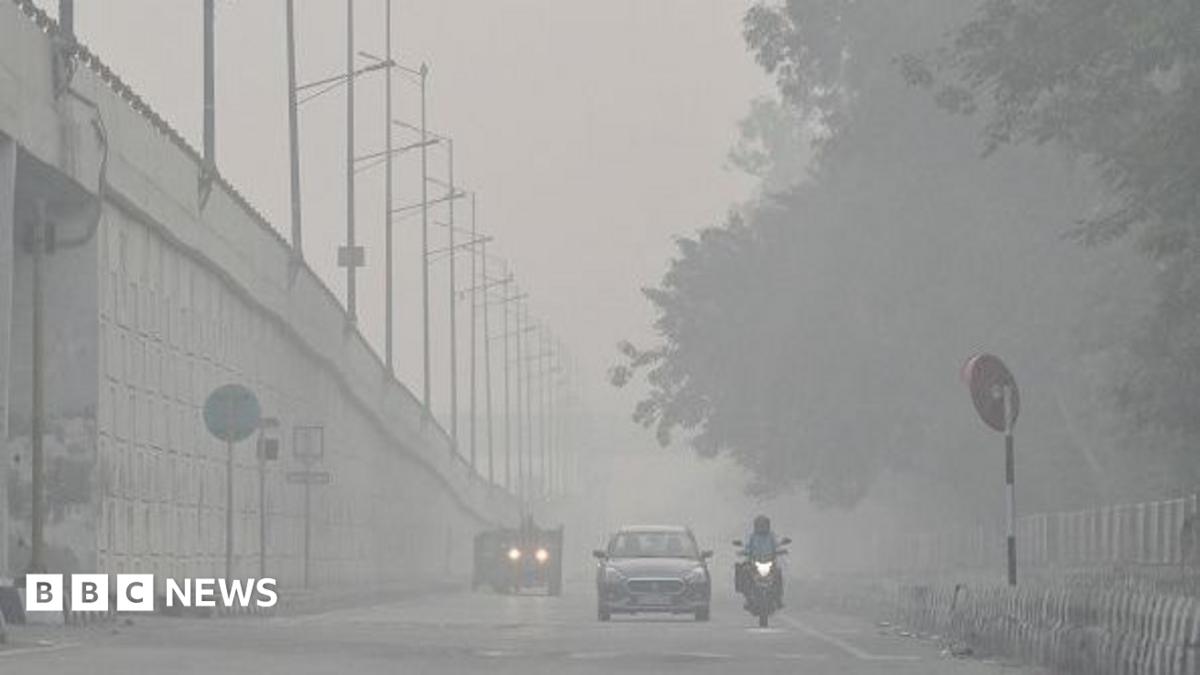
Emergency rules took effect across Delhi as the city’s overall air quality index crossed 300 into the very poor category, driven by winter pollution and stubble burning ahead of Diwali.
Stubble Burning and Weather Conditions Drive Delhi Pollution
Smoke from crop residue burning in neighbouring states began blowing into the capital as falling temperatures and sluggish winds settled over northern India, following an unusually clean October that recorded the lowest average air quality index for the month in eight years.
Watch | Rohini, Delhi: A thick layer of smog blankets several areas of the national capital. In view of the deteriorating air quality, the CAQM has implemented the second stage (Stage-II) of GRAP in Delhi-NCR. pic.twitter.com/lmgZWsN9Eh
Officials explained that a recent cyclonic storm named Arnab had brought rain and strong winds that cleared the air last week, but the weather has since normalized and northwesterly winds have returned.
Satellite observations showed that 194 stubble fires were reported in just 24 hours, taking the season’s total count to about 1,007. On Wednesday morning, Delhi’s overall air quality index stood at 377, with coarse pollutants and fine particulate matter crossing 400 micrograms per cubic metre at multiple monitoring stations. Following the air quality slip to 324 on Monday and 350 on Tuesday, Delhi’s environment minister Manjinder Singh Sirsa accused the Punjab government of misrepresenting data on stubble burning by registering 271 FIRs against farmers despite claims that no such activity was taking place.
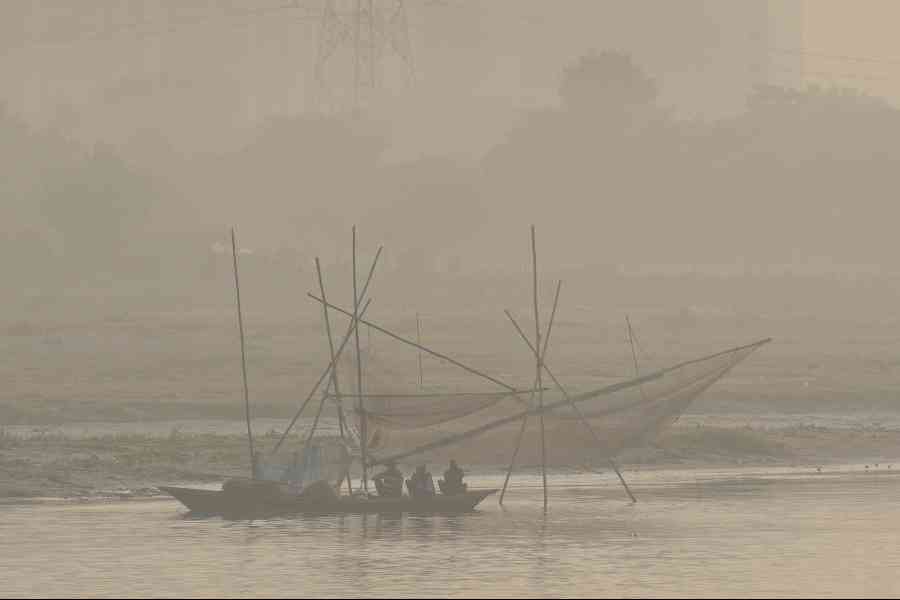
Meteorological conditions are compounding the crisis. Anil Kumar, former director of the Delhi government’s Department of Environment, noted that weather conditions have a major role in pollution levels across North India, explaining that lower temperatures, slow winds and a lower mixing height make it difficult for dirty air to move upwards and spread. Maninder Singh Nayyar, founder and CEO of CEF Group, added that cold weather, weak winds and temperature inversion make pollution stay in the air for longer, while smoke, dust and humidity mix together to increase people’s exposure to fine particles such as PM2.5.
Emergency Restrictions and Graded Response Action Plan Stage II
Municipal agencies have been directed to intensify dust and vehicular management measures, including regular road cleaning, proper dust collection and paving or planting greenery in open roadside spaces, after the Commission for Air Quality Management activated Stage II of the Graded Response Action Plan across the National Capital Region once average air quality reached 324.
Additional measures target private vehicle usage and traffic congestion. Parking charges have been increased, and the Delhi Metro introduced 20 additional weekday train trips. Authorities also staggered government office timings to ease peak-hour crowding.
Supreme Court Green Firecracker Rules for Diwali Weekend
Diwali is traditionally marked by fireworks that release fine particles and harmful gases into the atmosphere, which frequently worsen the city’s air. Historical comparisons show that in 2025 the average air quality index before Diwali was 345 and rose to 351 after the festival, while in 2024 it moved from 328 to 360, and in 2023 it spiked to 358 a day after the holiday from 218 beforehand. During the worst air quality decade in 2021, the index reached 462 after Diwali following pre-festival readings of 314.
Following years in 2025 when the Supreme Court allowed green and less-polluting crackers for a limited time, the court this year permitted celebrations with firecrackers from 06:00 to 07:00 local time and from 20:00 to 22:00 local time on November 7 and 8. The court also ordered a complete ban on fireworks within 300 metres of hospitals, care homes, schools and other designated silence zones, mandating that the complete ban on cracker bursting will be restored from 9 November.
| Date | Permitted Celebration Window | Enforcement Agency Action |
|---|---|---|
| November 7, 2026 | 06:00 to 07:00 and 20:00 to 22:00 local time | Police patrol and random QR-code checks |
| November 8, 2026 | 06:00 to 07:00 and 20:00 to 22:00 local time | Seizure of conventional or uncertified crackers |
| November 9, 2026 | Complete ban restored | Full restriction on cracker bursting |
Dr Arindam Ghatak, an air pollution expert and CEO of Biomoneta, urged healthcare facilities to prepare for a potential increase in breathing-related illnesses by maintaining adequate medical supplies and improving air filtration in patient care areas.
More on Manjinder Singh Sirsa
Delhi’s average Air Quality Index (AQI) rose to 324 on November 2, following which the Commission for Air Quality Management (CAQM) implemented Stage II of the Graded Response Action Plan (GRAP) across the entire Delhi-NCR region, with immediate effect. Delhi’s air quality has… pic.twitter.com/GzXwdxqKdV
🌿 GRAP Stage-II | Breathe Clean, Stay Responsible! To curb air pollution in Delhi, citizens are advised to follow GRAP Stage-II guidelines. 🚫 Avoid prohibited activities. ✅ Ensure valid PUC certification. 🚗 Follow applicable vehicle entry restrictions. 🌱 Choose cleaner… pic.twitter.com/Sq3mUnYqjw