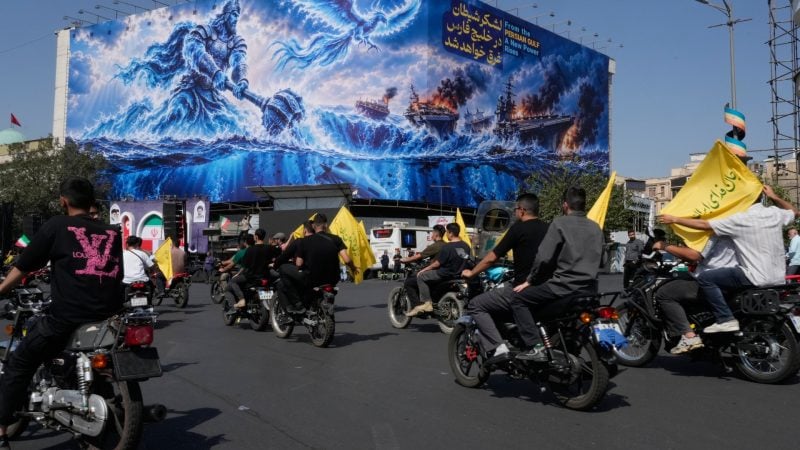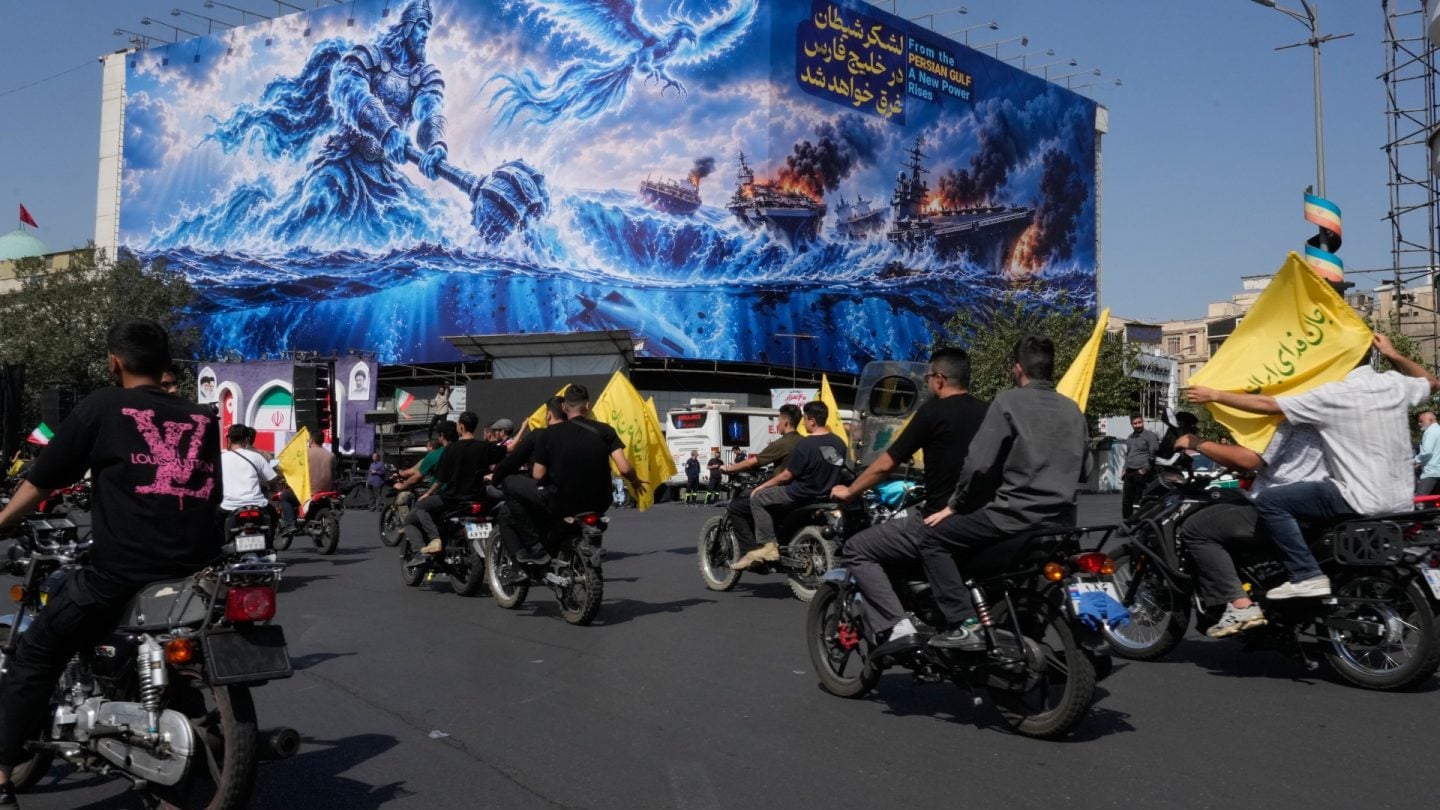
Brent crude futures for December settled up $2.76, or 2.4%, at $117.64 a barrel after touching $118 on November 3, 2026, as oil markets braced for a possible renewed clash between the United States and Iran following midterm voting.
U.S. Strikes on Qeshm Island and Market Repercussions
President Donald Trump confirmed that the United States launched strikes on Iran early Tuesday, targeting a newly built anti-aircraft facility on Qeshm Island in the Gulf near the Strait of Hormuz, according to Aljazeera. Describing the operation as a minor attack that wasn’t war
, Trump said they built an anti-aircraft facility and that the military waited for it to be completed before striking. U.S. officials told domestic media that the action was defensive and followed Iranian fire at an American aircraft.
The exchange sent energy markets climbing. The more active January contract gained $2.63 to $113.43 a barrel, putting prices at their highest levels since the end of April. Traders reacted to mounting fears that the eight-month-old conflict, which began with U.S. and Israeli strikes on February 28, could escalate sharply now that the U.S. midterm elections have arrived.
Strait of Hormuz Shipping Disruption and Iranian Demands
Shipping through the critical waterway faced mounting peril as Iran pushed a revised proposal. Tehran announced it had a two-day plan to reopen the Strait of Hormuz and resume nuclear talks with Washington, shortening an earlier seven-day timeline. Iranian officials insisted that reopening the corridor remains conditional on the U.S. lifting its naval blockade and oil sanctions, releasing frozen funds, and agreeing to a ceasefire that includes Lebanon.
Iran offers to reopen Strait of Hormuz in 48 hours amid Trump’s fresh strike threats: What are Tehran’s four demands? Iran says it can reopen the Strait of Hormuz within two days if Washington accepts its demands, including an end to the war and the US naval blockade. The offer…
— https://x.com/moneycontrolcom/status/2117195008700760551
Under the proposed terms, vessels passing through the reopened strait would have to follow a specific route agreed upon by Iran and Oman and travel under Iranian supervision. Iranian Foreign Ministry spokesperson Esmail Baghaei defended the initiative, stating that this once again demonstrates Iran’s good-faith approach. However, a senior Iranian official told Reuters that Tehran considered Washington’s initial response unsatisfactory.
On the water, disruptions continued to mount. The Islamic Revolutionary Guard Corps claimed that four oil tankers were destroyed after striking naval mines while attempting to pass through a prohibited shipping lane south of the Strait of Hormuz. In a separate incident reported by the United Kingdom Maritime Trade Operations, two unidentified projectiles struck a tanker’s engine room about 14 nautical miles northeast of Oman’s coastal village of Limah.
Fearing a renewed war between America and Iran, European and regional powers are building a diplomatic framework to prevent escalation. Their efforts reveal a new appetite for middle-power-led paths towards stability without American leadership. @ECFRMena https://t.co/HNiRli7Pcv
— https://x.com/ecfr/status/2117614025798230445
Mediators Bridge Gaps as Officials Weigh Diplomacy and Military Force
While indirect negotiations in Doha saw the Iranian delegation depart after a tense weekend, Qatari mediators continued intensive efforts to bridge the gap between Tehran and Washington. U.S. Secretary of State Marco Rubio, hosting Group of 20 foreign ministers in Atlanta, maintained that there are multiple talks. Talks have actually never stopped, adding that Trump would prefer a diplomatic resolution but retains full confidence in military capability if needed.
Regional powers moved to establish separate security arrangements. Iranian Foreign Minister Abbas Araqchi confirmed that talks with Saudi Arabia were continuing to shape a regional security framework excluding foreign military involvement. These contacts follow high-level meetings in Tehran involving senior officials from Saudi Arabia, Turkey, and Pakistan, aimed at securing a durable postwar architecture as the region braces for Washington’s next steps.

Behind closed doors, the security forums in the region reflected the deep anxieties of neighboring governments. Andreas Krieg, a professor at King’s College London, noted on X that the standoff in the Gulf between the United States and Iran essentially operates as a confrontation between Qatar and Israel. Meanwhile, Omani Foreign Minister Badr Albusaidi advocated for an inclusive diplomatic approach, emphasizing that bringing all eight regional states together would unlock enormous economic potential.
However, major hurdles remain regarding Iran’s nuclear infrastructure and maritime security protocols. The International Atomic Energy Agency recorded 440.9 kilograms of uranium enriched to 60 percent, a level just below weapons-grade, based on data from June 2025. Western analysts and diplomats point out that while Iran demands the unfreezing of assets and the waiving of oil sanctions, it has consistently refused to transfer its highly enriched uranium stockpiles abroad or agree to mandatory verification and enforcement mechanisms.
🚨🇺🇸🇮🇷 Trump, talking about the Midterms: "A lot of people say the oil price, because of Iran. But I am totally convinced that my decision on Iran, for the long-term good of our country and even the world, was absolutely correct, and it continues to be." If he truly believes…
— https://x.com/MarioNawfal/status/2117936020880576632
In Tehran, the newly empowered leadership has taken a hardline stance. Supreme Leader Mojtaba Khamenei, who has remained out of public view since the opening strikes killed his predecessor and father, issued statements through his official Telegram account declaring that any threat must be met with an immediate, impactful, and geographically unrestricted response. Parallel to these warnings, Iranian military chiefs reported high readiness across the Gulf coast, the Strait of Hormuz, the Gulf of Oman, and the country’s borders.
As the international community awaits the final fallout of the U.S. midterm elections, ordinary citizens and officials across the Middle East remain gripped by uncertainty. With Chinese President Xi Jinping telling Oman’s sultan that the Gulf region should not become an arena for great-power rivalry and geopolitical conflict, Beijing has also stepped up diplomatic engagement by dispatching special envoys to Tehran, Riyadh, and Muscat.
🇺🇸🇮🇷 Trita Parsi: Trump may have a way out of the Iran war, but the WINDOW COULD CLOSE after the midterms I spoke with Trita Parsi just hours before Americans headed to the polls, and he shared something I found genuinely encouraging. He's hearing that U. S.-Iran negotiations… pic.twitter.com/KhiHnxLqSN
— https://x.com/MarioNawfal/status/2117738564125688240
Earlier coverage: Iran Says It Could Reopen Strait of Hormuz If U.S. Meets Demands
Trump: A lot of people say the oil price, because of Iran. But I am totally convinced that my decision on Iran, for the long-term good of our country and even the world, was absolutely correct, and it continues to be. pic.twitter.com/0zOTgZy6YW
— https://x.com/clashreport/status/2117932883734044934
More on Qeshm Island
WSJ: U. S. Strikes Iran’s Qeshm Island as Trump Talks Down War Risks https://t.co/7O8DTYFi5j pic.twitter.com/5a7M0SUEUy
— https://x.com/bonzerbarry/status/2117417891700285465
BREAKING: The U. S. struck Iran’s Qeshm Island, according to U. S. officials. According to The Wall Street Journal, the strike is part of a series of limited, largely undisclosed U. S. attacks on Iran in recent weeks, which Washington describes as defensive measures aimed at… pic.twitter.com/Xr9tT6xl6J
— https://x.com/RpsAgainstTrump/status/2117433213765231100