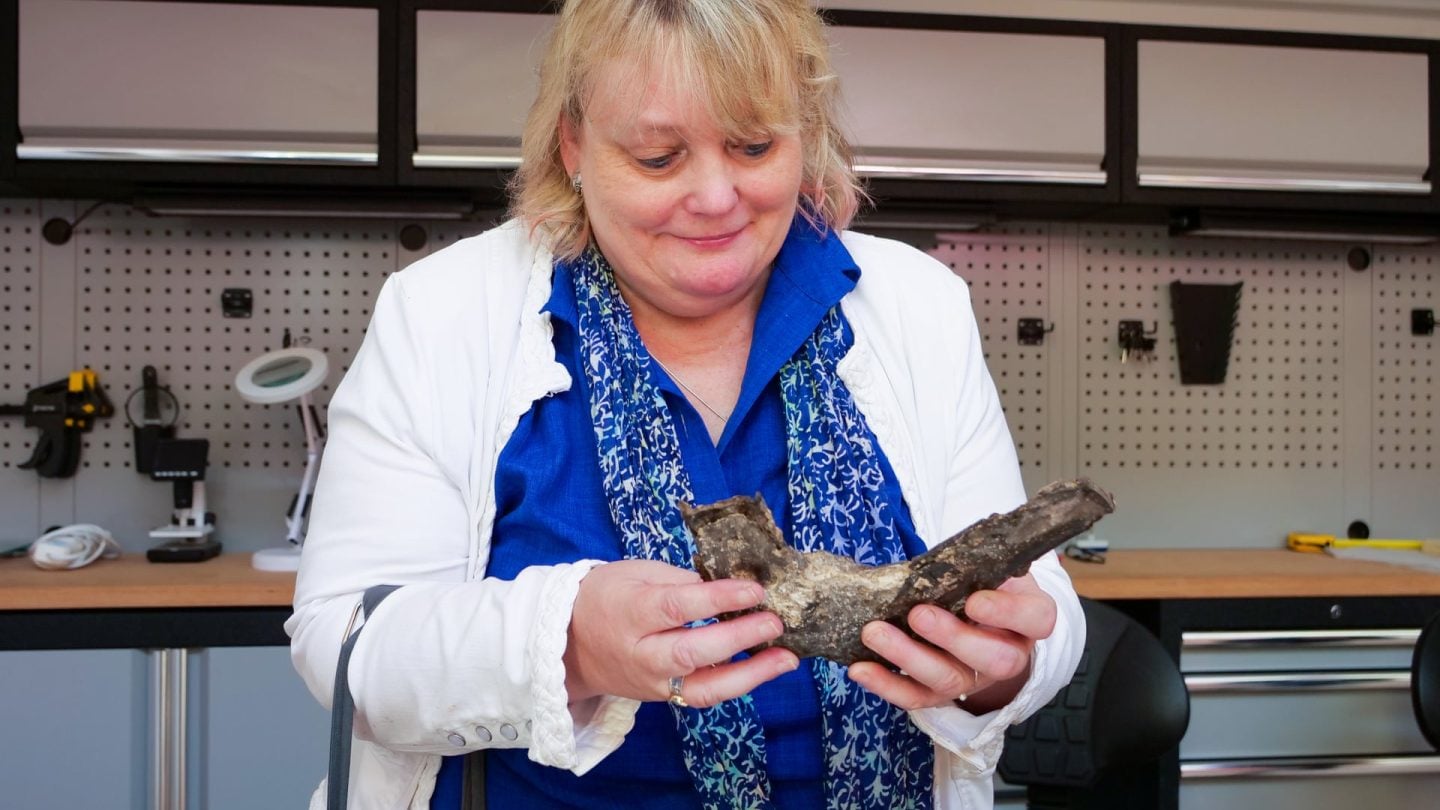
Researchers examining the hind leg bones of an Aratasaurus that lived 115 million years ago in north-eastern Brazil have identified what they describe as fossilised red blood cells and traces of heme-derived molecules.
The international research team, headed by Curtin University, used electron microscope imaging to reveal small, round structures resembling red blood cells inside vascular canals. Subsequent chemical tests returned positive results for heme and its breakdown products, alongside traces of amino acid building blocks for collagen.
Researchers Find Fossilised Red Blood Cells in Dinosaur Bones
The Aratasaurus remains were originally discovered in a mine in 2008 and have since been held in the National Museum of Brazil. During ongoing study of the hind leg bones, research team leader Prof Kliti Grice spotted the cellular structures.
Grice characterized the finding as a world first, noting that fossilised red blood cells with distinct chemistry related to heme have never previously been found in situ in any fossil, let alone a dinosaur. According to the research team, the discovery extends the known fossil record of blood and offers a direct molecular window into the physiology of long-extinct animals, potentially allowing scientists to investigate metabolism and activity levels.

Experts Question Preservation and Cellular Identity of Findings
Despite the team’s findings, other experts in the field have expressed doubt. Prof Mary Schweitzer at North Carolina State University, who has previously discovered soft tissues and blood vessels in dinosaur fossils, remains unconvinced that the team has found red blood cells. Schweitzer noted that dinosaur red blood cells should feature a nuclear bulge giving them a dome-like appearance on both sides.
The discovery also creates uncertainty over how such biological material could be preserved over millions of years, challenging the conventional palaeontological wisdom that endogenous organics disappear within a million years or less. Grice emphasized caution, stating that the work does not imply that large biological molecules like proteins or DNA survive intact, and noted that extraordinary claims require extraordinary analytical evidence.