Traveling 61,000 kilometers per hour, Voyager 1 crossed one light-day from Earth on November 18, 2026, reaching about 26 billion kilometers away.
- NASA confirmed the distance milestone after the probe reached the boundary on Wednesday.
- Radio signals now take a full 24 hours to reach the spacecraft and another 24 hours to return an answer to Earth.
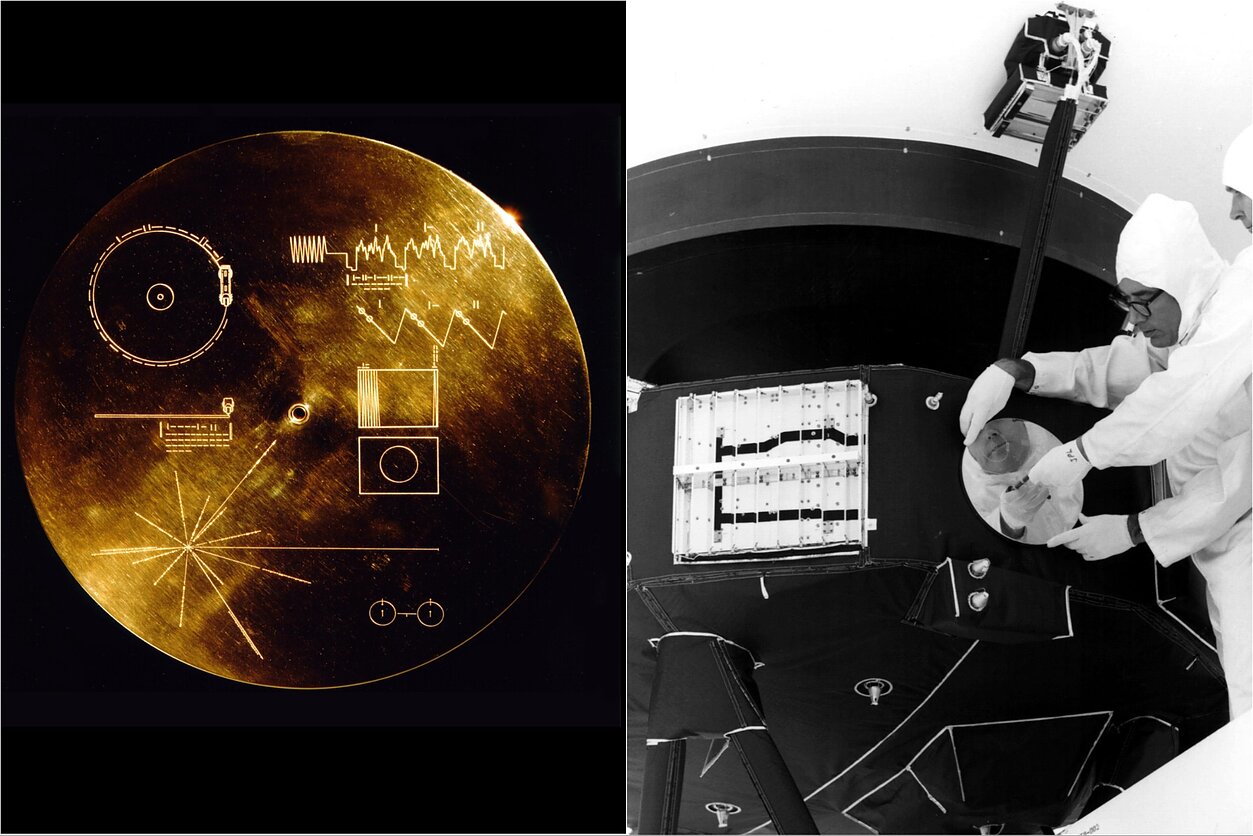
- Launched in 1977, the spacecraft carries a golden record containing sounds, images, and greetings from Earth.
Reaching Interstellar Space After Decades of Flight
The spacecraft was launched in 1977 during a rare planetary alignment that occurs once every 176 years. Engineers wanted to investigate the alignment of Jupiter, Saturn, Uranus, and Neptune. After finishing its primary mission, the probe swung past Jupiter and Saturn, using their giant gravitational pulls for acceleration. It flew close to each giant world, drawn and accelerated by their immense gravity. In 1979, the craft flew past Jupiter and discovered its rings, while sending back the first detailed images of the giant planet and its moons alongside their extreme winds and weather patterns. Its data also strengthened interest in the moon Europa, which is suspected to harbor liquid water beneath its ice.
In 1980, the probe flew past Saturn, where it discovered five new moons. On Valentine’s Day in 1990, operating beyond the orbit of Neptune, the probe captured a portrait of the solar system from the outside, portraying Earth as a pale blue dot from more than six billion kilometers away.
In 1998, the vehicle became the most distant human-made object, and in 2012, it became the first to cross the heliopause and enter interstellar space. Its twin, Voyager 2, launched two weeks earlier, took a longer path through all four major planets, reaching interstellar space in 2018 and projected to reach the light-day threshold around November 2035 according to earlier calculations cited by EarthSky.
It now operates in interstellar space, a region dominated by the stellar wind and radiation of the Milky Way rather than the Sun.
“Voyager 1 took nearly 50 years to reach just the edge of our solar system, let alone one light-day,” said NASA representative Tiffany Kataria, as reported by AFP. “turite išsiųsti žinutę, tada eiti namo ir laukti dvi dienas, kol galiausiai sulauksite atsakymo”, Suzanne Dodd, project manager for Voyager at NASA's Jet Propulsion Laboratory said,
…- –. .-. Can you decode this message? 🔦 On Nov. 17, celebrate Voyager 1 reaching one light-day from Earth by flashing this message toward the night sky. Join the celebration: https://t.co/un5jS48qv8 pic.twitter.com/VNq91wPflj
Power Conservation and Current Instrument Status
Power comes from a radioactive isotope thermoelectric generator whose output steadily declines over time. Engineers have powered down cameras and several other onboard instruments to keep essential communication systems active.
A technical hiccup accompanied the milestone. The spacecraft stopped transmitting science and engineering data on November 14, though a strong carrier signal allows mission controllers to track its position and confirm its trajectory.

Reflecting on a Quiet Cosmic Business Card
Carl Sagan called the project a quiet business card for humanity in space. According to former NASA rocket engineer and NASAWatch editor Keith Cowing, even equipment built so long ago remains invaluable. Proxima Centauri, our solar system’s nearest stellar neighbor, lies more than four light-years away.
Carrying Humanitys Golden Record Into the Galaxy
Attached to the hull of Voyager 1 and its twin is a 30-centimeter gold-plated copper disk designed to tell future civilizations about Earth. The golden record holds greetings spoken in 55 languages, recordings of Earth sounds, and music, alongside 115 encoded images and diagrams.
NASA expects to maintain radio contact with the probe until the end of the 2030s, with 2036 mentioned by NASA as a baseline target until which communication could be sustained. Long after transmissions cease, the spacecraft will continue its silent journey through the galaxy.
More on Earth
pic.twitter.com/oAUw0bcEdn