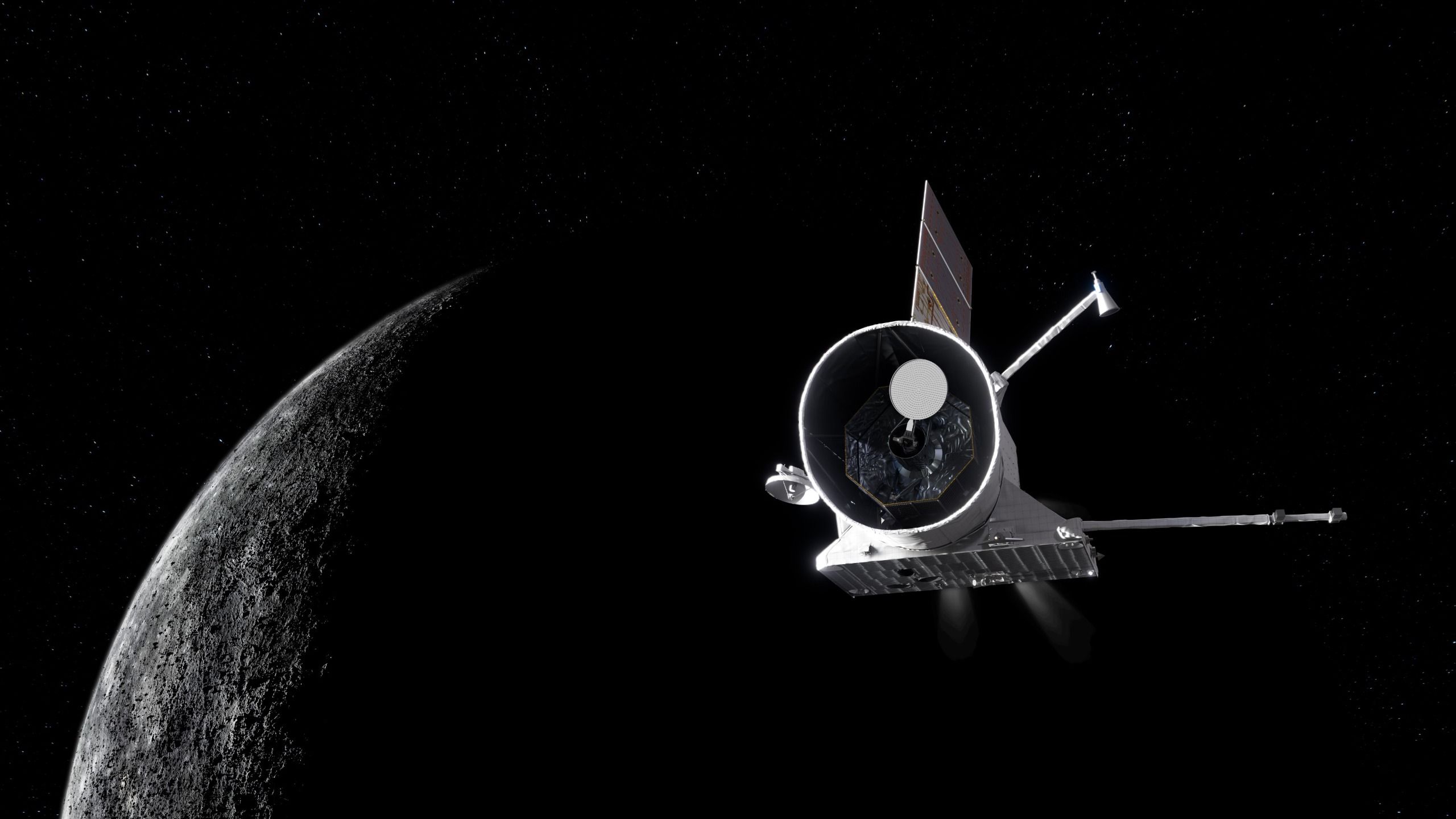
Mathematical models suggest a new planet with a mass one to two times that of Earth may exist far beyond Neptune. Researchers say the gravity of this hypothetical world, called Planet X2, could explain the strange paths of distant, icy objects.
Astronomers find gravitational clues
Astronomers identified the potential planet by looking for gravitational fingerprints instead of using a lens. Researchers used computer simulations to replay the 4.5-billion-year history of the solar system, according to a study in the “Monthly Notices of the Royal Astronomical Society”.
The team tested several possibilities to explain oddities in the outer solar system. One scenario involved small “embryos,” or baby planets with masses between Mars and Earth, being thrown outward early in solar system history. However, this model failed to match reality.
Simulations showed these small bodies were typically flung out of the solar system entirely within a few million to a few tens of millions of years. In 200 simulated systems using these embryos, none matched all the observed features of our solar system, StudyFinds said.
The simulations worked better when researchers included a distant, larger planet. A version of Planet X2 weighing twice as much as Earth produced a group of distant objects with orbits that resemble those seen by astronomers today.

This model recreated the orbits of 11 known objects with extreme paths, including the distant world Sedna, which moves on a long, narrow loop. The gravity of Planet X2 pulled certain icy objects out of Neptune’s reach and tilted others onto steep angles.
We simply can't explain the existence of those objects, or why they move on the orbits we observe, on the basis of the known planets. Jonathan Horner
Planet X2 orbits the sun
Planet X2 maintains an average distance from the sun of about 33 billion to 46 billion miles in the best-fitting models. This places the planet 12 to 17 times further out than Neptune. It is also nine to 13 times further out than Pluto.
The planet would remain nearly 19 billion miles from the sun even at its closest approach. This distance is more than six times the distance of Neptune.
This proposed planet is smaller than the hypothesized “Planet Nine,” a giant world estimated to be five to 10 times the mass of Earth. Researchers said several recently discovered distant objects follow orbits that do not fit the predictions made for Planet Nine. This is despite Planet Nine being proposed to explain patterns in the orbits of distant Kuiper Belt objects.
Horner said the two hypothesized planets are not mutually exclusive. He said, “It is entirely possible that both are right, or both are wrong!”
Scientists test the model
The existence of Planet X2 is a hypothesis rather than a confirmed discovery. Astronomers are looking to the Rubin Observatory’s Legacy Survey of Space and Time to provide a direct test. The observatory could reveal the planet or allow scientists to examine if the orbits of newly discovered distant objects match the Planet X2 model.
Scientists at the Rubin Observatory announced the discovery of 2026 ED138 in October. This is a large object beyond Pluto and a possible dwarf planet. Finding more distant objects will help determine if current observations are representative or merely coincidental.
The evidence for a planet might get weaker as more objects are discovered. In that case, the hypothesis could be refuted, Horner said, according to Newsweek.