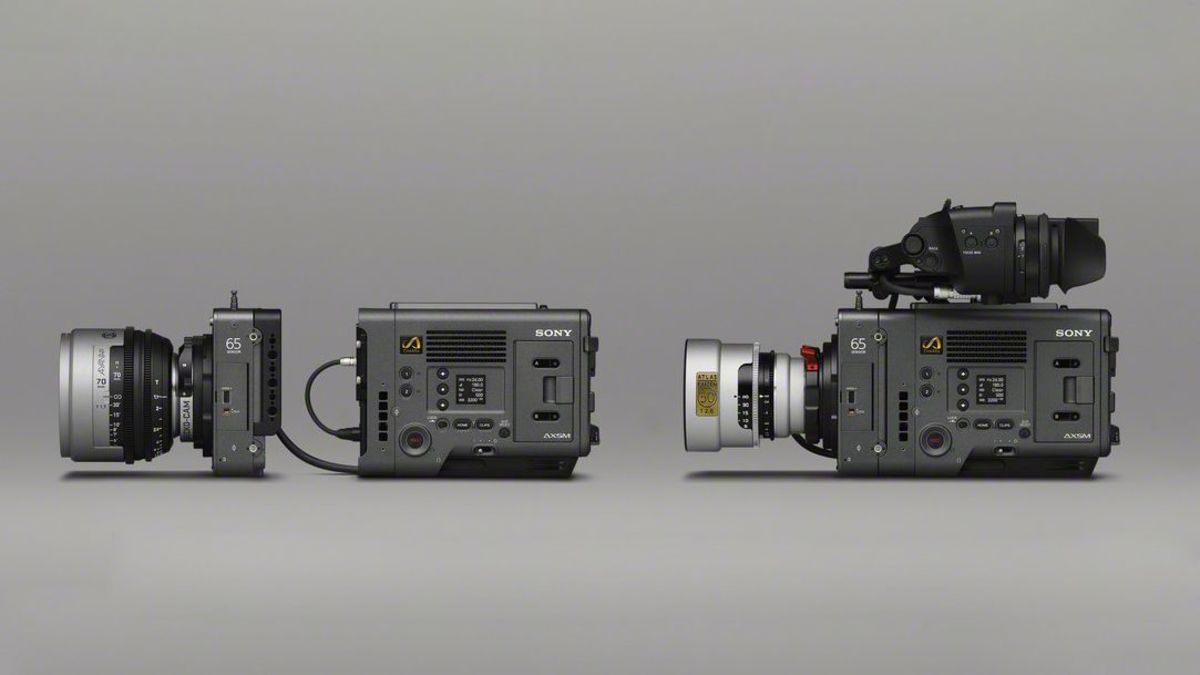
Sony has priced its upcoming RIALTO 65 camera extension system at $80,000, confirming a tentative launch in the first half of 2027. Designed to transform the VENICE 2 into a 65mm-format camera, the modular unit features a 9.6K Open Gate sensor measuring 53.75mm wide by 35.83mm high.
Filmmakers looking to push into large-format cinematography now have definitive pricing and technical specifications for Sony’s modular expansion. First shown back at CineGear in June, the RIALTO 65 Camera Extension System pairs a high-end sensor with the existing VENICE 2 CineAlta camera. Rather than requiring productions to purchase an entirely new standalone camera body, the system functions as a replacement sensor block that adapts current hardware into a 65mm-format production package. Operating the system requires a compatible VENICE 2 camera body running dedicated firmware version 6.00 or later.
Large Image Sensor Supports Dual Readout Modes
The system’s core asset is an image sensor measuring 53.75 mm wide by 35.83 mm high, yielding a diagonal of approximately 64.60 mm. That imaging area is approximately 2.2 times larger than a 35mm full-frame sensor, placing it among the largest image sensors used in commercially available cinema cameras.
To handle a wide array of glass, the system supports distinct readout modes. Shooters are given the option to pick between a 9.6K 1.5:1 open-gate format and a 9.6K 2.20:1 readout mode featuring a diagonal close to 59.04 mm built for traditional lenses. Additional readout modes will be introduced through future software updates to the VENICE 2 body. When you couple the extension with a VENICE 2, you can capture 9.6K 3:2/1.5:1 open gate footage reaching up to 30p, alongside 9.6K 2.20:1 footage up to 50p, though the highest frame rates remain absent from the top-tier Raw X-OCN XT format.

As we grow our lineup of extension systems that enhance freedom and flexibility, we look forward to showcasing our commitment to the scope and deep expression of large format filmmaking by providing our VENICE 2 customers with more sensor options.
Yang Cheng, Senior Vice President, Imaging Solutions, Sony Electronics Inc.
The equipment supports dual base ISO settings of 2500 and 10000. At the 2500 base ISO, the hardware delivers 15+ stops of latitude, preserving dynamic range across high-contrast environments.
Modular Configuration and On-Set Rigging Options
Weighing approximately 1.5 kg and measuring 115 mm x 154 mm x 63 mm, the removable camera head maintains a compact physical footprint despite its large sensor. Productions can operate the module in Studio Mode, with the head attached directly to the VENICE 2 body, or switch to Extension Mode using a detachable cable for confined spaces.
The hardware supports 4.5m and 12m cable options that detach at both ends for straightforward rigging.
| System Component | Tentative Price (USD) |
|---|---|
| RIALTO 65 Camera Extension System (CBK-6510XS) | $80,000 |
| 12m Cable Option | $9,000 |
| CBK-NDK6510 ND Filter Kit (11-piece set) | $8,000 |
Existing Memory Cards Fit Production Workflows
Because the VENICE 2 body manages primary recording functions, rental houses and production teams can continue using their existing AXS memory cards, color science pipelines, and 16-bit X-OCN recording workflows. Camera tilt and roll information can be recorded as metadata and utilized in post-production workflows.
The system does not feature an integrated lens mount, requiring productions to utilize third-party adapters matched to their chosen optics. Metadata including focal length, focus position, and aperture values transmit directly when paired with compatible communication mounts. Operators working with anamorphic glass can use a de-squeezed monitor feed across various magnification levels along with the Zoom to Fit utility to verify framing and composition tailored to the specific lens in play. Eleven drop-in neutral density filters with electronic contacts handle exposure management, allowing the camera body to automatically read filter density data.
Sony released initial demonstration media to highlight the hardware’s performance under challenging illumination. Cinematographer Łukasz Żal utilized the system to shoot “Local People,” showcasing the sensor’s capabilities.