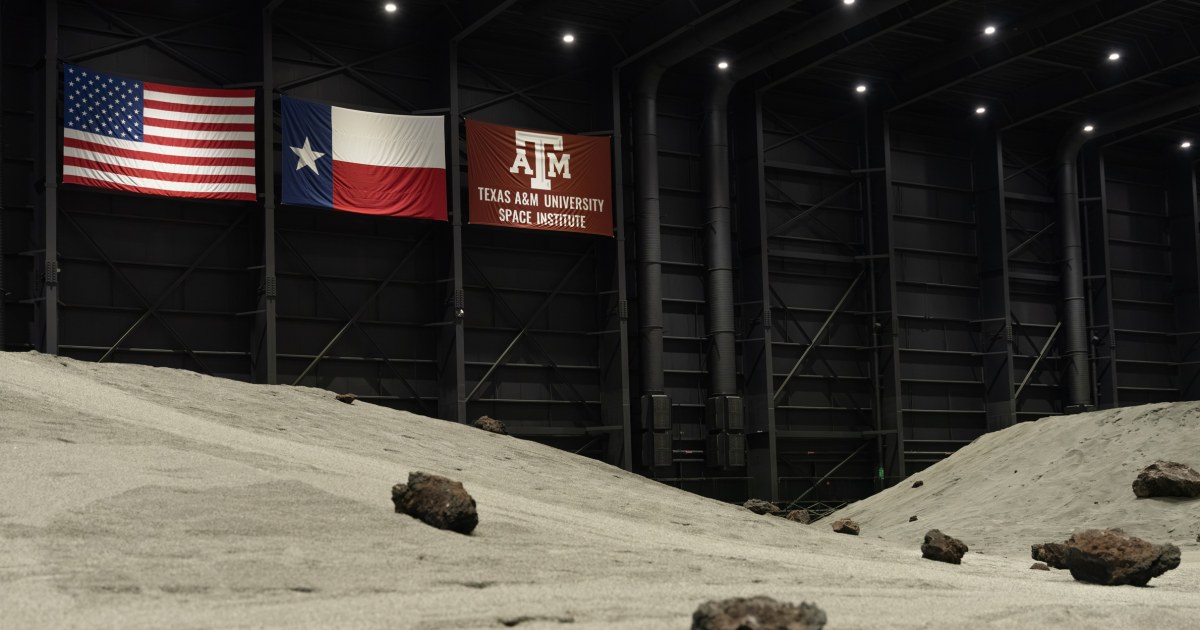
Texas A&M University opened the Texas A&M Space Institute in Houston on Friday.
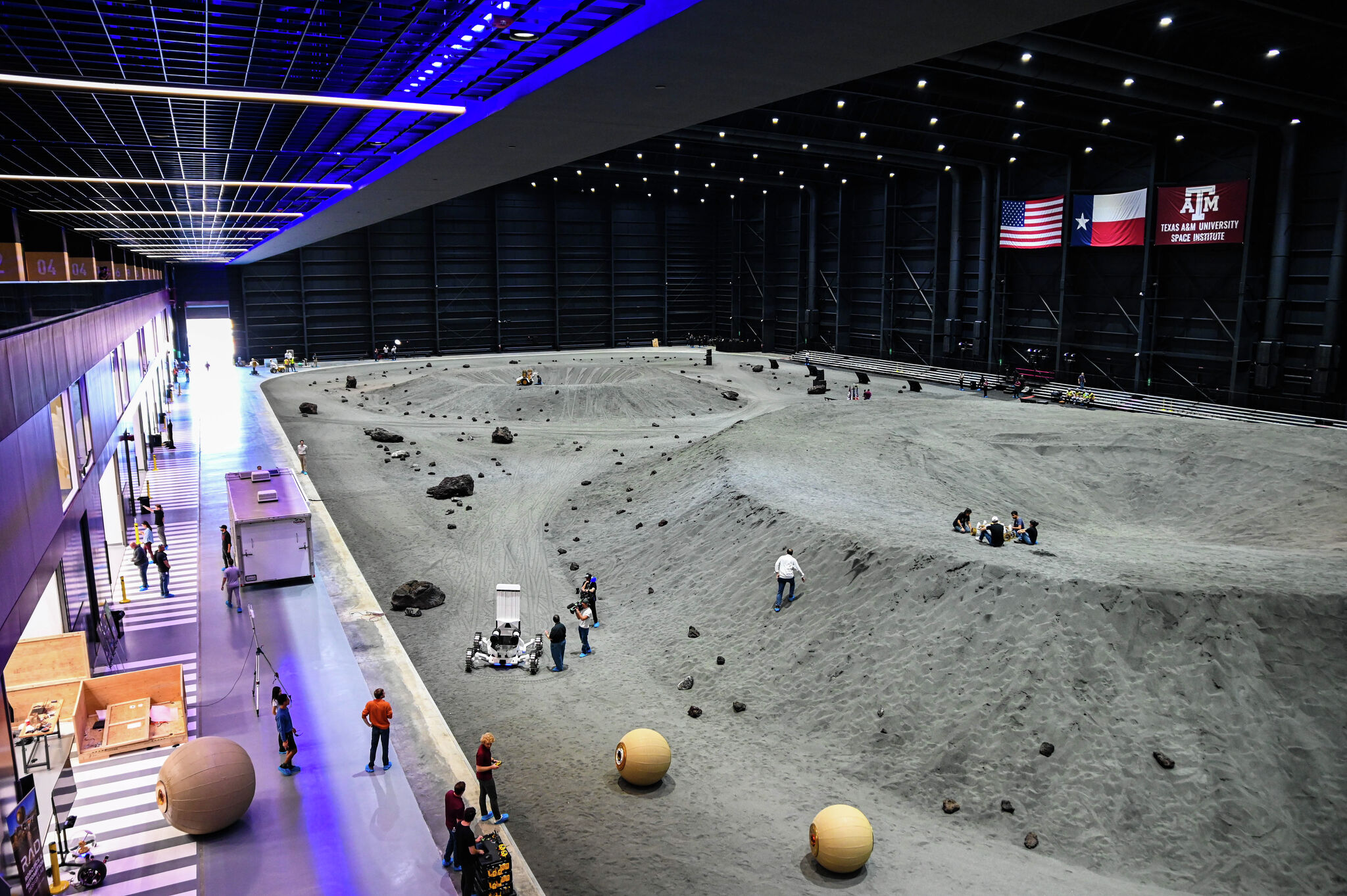
The facility spans 416,800 square feet. It sits directly outside the gates of NASA’s Johnson Space Center.
Engineers, scientists, and commercial space companies get a place to test rovers, spacesuits, and autonomous robotics here. These machines face environments that closely replicate the surfaces of the moon and Mars.
The Texas Legislature funded the complex with a $200 million investment. The facility features two massive simulated extraterrestrial areas.
Each area measures 117,000 square feet.
House Bill 3447 funded the institute. The 88th Texas Legislature passed it in 2023.
Lawmakers allocated $350 million through that act to create the Texas Space Commission and its research fund. They earmarked $200 million specifically for the Texas A&M facility.
Building Space Environments in Houston
The lunarscape holds 16,000 cubic yards of basalt. Workers sourced the rock from a quarry in Uvalde, Texas.
The Martian surface uses 6,000 cubic yards of volcanic rock. New Mexico supplied this iron-rich material. Organizers said that Tranquility Base could fit inside the lunarscape with more than 50 percent of the space left unused. Apollo 11 landed at Tranquility Base in 1969.
The Marscape material is lighter than the moonscape’s basalt. Its maroon color fits Texas A&M.
A 100-foot-long tunnel called a wormhole connects the two simulation areas. Rovers move between the different planetary surfaces through it.
Tenants and Research Bays at the Institute
AstroLab and Intuitive Machines signed agreements. Officials are finalizing others.
Lunar resources company Interlune plans to establish a center at the institute to produce simulated lunar soil for testing landers and rovers. John Bellinger said this. He serves on the Texas A&M University System Board of Regents.
Institute director Nancy Currie-Gregg said that two research garages will be made available free of charge for faculty and students originating from anywhere in Texas.
So rather than limiting what can be done in these research spaces, we decided to keep them simple so they can be customized by researchers — both now and in the future.
Robert Ambrose, associate director of the Texas A&M Space Institute, via collectSPACE
The facility supports university projects like the Roboball spherical rover. It also handles advanced materials manufacturing, robotics testing, space surveillance, tracking technologies, and in-space research.
Programs and Future Training Plans
Texas A&M offers expanding opportunities in space engineering and space medicine, including an Aerospace Medicine program through the Naresh K. Vashisht College of Medicine. The Bush School of Government and Public Service equips students with tools to address space law, economic development, and policy. It has hosted leadership courses for Space Force officers, known as Guardians.
“When the Space Force looked across the entire country for a university partner to help develop its officers as leaders, they chose Texas A&M,” said Col. (Ret.) Kevin Parker, director of the National Security Leadership Program at the Bush School.
Founded in 1876 as the Agricultural and Mechanical College of Texas, Texas A&M University was the state’s first public institution of higher education. It became the flagship of the Texas A&M University System in 1948 and, since 2021, has enrolled the largest student body in the United States.
As one of six senior military colleges, it maintains a full-time volunteer Corps of Cadets alongside its civilian population. The university joined the Association of American Universities in 2001 and is classified among “R1: Doctoral Universities – Very high research activity.”
The Space Force announced that the university will continue this work through 2036.
With the opening of the Texas A&M Space Institute, we’re preparing the next generation of engineers to lead humanity’s return to deep space. The next era of exploration will be led by the engineers we’re preparing today, and I have every confidence in the paths they’ll forge.
Nancy Currie-Gregg, director of the institute and a former NASA astronaut, via Texas A&M University