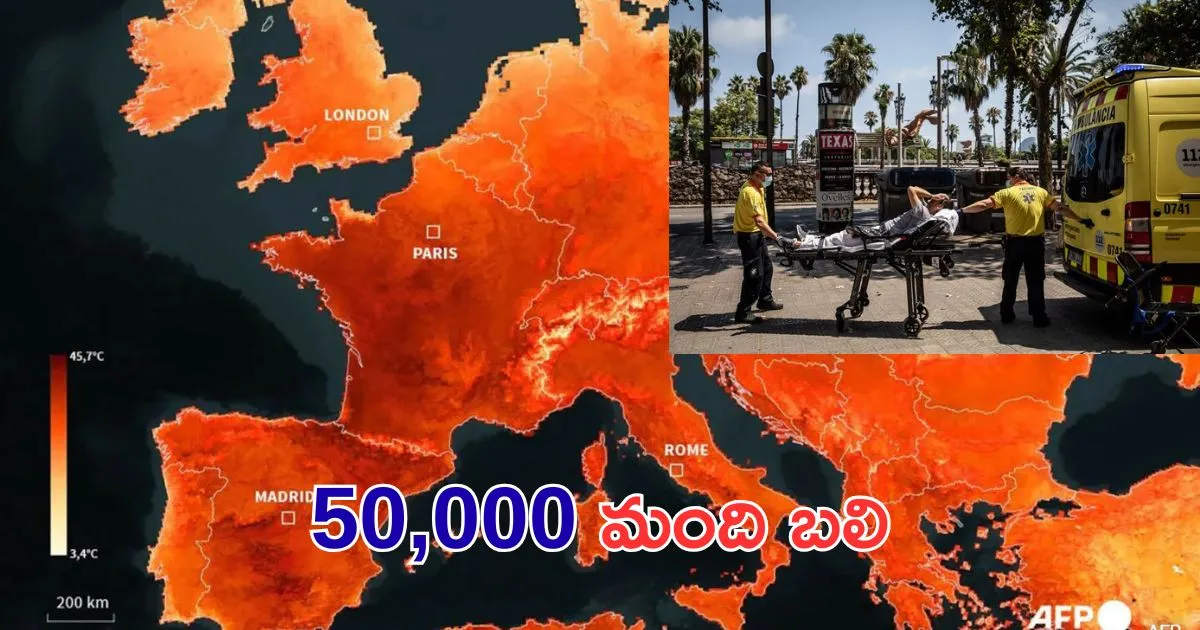
Europe endured its deadliest summer on record as extreme heatwaves claimed upwards of 50,000 lives across 30 countries. Scientific studies show that human-driven climate change fueled roughly 65 percent of these fatalities, triggering severe economic losses and widespread disruption across the continent.
The Toll Across 854 Cities and Fossil Fuel Driven Warming
A comprehensive study covering 30 European countries and 854 cities documented the catastrophic human cost of extreme summer temperatures. Published scientific findings indicate that approximately 50,000 people died as heatwaves gripped the continent from May through September. Southern and western regions bore the heaviest burden as infrastructure buckled under the thermal strain, wildfires ignited, hospitals faced surging admissions, and transport links stalled.
Researchers analyzing the data found that two-thirds of these deaths directly stem from human activities that accelerate climate change. Without the warming driven by fossil fuel consumption, a vast majority of those victims would have survived. The death toll eclipsed previous extreme summers, surpassing the figures recorded during the severe hot spells of 2003 and 2022.

Health department officials confirmed that over 50,000 individuals perished between June and August alone due to high temperatures and heat stroke, with the London School of Hygiene and Tropical Medicine establishing that climate change driven by fossil fuel pollution caused about 32,600 of those fatalities. Western Europe experienced summer temperatures nearly 3 degrees Celsius higher than the 1991–2020 average, while current figures and reports left scientists and authorities deeply alarmed.
Economic Fallout and Squeezed National Output
The extreme weather inflicted massive financial damage alongside the humanitarian crisis.
National economies across the region registered distinct contractions as cooling systems failed and productivity dropped. France experienced a 0.2 percent decline in its GDP, while Germany saw a 0.1 percent drop and Spain recorded a 0.05 percent dip in output.
Vulnerable Populations and Disproportionate Mortality Among the Elderly
Demographic breakdowns show that older adults absorbed the overwhelming majority of the casualties. Nearly half of all recorded victims—some 22,502 individuals—were aged 85 or older. By contrast, about 6,000 fatalities occurred among people under the age of 65, including 833 young adults between 20 and 44 years old.

Italy recorded the highest national death toll among the surveyed nations, followed by France, Spain, Germany, and Britain. Official country tallies showed 13,303 deaths in Italy, 7,268 in France, 6,824 in Spain, 6,340 in Germany, and 4,354 in Britain, where the UK saw older adults make up the majority of its 4,354 fatalities. In Italian cities like Napoli, death rates reached 815 per million residents. Emergency physicians noted that high temperatures primarily acted as a multiplier for pre-existing medical conditions, making true mortality counts difficult to isolate immediately and leaving isolated elderly residents particularly exposed when they lacked adequate cooling or financial means to run air conditioning.