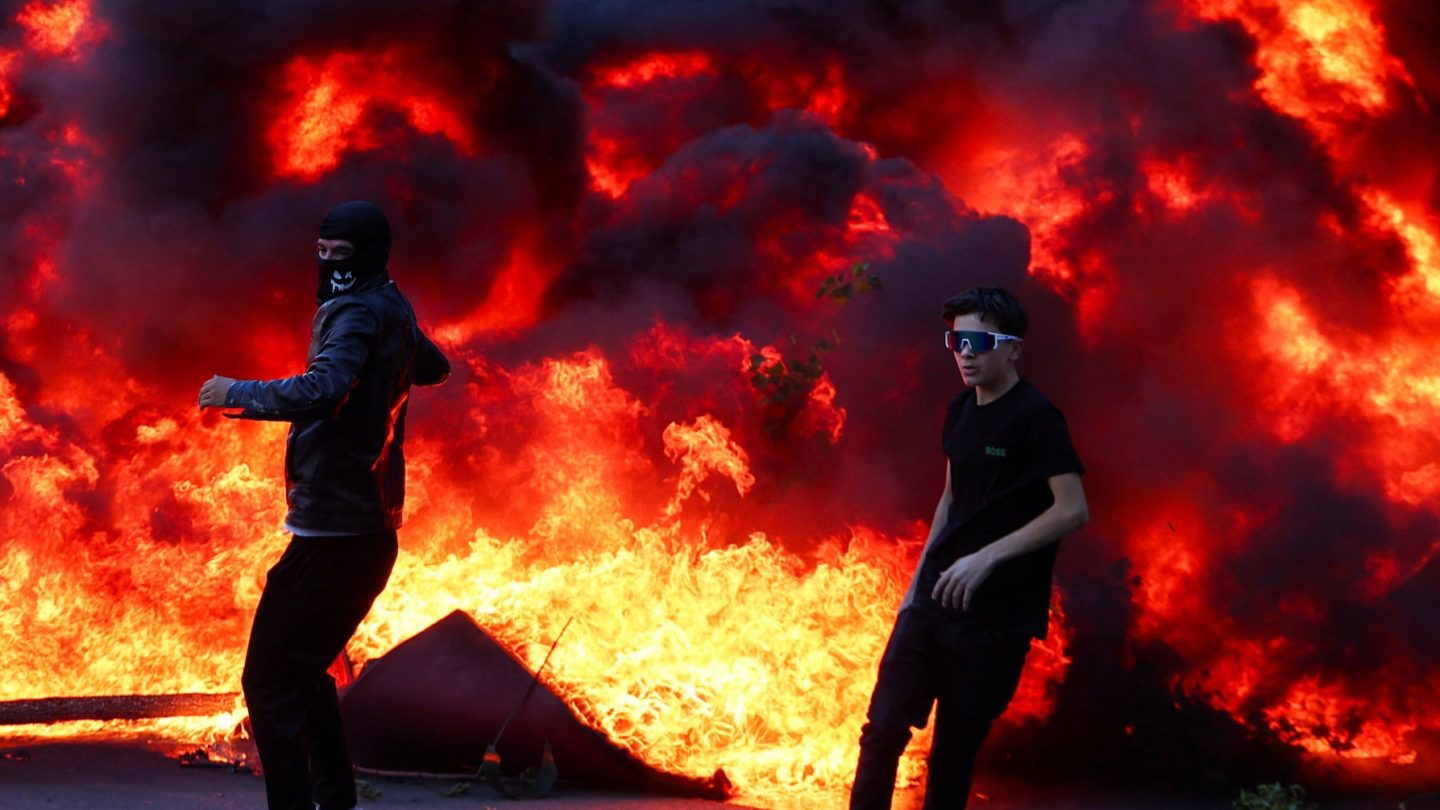
Tens of thousands of students and citizens have flooded the streets of Tirana in a tenth day of fierce anti-government protests. Demonstrators are clashing with police, demanding the resignation of Prime Minister Edi Rama over university conditions, living costs, and corruption controversies surrounding real estate developments.
What began as a student protest at the University of Tirana has expanded into a broader movement. Demonstrators hurled stones, firebombs, and fireworks at police lines as the unrest spread to other cities including Elbasan and Shkodra, according to international reporting. Law enforcement officers responded with water cannons, tear gas, and baton charges to clear the streets outside government buildings.
Clashes at the Ministry of Education and the Parliament in Tirana
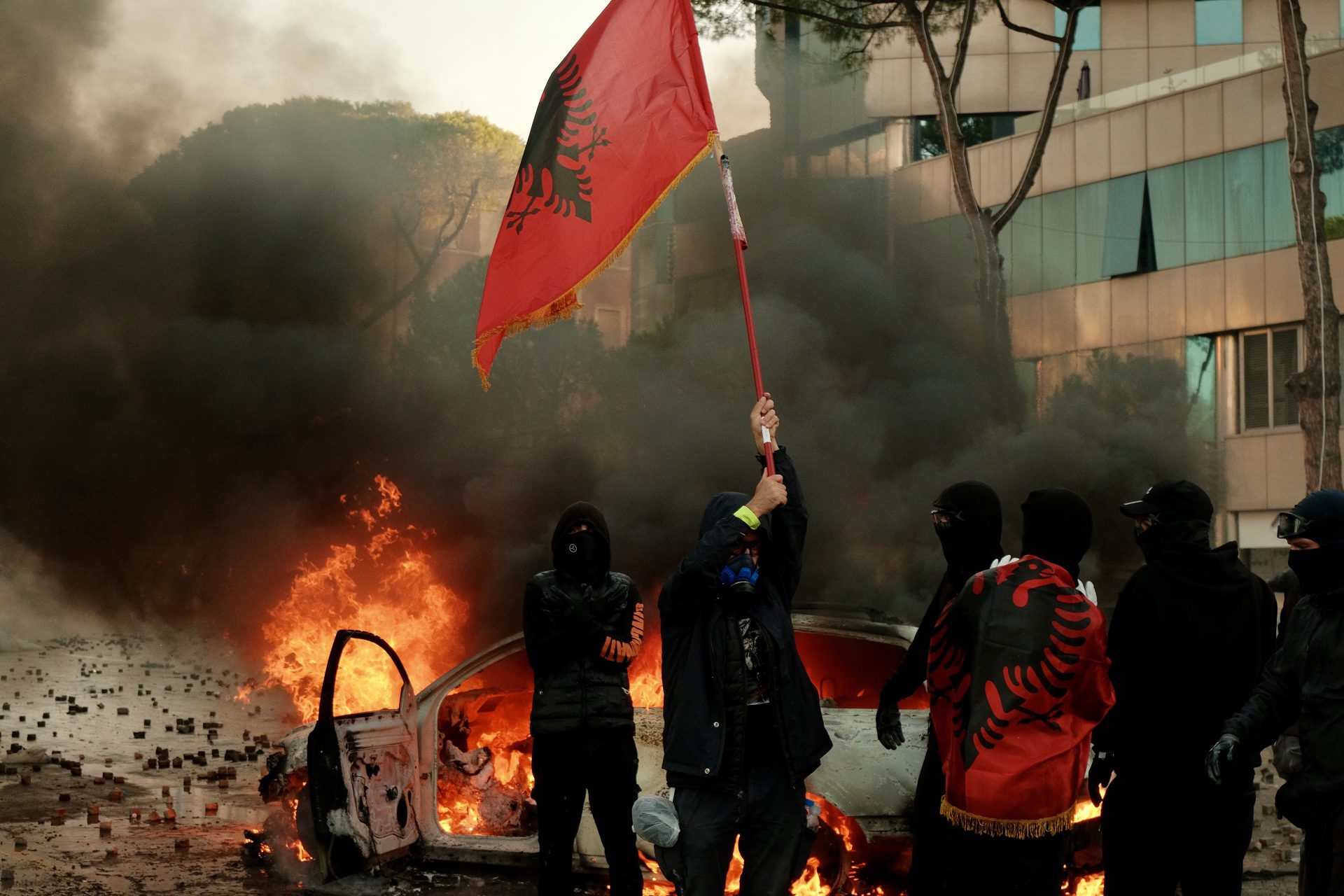
The demonstrations turned destructive on October 14, when protesters stormed the capital and set fire to the Ministry of Education and a nearby Raiffeisen Bank branch. Rioters also targeted the Ministry of Justice, police stations, and the headquarters of both the ruling Socialist Party and the opposition Democratic Party in Shkodër, according to regional monitoring accounts.
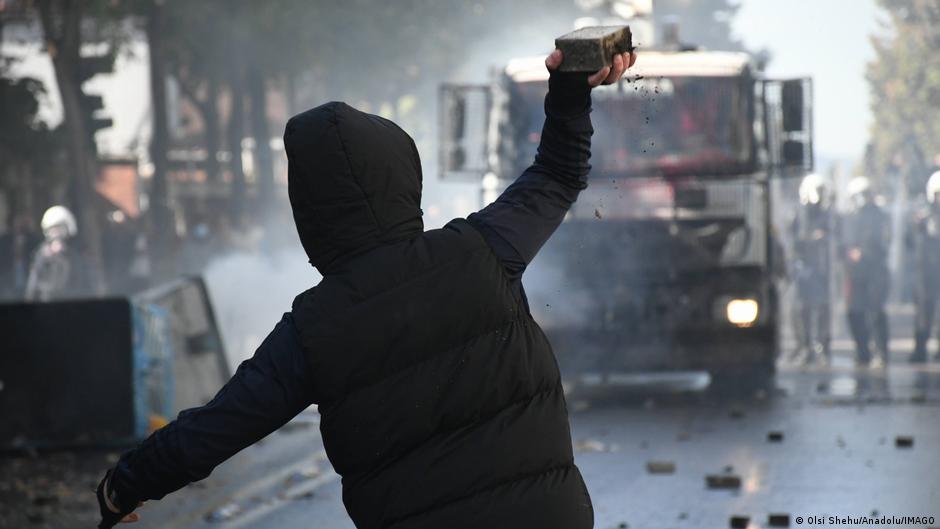
By Thursday, large crowds gathered outside the country’s parliament building as lawmakers clashed internally. Opposition members attempted to disrupt parliamentary sessions and held up photographs of students injured by police forces, while the ruling majority pushed ahead with voting on scheduled legislation.
Protesting is a legitimate right, but it cannot be used as an excuse for violence, city destruction or ugly fighting in the middle of the road.
Albana Kociu, Deputy Prime Minister
Official figures show that 272 people have sustained injuries since the riots began, including 169 police officers, and authorities have filed charges against 388 individuals. Police officials issued statements warning that anyone who uses violence or attacks officers will bear individual responsibility and face the law.
The Rise of the Flamingo Movement and Sazan Island Real Estate Grievances
The current student anger converged with the months-long Flamingo movement, which began in late May with environmental rallies against a luxury resort project planned on Sazan Island and the Vjosa-Narta wetland area. That development, along the southern Adriatic coastline, is backed by an investment firm linked to Jared Kushner, son-in-law of U.S. President Donald Trump.
Protesters argue that the fast-tracked tourism developments sacrifice public goods and natural protected areas for private enrichment. These frustrations over environmental policy quickly merged with long-standing grievances regarding high tuition fees, poor university infrastructure, shrinking job opportunities, and systemic corruption.

Demonstrators maintain that the political establishment has failed to provide a viable economic future for young professionals. Honorary consul general Dikshu Chandra Kukreja noted that shrinking domestic job opportunities are further compounded by returning members of the Albanian diaspora fleeing economic slowdowns across Europe.
Prime Minister Edi Rama Blames Outside Agitators and Hybrid Warfare
Prime Minister Rama, who has governed since 2013 and secured a fourth consecutive term in elections last year, has firmly refused to step down. Instead, he has characterized the youth-driven uprising as a form of hybrid warfare and accused external forces of orchestrating the unrest.
Albanian students & professors reject PM Rama's call for dialogue. According to them, the time for dialogue has passed and the only solution is his resignation. Meanwhile, on social media, the identical behavior of the 🇦🇱 PM is being compared to that of ex Serbian President Vucic https://t.co/z9PpdOTUKe pic.twitter.com/Bhs0oq2TrG
Rama has variously blamed groups such as antifa and pointed fingers at foreign interests for stoking anti-government sentiments. Analysts interviewed by international outlets have expressed skepticism toward these claims, pointing to a lack of verifiable evidence linking international groups to the domestic demonstrations.
I am not being challenged, the government is not being challenged, a government majority or a winning party in the elections is not being challenged but a path is being challenged, a mission is being challenged.
Edi Rama, Prime Minister of Albania
Rama argued that the unrest threatens Albania’s unsteady path toward European Union membership. The European Commission issued statements emphasizing that while the country has made significant strides in judicial reforms and accession criteria since becoming an official candidate in 2014, grievances must be handled through peaceful dialogue, and any police response must remain proportional and within the bounds of the law.
Horizontal Networks Baffle Government Control Efforts
Unlike traditional political uprisings, the current movement operates through horizontal networks without centralized leadership or formal institutional spokespersons. Organizers utilize encrypted messaging and social platforms to coordinate actions within seconds.
This is a horizontal organizational structure, without individual ‘leaders’ and without a central command structure. That is exactly why the government is having such a hard time understanding and controlling the situation.
Semanaj, protest organizer
Protesters have rejected both the ruling Socialist Party and the traditional opposition figures, chanting for accountability across the political spectrum. With neither side showing a willingness to compromise, street clashes continue in waves of lulls and escalations, leaving the immediate political trajectory of the Balkan candidate nation uncertain.