Israeli opposition leader Gadi Eisenkot is racing to assemble a new government before his mandate expires on December 6, working through deep political divisions as caretaker Prime Minister Benjamin Netanyahu faces both a sliding parliamentary majority and a high-stakes corruption trial.
Eisenkot Secures Yisrael Beytenu Democrats Pact
Eisenkot leads the Yashar party. He has secured key coalition agreements with allied factions as he attempts to replace Netanyahu after the inconclusive October 27 election.
On Tuesday, Avigdor Liberman’s right-wing Yisrael Beytenu party signed the first formal coalition pact with Yashar, according to France 24. Just days later, Eisenkot and left-wing Democrats chair Yair Golan agreed to sign a coalition agreement between their two parties.
The deal with the Democrats grants the party four ministerial portfolios. These include an expanded national security ministry, the Ministry of Labour, the Ministry of Communications, and the Ministry of Culture and Sport, which will feature a newly established democracy administration. Golan announced the agreement on social media, writing:
אם לא יבשילו הנסיונות הכנים אותם אני מוביל להקמת ממשלה רחבה, בכוונתי להקים ממשלת חירום לאומית – אותה אפעל להרחיב לפני השבעתה או לאחריה. כל חברי הכנסת יהיו חייבים לציית לצו מצפונם ולקבל את ההחלטה האם תקום ממשלה חדשה, או האם הם נכונים לגרור את מדינת ישראל ואזרחיה לבחירות נוספות…
We promised the people that we would replace Netanyahu and defend democracy. And that is what we will do.
Yair Golan, chair of the Democrats, via France 24
President Isaac Herzog granted Eisenkot the mandate to form a government after 67 members of the parliament endorsed the former Israel Defense Forces chief of staff.
The allied left-leaning Democrats formed from the remnants of the Labor Party and Meretz. They bring their combined totals alongside Yashar and Yisrael Beytenu to 36 lawmakers.
Eisenkot Seeks Outside Backing
Eisenkot’s bloc commands only 36 lawmakers. This falls far short of the 61-seat majority required in the 120-seat Knesset.
To bridge that gap, Eisenkot faces a choice over how to secure parliamentary backing without fracturing his own alliance. One viable path involves a minority government supported from the outside by the 19 lawmakers belonging to Arab-led parties, including the Joint List and the United Arab List, or Ra’am, as reported by the World Socialist Web Site.
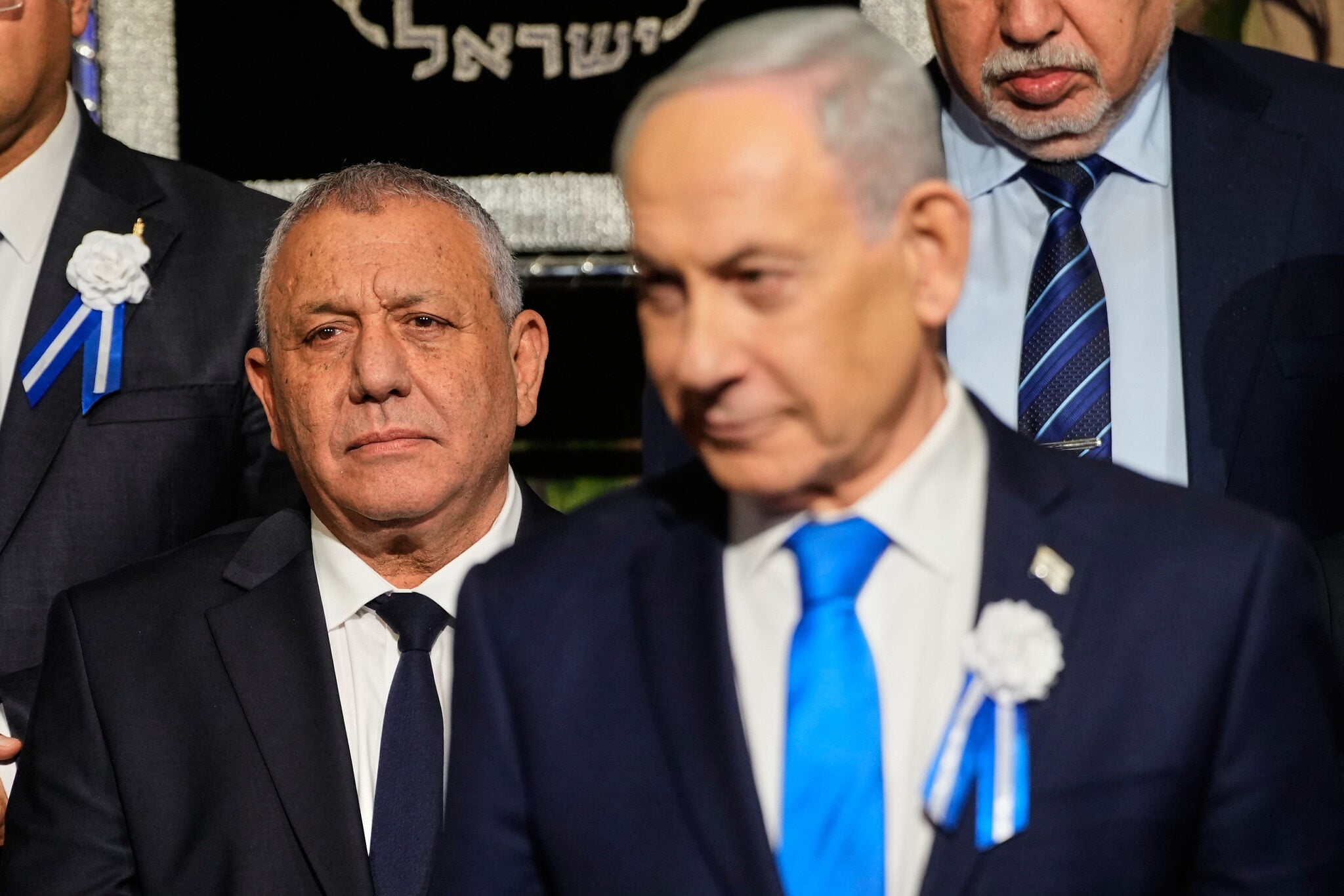
Eisenkot outlined tracks that could involve breaking promises made by change bloc members. These tracks include relying on the Arab parties or avoiding partnerships with haredi Orthodox parties if they refuse compromises on military service.
Mansour Abbas leads the United Arab List. He indicated a willingness to play a role as the Arab community registered unprecedented mobilization in the election to reach 19 parliamentary seats.
Golan has advocated for forming a minority government backed by Arab parties as the only realistic option to remove Netanyahu. Figures on the right side of the anti-Netanyahu camp oppose the move.
Liberman said he will vote against a narrow government relying on Arab party support.
“Swearing in a government with Arab parties' votes would be, for the other side, like [Yariv] Levin's speech on steroids. You don't understand the consequences of this for the country,” B'Yachad party leader and former Prime Minister Naftali Bennett said, warning opposition leaders that such a move could provoke civil unrest in the streets, rivaling the judicial reform protests of 2023.
Why Netanyahu Is Pushing a Rotating Premiership Offer
As Eisenkot weighs his options, Netanyahu is preparing a counter-move to salvage his political survival. Officials in the Prime Minister’s Office said that Netanyahu is willing to serve as the second prime minister in a rotation agreement with Eisenkot, according to The Times of Israel.

The broadcaster said that the offer has been conveyed through unofficial channels to maintain plausible deniability while Likud remains internally divided.
Opposition figures remain suspicious of the overture. “I wouldn't rule out the possibility that [Netanyahu] will offer Gadi Eisenkot a rotation in which Netanyahu would serve second, but everyone needs to understand: this is merely a ploy,” Yisrael Beytenu chairman Avigdor Liberman said during a Knesset plenum session, dismissing the proposal and telling lawmakers that Netanyahu simply wants a repeat election and will drag out talks before finding a pretext to break them off.
Bennett Meets Netanyahu Pushes Change Bloc Unity
Former Prime Minister Naftali Bennett met with Benjamin Netanyahu in the Knesset for two hours. Bennett subsequently engaged with other leaders of the change bloc to push for unity.
Separately, Haaretz reported that Eisenkot could establish a minority government containing 55 seats alongside United Torah Judaism, which holds seven parliamentary seats, with Arab parties abstaining.
Eisenkot also addressed military conscription principles under his party’s Service for All framework. He seeks non-military service alternatives for various sectors without abandoning military service requirements.
Likud lawmakers expressed pessimism in closed-door discussions. They assessed that negotiations for an opposition government have largely been settled.
Eisenkot Outlines Three Coalition Pathways
Gadi Eisenkot described an urgency to form a coalition. “I do not intend to cooperate with such a charade,” Gadi Eisenkot said, adding that the urgency to form a coalition was spurred in part by Prime Minister Benjamin Netanyahu's rhetoric targeting the Arab parties, which Eisenkot warned was placing the Arab Israeli population at risk of attack.
The World Socialist Web Site said that Eisenkot has laid out three distinct pathways for coalition-building. Among them is a minority administration reliant on external backing from Arab-led factions.
Al Jazeera reported that Avigdor Liberman had vowed to shun any governing coalition incorporating an Arab-led faction or relying on ballots cast by Palestinian citizens of Israel. Those very ballots previously propelled Liberman to the chairmanship of the Knesset’s Foreign Affairs and Defense Committee.
Naftali Bennett told reporters that if a unity government is not possible, the opposition will move forward with a less desirable alternative, according to ynetglobal.
Bennett Urges Citizens Block Thoroughfares Protest
Quoted by The Jerusalem Post, former prime minister Naftali Bennett characterized the administration as legal yet illegitimate due to its agenda to dismantle Israel’s democratic foundations. He urged citizens to take to the streets and block thoroughfares in protest.
Barak said that civil disobedience is the duty of citizens when the government has lost its senses.
Former Israeli diplomat Alon Pinkas told the Australian Broadcasting Corporation that court developments would not affect the coalition-building process. He said the attorney general had no choice but to accept the judge’s recommendation.
Pinkas added that if Eisenkot succeeded, all the ongoing legal and political turbulence would be forgotten.

Judges Urge Dropping Bribery Charge
External legal developments are compounding the political pressure in Jerusalem. Judges in Netanyahu’s ongoing corruption trial in Jerusalem urged Attorney-General Gali Baharav-Miara to consider dropping Case 4000, the sole bribery charge against the caretaker prime minister.
Gadi Eisenkot’s path to the premiership is built on an extensive military and political background. He served as a minister without portfolio in Israel’s unity government from 2023 to 2024 and was the 21st chief of staff of the Israel Defense Forces from 2015 to 2019. Earlier in his military career, he served as military secretary to the prime minister from 1999 to 2001 and held numerous leadership roles in the Golani Brigade.
Eisenkot’s 28-day presidential mandate ticks down toward the December 6 deadline. The opposition leader continues preparations to swear in a government next week.