
Home heating oil costs could climb by roughly 50% this winter, with average household spending projected to exceed $2,600 amid ongoing global supply disruptions caused by the wars in Iran and Ukraine, according to industry data and federal estimates.
Families relying on heating oil face a severe financial squeeze as the National Energy Assistance Directors Association projects average heating costs will rise by about $878 this winter compared to last season. Those steep projections mark a sharp escalation from earlier industry estimates issued in mid-September.
Retail prices have already surged past significant milestones. On Long Island, the average price for heating oil climbed to $6.37 a gallon in late September, representing a 65.9% jump over the $3.84 recorded during the same week a year earlier, according to state figures. Retail prices in Massachusetts and across Maine are hovering near $6.12 and $6 per gallon, respectively.
Global Supply Disruptions Fuel Costs
The price acceleration stems from disruptions across the distribution network. Unsteady oil supplies resulting from the ongoing conflict in Iran and the war in Ukraine, alongside declining refinery activity, have created challenges for the market.
These overseas pressures arrive on top of already inflated baseline prices for household essentials. Michael Ferrante described the upcoming season as the most troubling scenario
he has witnessed in decades, warning that both consumers and small retailers will struggle to keep pace with the mounting expenses.
Roughly 82% of all home heating oil in the United States is consumed in the Northeast, where many states lack natural gas pipelines. While only about 3% of American households use oil as their primary heat source, those residing in Northeastern states absorb the impact most acutely.
Fuel Markets Split Across Gas, Electric, and Propane
While oil-heated homes face highs, the outlook varies sharply by fuel type. According to the Energy Information Administration Winter Fuels Outlook, natural gas inventories remain above average, and prices are expected to drop about 9% as a stronger El Niño pattern brings milder winter weather to much of the country. Propane users can similarly expect adequate supply levels and lower average expenditures.
Electricity markets present a mixed picture. Although milder weather may reduce overall system runtime, wholesale electricity prices are projected to climb 11% nationally.
- Wholesale electricity prices in the mid-Atlantic PJM market are expected to jump about 41%.
- Prices in the Northwest Mid-Columbia region are projected to fall by 23%.
- Natural gas and propane households can anticipate spending less on average than they did last winter.
Households Face Hard Budgeting Choices
Lisa Furman, who owns a home in Hancock County in northern Maine, expects to pay $3,400 for heating oil over the next 10 months, more than double the $1,500 she typically spends.

Now you’re going to double my heating oil bill? This is just a slap in the face,
she said.
Seniors and fixed-income residents face acute vulnerabilities, as they are often more susceptible to cold temperatures.
States Mobilize Emergency Funding
In response to the mounting crisis, state leaders have mobilized emergency funding and targeted relief programs. Massachusetts Gov. Maura Healey declared a State of Energy Emergency, unlocking nearly $150 million in relief and expanding assistance to middle-class households that heat with oil. Rhode Island directed $28 million in reserves toward electric-bill relief, and Maine Gov. Janet Mills announced $40 million in automatic electricity discounts for low-income residents.
New York has rolled out financial buffers, including the distribution of energy rebate checks through the $1 billion Protecting Our Wallets Energy Rebate initiative for qualifying single and joint filers. Meanwhile, federal assistance programs face administrative strain. State officials are managing the Low Income Home Energy Assistance Program without dedicated federal staff following personnel changes at the Department of Health and Human Services.

Community action agencies report soaring demand. Jason Parent, chief executive of Avec Community Action in Maine, noted that average HEAP awards of about $700 cover only a fraction of winter fuel needs when prices sit near $6 per gallon.
Homeowners Adopt Energy Saving Steps
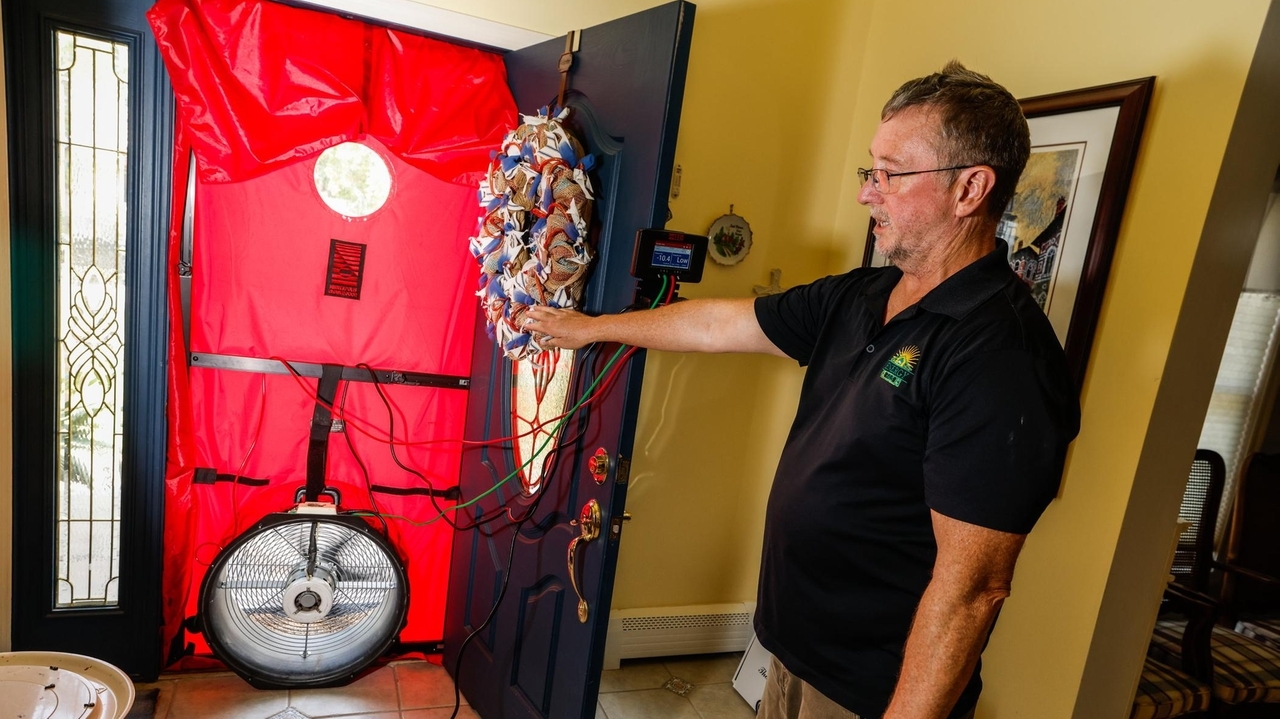
Energy efficiency experts emphasize that home weatherization and system maintenance offer direct avenues to reduce fuel consumption before temperatures drop further.
Alex Valentino of PSEG Long Island noted that utility customers can access home energy assessments to identify heat loss. For non-utility customers, NYSERDA’s EmPower+ program provides similar evaluations and efficiency support for income-eligible residents.
- Sealing air leaks around doors, attics, and recessed lighting with caulk or weather stripping.
Long-term solutions, such as converting from oil-fueled boilers to electric heat pumps, remain costly.


