
Gestational diabetes affects 5 to 9 percent of U.S. pregnancies annually, according to the Centers for Disease Control and Prevention.
- Pennington Biomedical researchers published a review examining multi-generational health risks associated with gestational diabetes mellitus.
- Women with a history of gestational diabetes face an eight- to 10-fold higher risk of developing type 2 diabetes later in life.
- A study published in Molecular Genetics and Genomics evaluated DNA methylation markers for gestational diabetes in South African women.
Review Connects Gestational Diabetes to Long-Term Health Risks
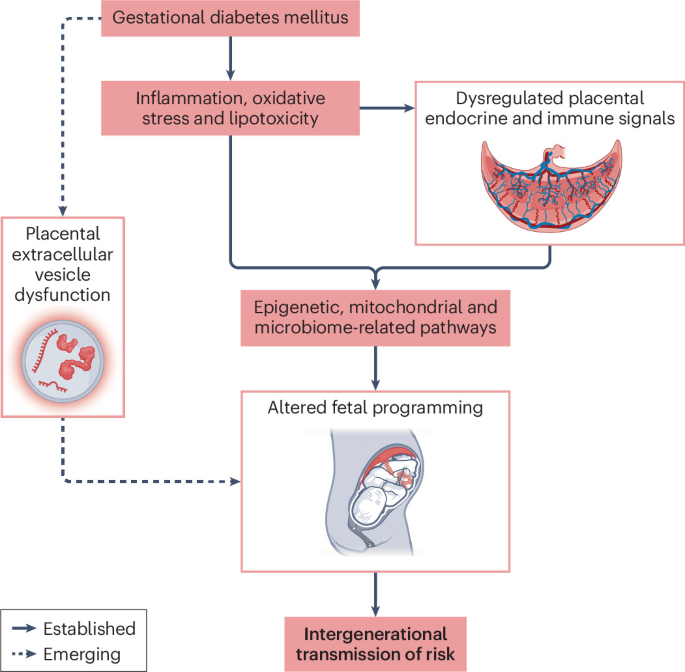
A review published in Nature Reviews Endocrinology outlines how gestational diabetes mellitus extends beyond pregnancy. Worldwide, gestational diabetes affected an estimated 15.6% of pregnancies in 2024 according to the International Diabetes Federation. In Malaysia, prevalence rose from 12.5% in 2016 to 27.1% in 2022.
Dr. Yun Shen and Dr. Gang Hu of LSU’s Pennington Biomedical Research Center, alongside international colleagues, evaluated evidence linking the condition to long-term health risks across mothers and children. Women with a history of the condition experience an eight- to 10-fold higher risk of developing type 2 diabetes than women without it. Cardiovascular disease and hypertension risks also rise, with type 2 diabetes risk peaking about three to six years after delivery.
“Rather than waiting until diabetes or cardiovascular disease develops years later, we have an opportunity to begin prevention much earlier, when interventions may benefit not only the mother but potentially her child as well,” Dr. Gang Hu, director of the Chronic Disease Epidemiology Laboratory at Pennington Biomedical and the review's corresponding author, said.
Women aged 35 and above, particularly those with obesity, face a higher risk of developing the condition.
Gestational diabetes gives clinicians a window into future health risk at a relatively young age.
Dr. Gang Hu, director of the Chronic Disease Epidemiology Laboratory at Pennington Biomedical
Intrauterine exposure to maternal hyperglycemia connects to greater adiposity and cardiometabolic risk in offspring. But distinguishing the intrauterine environment from shared postnatal and genetic factors is complex. Infants exposed to gestational diabetes face an increased risk of future obesity and metabolic disorders.
“Understanding differences in insulin resistance, insulin secretion, glucose levels and other risk factors may eventually help us determine which mothers and children would benefit most from closer monitoring and more personalized prevention strategies,” Dr. Yun Shen, first author of the review and assistant professor in Pennington Biomedical's Chronic Disease Epidemiology Laboratory, said.
Gestational diabetes does not develop the same way in every patient.
Dr. Yun Shen, assistant professor in Pennington Biomedical’s Chronic Disease Epidemiology Laboratory
Researchers Evaluate South African Cohort Epigenetic Markers
Technical validation in a matched group comprising 12 participants with gestational diabetes and 12 without confirmed differential methylation consistent with earlier genome-wide array findings. Researchers observed decreased methylation at cg23643951 within CAMTA1 and cg21910650 within KLHDC3/MEA1, alongside increased methylation at cg16306629 near COLEC10.
Within the technical validation group, cg21910650 methylation was inversely correlated with fasting glucose and 1-hour oral glucose tolerance testing, while cg16306629 was positively correlated. These distinct methylation signatures were not replicated in a larger biological validation group consisting of 46 women with gestational diabetes and 135 non-affected participants.
Clinical Management and Prevention Strategies Outlined
Medical guidance from the University of Alabama at Birmingham highlights that gestational diabetes typically develops during the latter half of pregnancy and often presents no noticeable symptoms. Routine screening occurs between 24 and 28 weeks via a glucose tolerance test. Managing blood glucose requires stricter targets during pregnancy than for non-pregnant adults.
Alexandra Dodd noted that a common HgbA1c goal is less than 6 percent during pregnancy, compared to under 7 percent in non-pregnant adults. When dietary changes and physical activity are insufficient to control blood sugar, insulin may be recommended. Continuous glucose monitors and insulin pumps may help certain patients maintain more precise glucose control.
Postpartum care offers a window for risk reduction. The Pennington Biomedical review recommends glucose testing four to 12 weeks after delivery, followed by ongoing screening every one to three years if initial results are normal.
Clinical interventions can alter trajectories. The Tianjin Gestational Diabetes Mellitus Prevention Program, a randomized trial involving 1,180 women led by Hu, demonstrated that individualized counseling focused on diet, physical activity, and weight management resulted in a 46 percent lower incidence of type 2 diabetes over an average follow-up of 4.5 years compared to usual care.
As the largest academically-based nutrition research center in the world with the greatest number of obesity researchers on faculty, the Pennington Biomedical Research Center maintains an extensive reputation in health science-focused investigation. Its comprehensive programs conduct clinical, basic, and population science research aimed at preventing common chronic conditions such as heart disease, diabetes, hypertension, and cancer.
Dr. Jennifer Rood, interim senior vice chancellor and executive director of Pennington Biomedical, said that gestational diabetes carries long-term consequences. The efforts of Hu, Shen, and their peers help bridge pregnancy events with the subsequent health of mothers and children years down the line.