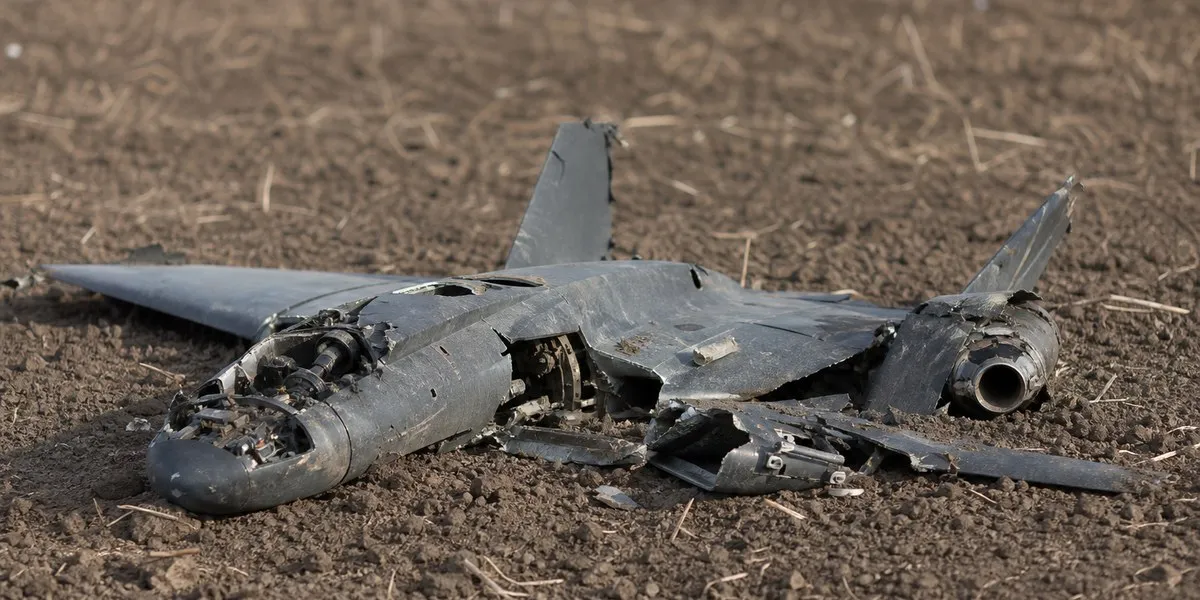
A Russian Geran-4 attack drone equipped with a warhead crashed near residential homes in Moldova, prompting the Ministry of Foreign Affairs to expel a Russian embassy staff member and drawing strong condemnation from Maia Sandu.
Explosive Dron Crash Shakes Telenesti District
The unmanned aerial vehicle came down just 100 meters from a residential building in the village of Chistelnita, located in Moldova’s Telenesti district. According to information released by the Moldovan Ministry of Defense, specialists secured the site overnight following the crash. Operating under strict security protocols, military experts subsequently dismantled and destroyed the warhead attached to the aircraft.
Maia Sandu denounced the incident sharply, stating that the assault drone crashed near residential buildings and a power plant. She condemned Russia for continuing to endanger the lives of Moldovan citizens. In response to what officials termed another incident involving a drone, the Moldovan Ministry of Foreign Affairs declared a member of the Russian embassy staff persona non grata and ordered their expulsion from the country. The Moldovan defense agency confirmed that the machine fell on Friday, October 23, and that experts formally identified the device the following day on Saturday, October 24.
Technical Profile and Intelligence Value of Jet-Powered Geran-4 Drones
The downed aircraft has been identified by defense specialists as a Geran-4 drone. International defense reporting notes that recovering relatively intact debris from such advanced systems gives Western intelligence agencies a rare opportunity to examine the technology powering newer Russian strike drones. Analysts can now inspect onboard computers, navigation systems, processors, antennas, communication gear, and engines to evaluate how these systems withstand electronic warfare jamming.
Unlike Shahed-136 munitions initially supplied by Iran, the Geran-4 reaches speeds up to 600 kilometers per hour. That velocity is more than triple the pace of the Shaheds. Ukrainian air defense commander Volodymyr Serdiuk explained to media outlets that the high speed of these drones makes locking onto them for interception significantly more difficult. The Geran-4 is similar to the newer Geran-5, which features a turbojet engine and carries a heavier payload.
Russia Struggles to Update Production for Faster Platforms
The downed aircraft shares design similarities with the heavier-payload Geran-5. Analysts at the American Center for Strategic and International Studies point out that Russia’s primary challenge is its capability to rapidly test modifications in actual combat conditions and push manufacturing updates out to production lines within a matter of weeks.
Defense efforts face steep hurdles against these faster platforms. Ukraine is also actively developing jet-powered interceptor drones.
Defense analysts also note the possibility of future technology transfers back to Iran. Tehran already operates the turbojet Shahed-238, which the Center for Strategic and International Studies estimates can reach speeds between 300 and 600 kilometers per hour while carrying up to 90 kilograms of payload.