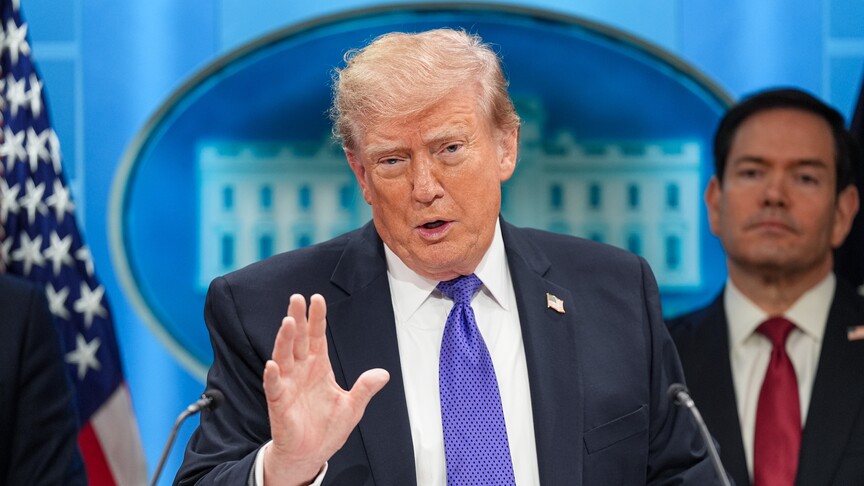
President Donald Trump said Friday that Tehran wants a diplomatic settlement to end hostilities but has yet to offer terms acceptable to the White House.
Speaking at a news conference following his return from an Asian diplomatic tour, Trump declared that the United States is seeking a permanent agreement rather than an arrangement that future administrations could easily dismantle. The remarks come as regional tensions remain high nearly nine months after initial military strikes disrupted energy transit through the Strait of Hormuz.
Trump Demands Durable Pact and Rejects Temporary Fixes
Elaborating on his strategy in subsequent interviews, Trump emphasized that any new pact must outlast political shifts in Washington to permanently bar Iran from acquiring nuclear weapons. “What I’m doing is I’m going to make it so that if we have an incompetent president in four years or 15 years or 20 years, I wouldn’t make a deal that is going to be permanent,” Trump told Fox News.
Trump was joined at the White House press conference by senior aides, including Vice President JD Vance, Secretary of State Marco Rubio, and Chief of Staff Stephen Miller. During the briefing, Trump said that the Iranian government had been misleading people for 51 years, a statement that drew attention given that the Islamic Republic was established following the 1979 revolution 47 years ago, while Shah Mohammad Reza Pahlavi ruled 51 years prior as a close Washington ally.
U.S. President Donald Trump also stated during the conference that the United States would respond to any attempt by Tehran to carry out a radioactive dirty bomb attack on American soil, noting that intelligence indicated possible exploration of chemical and biological weapons after military operations damaged its nuclear infrastructure, while Iranian Foreign Ministry officials dismissed related reporting as baseless.
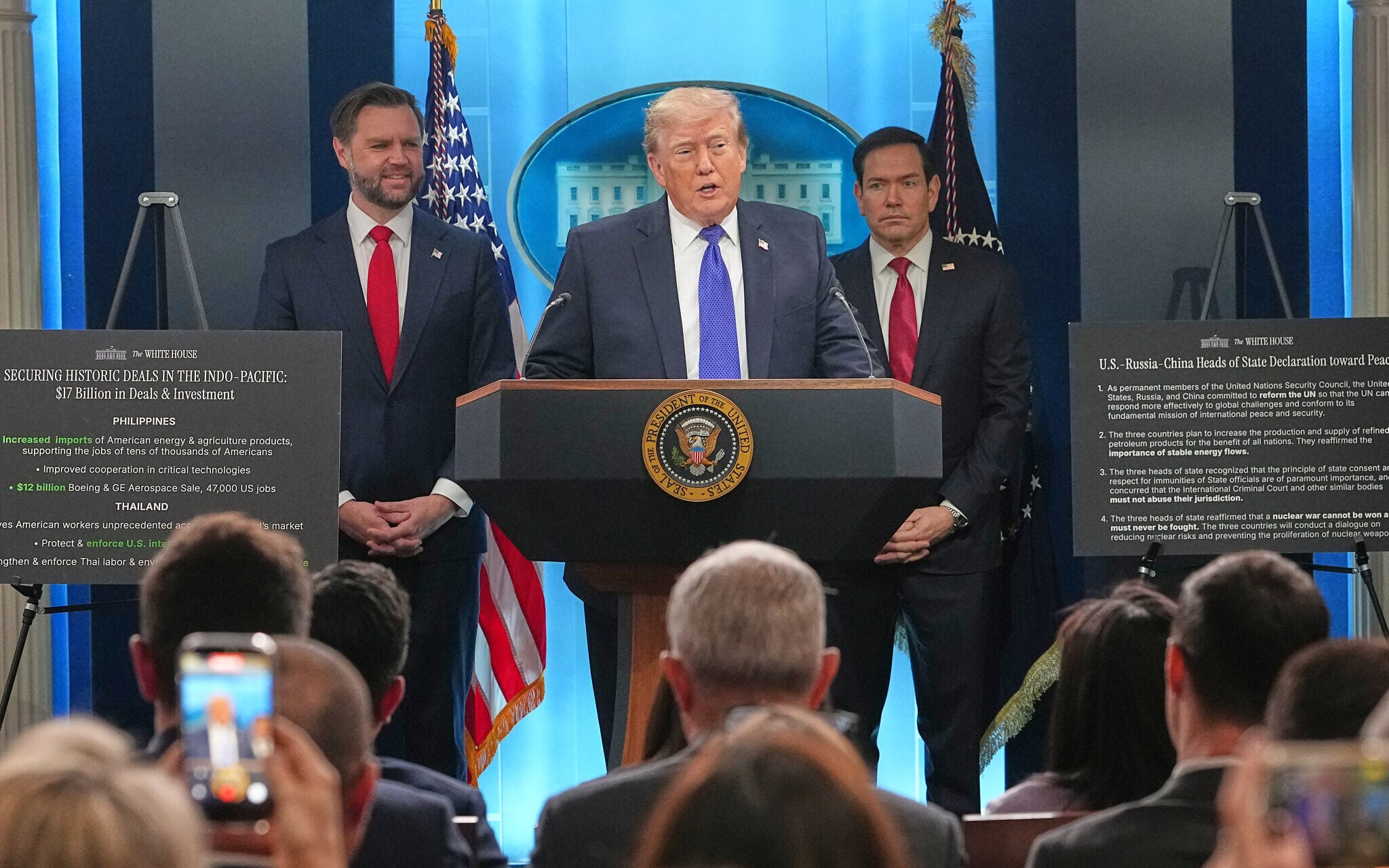
While addressing reporters, Trump remarked on the historical trajectory of leadership in Iran, stating his administration has dealt with successive groups of leadership and noting that current figures are arguably more reasonable yet remain difficult to negotiate with. The administration’s push for a lasting framework follows prior breakdowns in diplomatic accords.
In May 2018, Trump withdrew the United States from the 2015 Joint Comprehensive Plan of Action (JCPOA) negotiated under former U.S. President Barack Obama, arguing that the deal was inadequate, and subsequent efforts by the Biden administration to revive the pact broke down in 2022.
We make a deal, and then they break the deal the next day.
President Donald Trump, via Anadolu Ajansı
While Trump oscillated between favoring an agreement to end the fighting and suggesting the U.S. does not need a deal, Prime Minister Benjamin Netanyahu’s government has reportedly pushed Washington to join Israel in a renewed air campaign lasting four to seven days due to concerns over fast ballistic missile production and underground facilities.
Strategic patience has been described by former National Security Council senior Mideast director Michael Singh as the most attractive and sustainable approach given significant escalation risks, potential casualties, and uncertain returns.

Washington Maintains Economic Squeeze Amid Stalled Talks
The diplomatic stalemate persists alongside an ongoing economic pressure campaign targeting Iran’s international financial channels. Trump said that the Iranian government had spent decades misleading negotiators, framing the current diplomatic friction within a long history of distrust.
U.S. troops have maintained a naval blockade off the waters of Iran to stem the flow of Iranian oil into the global market, overseen by the Joint Maritime Information Center coalition. In related regional developments, Ali Balali, an adviser to the commander of the Guards’ Aerospace Force, warned that Iranian forces are on high alert to respond to further attacks, while Ebrahim Azizi, chairman of the Iranian parliament’s national security and foreign policy committee, posted on X that Iran cannot be blockaded.
Meanwhile, the Saudi-led coalition announced strikes against targets used by rebels to smuggle weapons after rebels attacked Saudi Arabia, and Iraqi security forces deployed to a city south of the capital to assert control in a militia stronghold.
Political Fallout at Home Over the Nine-Month Conflict
The protracted military engagement has triggered domestic political challenges for the White House. Voter backlash over rising fuel prices and the unpopularity of the conflict contributed to sweeping losses for the Republican Party in the midterm elections on November 3, handing Democrats control of both congressional chambers.
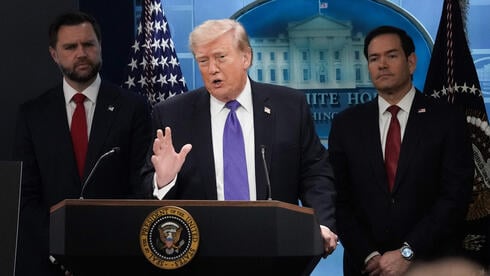
Asked during the White House press conference whether the war was worth the electoral cost, Vice President JD Vance declined to say whether he would have authorized the strikes that Trump insists were necessary to prevent Tehran from acquiring a nuclear weapon, while emphasizing the primary national security objective.
Vance, born James Donald Bowman in 1984 in Middletown, Ohio, enlisted in the Marine Corps after high school and served as a military journalist in public affairs until 2007. He rose to national prominence with his 2016 memoir Hillbilly Elegy, which was adapted into a film in 2020.
After a career in venture capital and a single term representing Ohio in the Senate from 2023 to 2025, Vance became the first Marine Corps veteran, the first Iraq War veteran, and the first millennial to serve as vice president.
The goal of keeping Iran from getting a nuclear weapon is absolutely what we need to be doing.
JD Vance, Vice President of the United States, via The Times of Israel
Trump affirmed his full support for the administration’s stance while making clear that he would authorize the military actions again if faced with the same decision, noting that fuel prices had risen less than expected during the nine-month conflict.