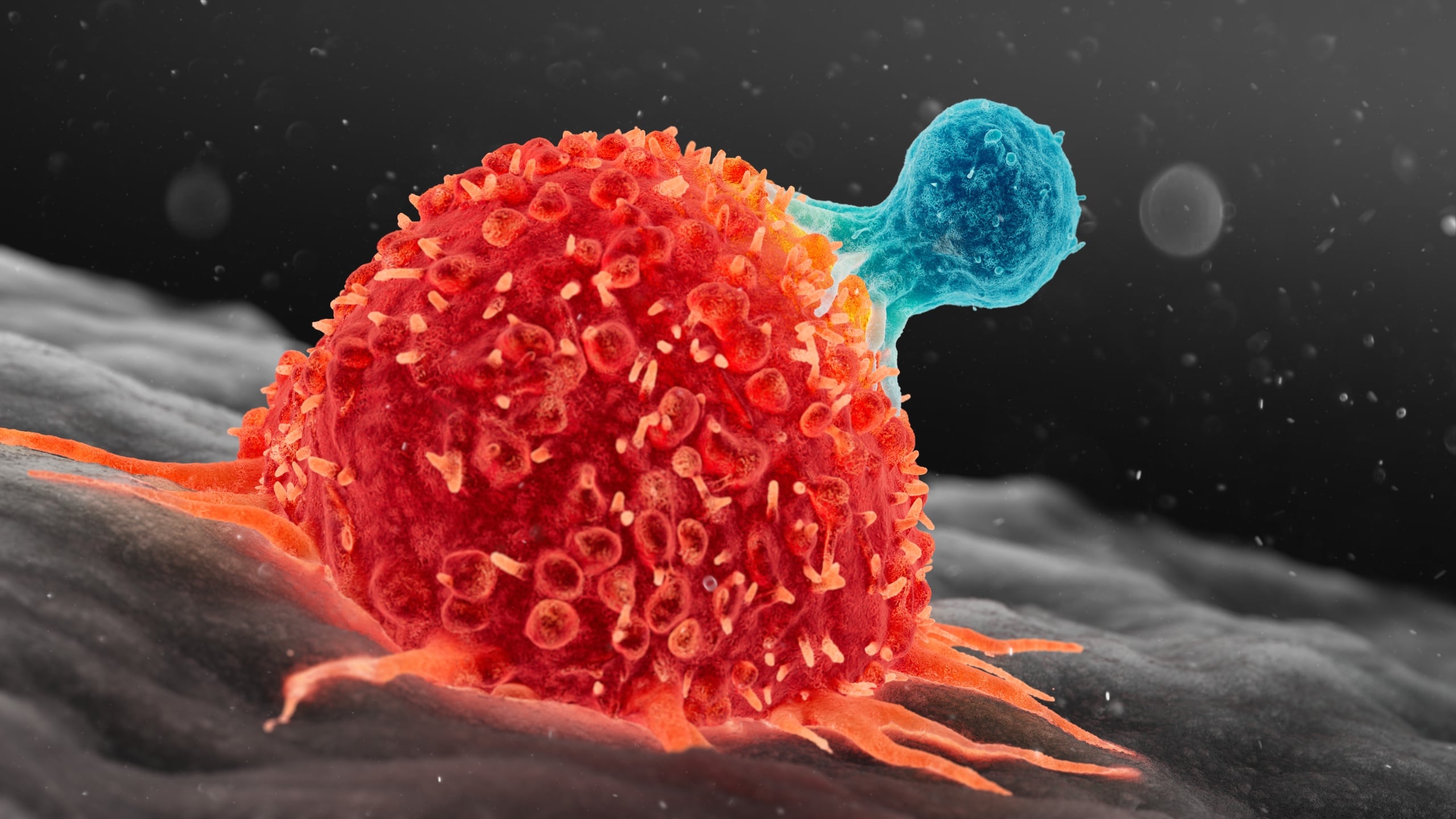
A three-year-old child diagnosed with malignant liver cancer experienced a complete regression after receiving two infusions of CAR T cells programmed to recognize glypican-3.
When clinicians first evaluated the young patient, he presented with a large liver mass measuring 11.2 cm by 9.6 cm by 7.1 cm. The findings were published in The New England Journal of Medicine. The cancer had also metastasized to his lungs with potential spread to his bones.
Despite three rounds of chemotherapy, surgical removal of his primary tumor, and two operations to clear his lungs, the cancer rapidly returned.
The boy enrolled in the CARE study. This trial is the first human test of an experimental form of CAR T cell therapy designed to target solid tumors.
Researchers engineered the treatment from the patient’s own T cells. They programmed the cells to recognize glypican-3, a protein frequently found in liver cancers.
Chimeric antigen receptor T-cell therapy involves collecting a patient’s immune cells from their blood, genetically modifying them in a laboratory, and infusing them back into the body to hunt abnormal cells.
Standard CAR T treatments transformed outcomes for leukemias and lymphomas since the Food and Drug Administration approved the first version in 2017. Target solid tumors proved exceptionally difficult due to complex cellular environments and the risk of attacking healthy tissue.
Investigators engineered the GPC3-CAR cells to express interleukin-15 and interleukin-21 immune proteins. This helped improve the tumor-killing capability of the treatment.
Following his initial infusion, the patient exhibited a partial response. Alpha-fetoprotein levels fell and CT scans showed tumor shrinkage.
This case demonstrates that a durable complete response in a chemotherapy-resistant solid tumor can be achieved entirely in the outpatient setting without systemic toxicity.
David Steffin, Baylor College of Medicine
Eight weeks after his initial treatment, the boy received a second dose. Follow-up examinations revealed no remaining signs of active disease aside from residual scarring, and he remained disease-free at the twelve-month mark.
Hepatocellular carcinoma is among the most prevalent malignancies globally. Research involving Seattle Children’s Hospital and Baylor College of Medicine tracks the progression of solid-tumor immunotherapy.
Conducted in Houston, Texas, the CARE study operates through Baylor College of Medicine, a private medical school serving as an independent institution within the Texas Medical Center. Within this setting, investigators help advance solid-tumor immunotherapy by engineering experimental CAR T cells designed to recognize specific cancer proteins.
This study provides evidence that these novel CAR T cells may be a safe and effective modality for hepatoblastoma and highlights the need for further assessment in patients with GPC3+ solid tumors.
Andras Heczey, Seattle Children’s Hospital and the University of Washington
The CARE study runs at Baylor College of Medicine. A similar clinical trial designated as IMPACT operates at Seattle Children’s Hospital.