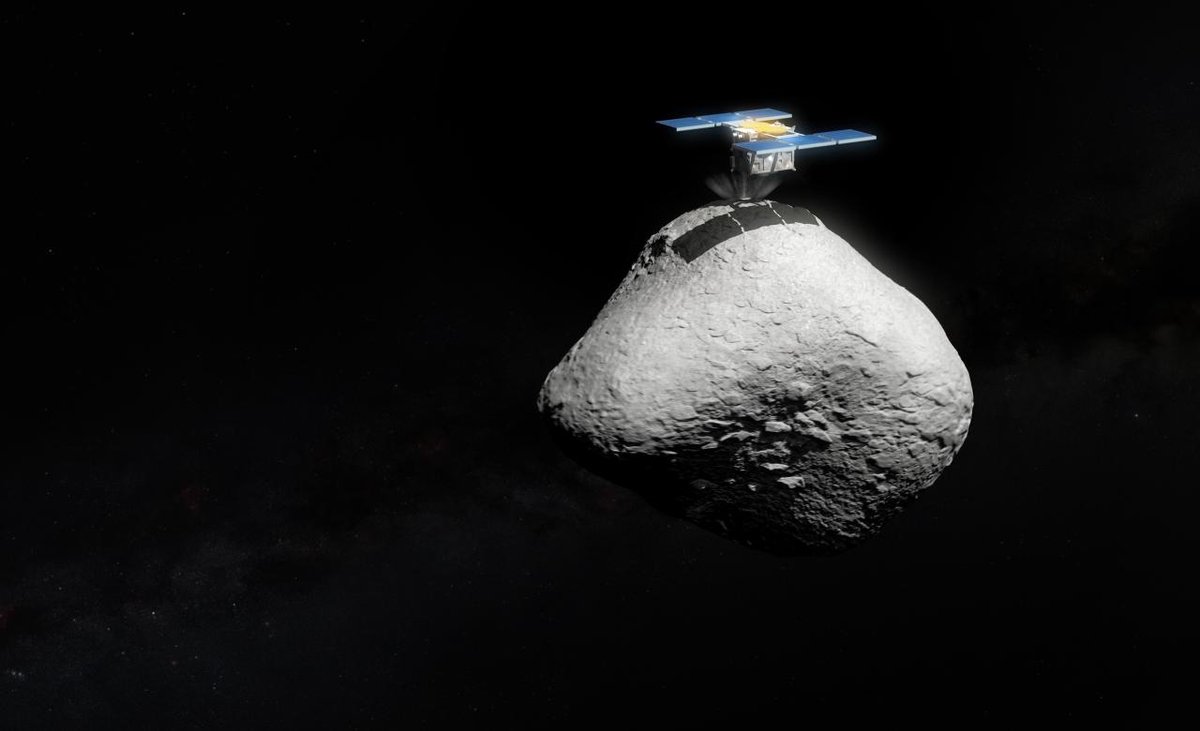
China has formally initiated preparations for its most distant planetary exploration effort yet, launching a call for instrument proposals to study Jupiter and place a robotic lander on its icy moon Callisto.
Soliciting Scientific Payloads for Tianwen-4
The China National Space Administration announced on November 13, 2026, that it had begun soliciting proposals for scientific instruments aboard Tianwen-4, according to The Daily Galaxy –Great Discoveries Channel.
BRERAKING: Tianwen-4 is going to bring a lander on Callisto. CNSA’s payload call lists three major goals — Jupiter orbit, Callisto orbit, and Callisto landing. No Uranus flyby mentioned. Major update for this 2030 mission. Thoughts? https://t.co/XOx1BtoV8V pic.twitter.com/voFWGSQy57
The agency’s Lunar Exploration and Space Engineering Center is seeking research and development submissions for 12 scientific payloads divided between a primary orbiter and a dedicated lander. Previous planning information indicates that the mission is scheduled to launch around 2029 aboard a Long March 5 heavy-lift rocket from the Wenchang Space Launch Center in Hainan province.
The mission builds on earlier milestones such as the Chang’e 6 lunar far side sample return in 2024. However, journeying to the outer solar system introduces extreme hurdles in communication, navigation, and power generation. To conserve propellant during its transit, the spacecraft will execute a slingshot flyby of Venus in April 2030, followed by a pair of Earth gravity assists in 2031 and 2033 before reaching the Jovian system.
Orbital Instruments and Surface Probes at Callisto
The Tianwen-4 orbiter will carry 10 instruments split between investigating Jupiter’s vast magnetosphere and observing Callisto from above. Magnetospheric gear includes magnetic field and wave detectors, particle analyzers, a soft X-ray spectrometer, and a far-ultraviolet imager. Meanwhile, remote sensing tools focused on the moon comprise cameras, a laser altimeter, a visible-infrared imaging spectrometer, and a gamma-ray spectrometer.
A Hidden Ocean Beneath Ancient Ice
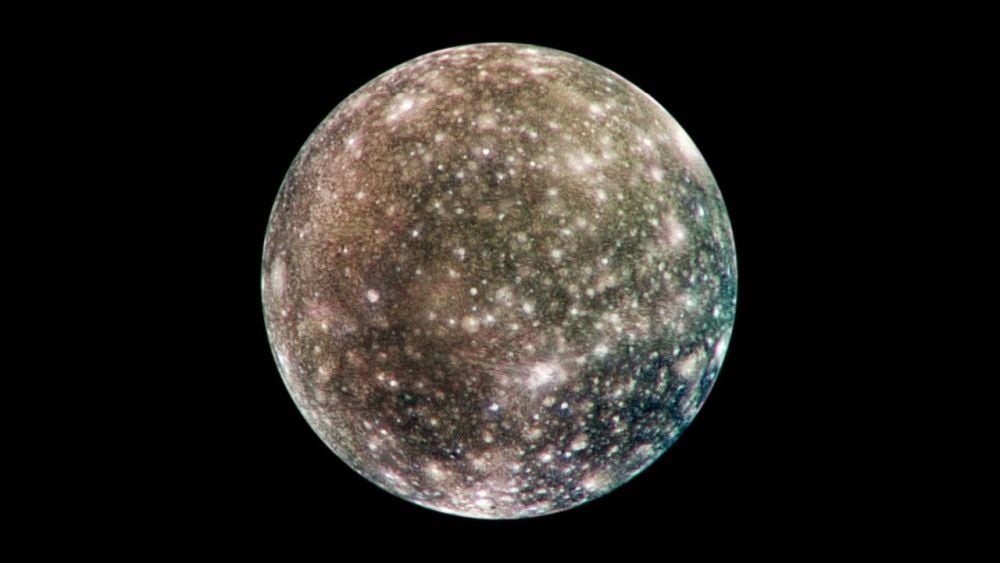
Callisto stands as the second-largest moon of Jupiter and the most heavily cratered body in the solar system. Its ancient, stable surface lacks the extreme tidal heating and volcanic upheaval found on Io, making it a geologically quiet target outside Jupiter’s harshest radiation belts.
China’s Tianwen-4 Jupiter mission to attempt Callisto moon landing https://t.co/rwmqECi6EC pic.twitter.com/4M1Fv9VuoK
Researchers hope the combined orbital and surface data will resolve ambiguities regarding an underground saltwater ocean. Although Galileo spacecraft observations indicate that the moon reacts inductively to Jupiter’s time-varying magnetic field, its internal structure remains unverified. Al Jazeera noted that confirming a subsurface liquid layer could illuminate how icy worlds preserve water far from the Sun and provide insight into conditions suitable for microbial life.
China’s project joins a broader wave of outer solar system exploration. NASA launched the Europa Clipper mission in October 2024 to examine Europa, with an arrival date set for April 2030. While American efforts target Europa, Tianwen-4 aims to reach a Jovian orbit in 2035, execute gravity assists at Callisto, and enter an orbit around the moon by February 2038 before releasing its lander.
BREAKING: China has officially unveiled plans to attempt humanity’s first-ever landing on one of Jupiter’s moons, targeting the icy world of Callisto. China’s space agency has confirmed that its Tianwen-4 mission will attempt to orbit Jupiter, enter orbit around Callisto and… pic.twitter.com/NU8MzoQw4a
China National Space Administration’s deep-space portfolio now spans the Moon, Mars, and a near-Earth asteroid. CNSA’s Lunar Exploration and Space Engineering Center currently operates Tianwen-2, which is exploring the co-orbital asteroid 469219 Kamoʻoalewa and plans to visit the active asteroid 311P/PanSTARRS while collecting regolith samples.
Tianwen-4 extends this trajectory toward the outer solar system.
Mission Timeline and Technical Challenges
The China National Space Administration has maintained discussions regarding a Jovian system mission since 2018. Selected implementing organizations must meet specific technical feasibility and scientific competence criteria. Selected proposals will contribute to understanding how the massive Jovian magnetic field interacts with the solar wind, alongside examining irregular moons during initial orbital phases.