Boston Children’s Hospital researchers have found a genetic mechanism that may explain why autism occurs four to five times more often in males than in females. Their study, published in Nature, identifies the ZFX gene as a driver of this male bias by regulating a large network of autism-related genes.
Genes Converge Through ZFX
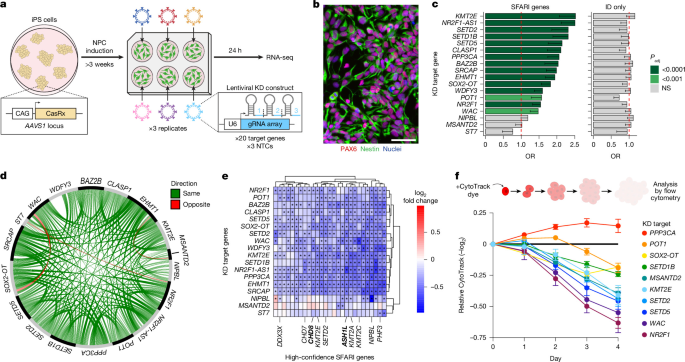
Many diverse genes linked to autism function as part of a concerted network rather than acting in isolation.
Disrupting a single gene in this network can trigger changes across many others. Researchers describe this phenomenon as transcriptomic convergence
.
This ‘transcriptomic convergence,’ as we call it, gives us a way to understand how hundreds of different genes can cause similar phenotypes, a similar condition.
Andersen, via News-Medical
ZFX Protects Females from Autism Symptoms
Females often show less severe symptoms than males even when they carry autism-associated mutations. This female protective effect is more complex than simple inheritance patterns, even though the X chromosome is central to the phenomenon.
In human cells, a process called X chromosome inactivation
turns off most genes on one of the two X chromosomes to prevent toxicity. More than sixty genes on the X chromosome escape this inactivation.

The transcriptional activator ZFX is one of these exceptions. Because ZFX escapes inactivation, females express it from both X chromosomes. This results in higher expression levels in females than in males.
The study found that ZFX regulates the expression of numerous autism-related genes.
Christopher Walsh, MD, PhD, is a senior study author and investigator of the Howard Hughes Medical Institute. He characterized the findings as a way to identify a potential driver of autism’s male bias
through the ZFX gene.
Scientists Target Gene Networks for Therapy
Scientists might target fewer, more influential genes that control large networks instead of creating individual therapies for hundreds of different genetic mutations.
Researchers suggested that upregulating ZFX in males might offer them a level of protection closer to that experienced by females. Walsh noted that boosting ZFX levels could also be beneficial for females. He suggested that a rising tide lifts all boats.
Institutions Support Research Using Human Cell Models
The team utilized human cell models to observe these genetic patterns.
The research was conducted under protocols approved by the Boston Children’s Hospital IRB. The study received support from several institutions, including the Simons Foundation Autism Research Initiative and the Howard Hughes Medical Institute. The K. Lisa Yang Center for Autism Research at Harvard University also provided support.