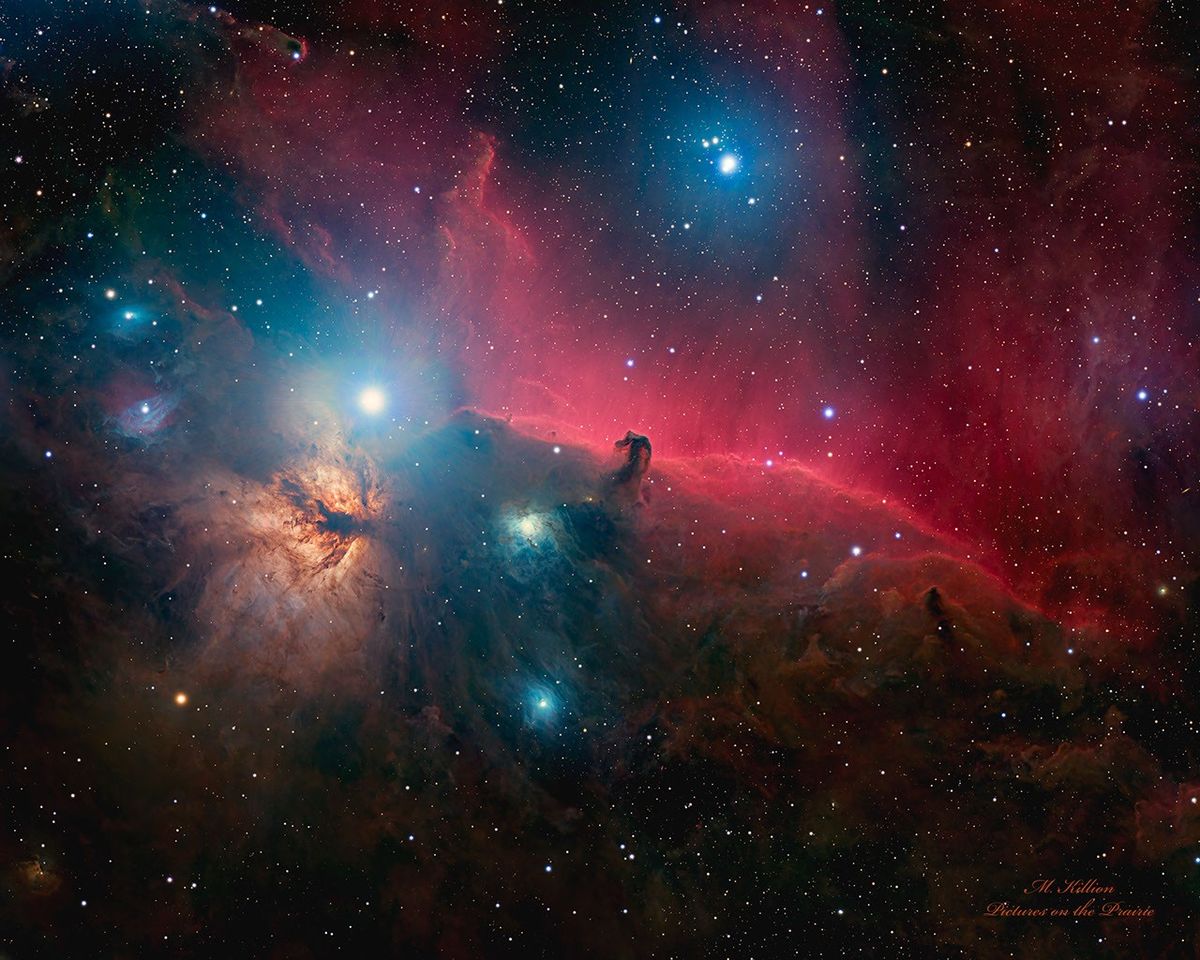
On November 19, 2026, NASA highlighted a striking celestial photograph titled in English The Horsehead and Flame Nebulas as its Astronomy Picture of the Day, published through an initiative that features spectacular images of the universe accompanied by explanations written by a professional astronomer.
The data behind the featured image required nearly six hours of collection time at the Utah Desert Remote Observatories.
The resulting visual blends cosmic dust, ionized gas, and active stellar nurseries into a frame that resembles a traditional painting.
Dominating the center of the frame is the Horsehead Nebula, a dense cloud of dust and gas standing approximately five light-years tall. Situated roughly 1,500 light-years from Earth, this dark silhouette blocks the brilliant red illumination behind it. That background glow originates from hydrogen gas energized by Sigma Orionis, a bright star positioned at the top of the region, which emits ionizing radiation.
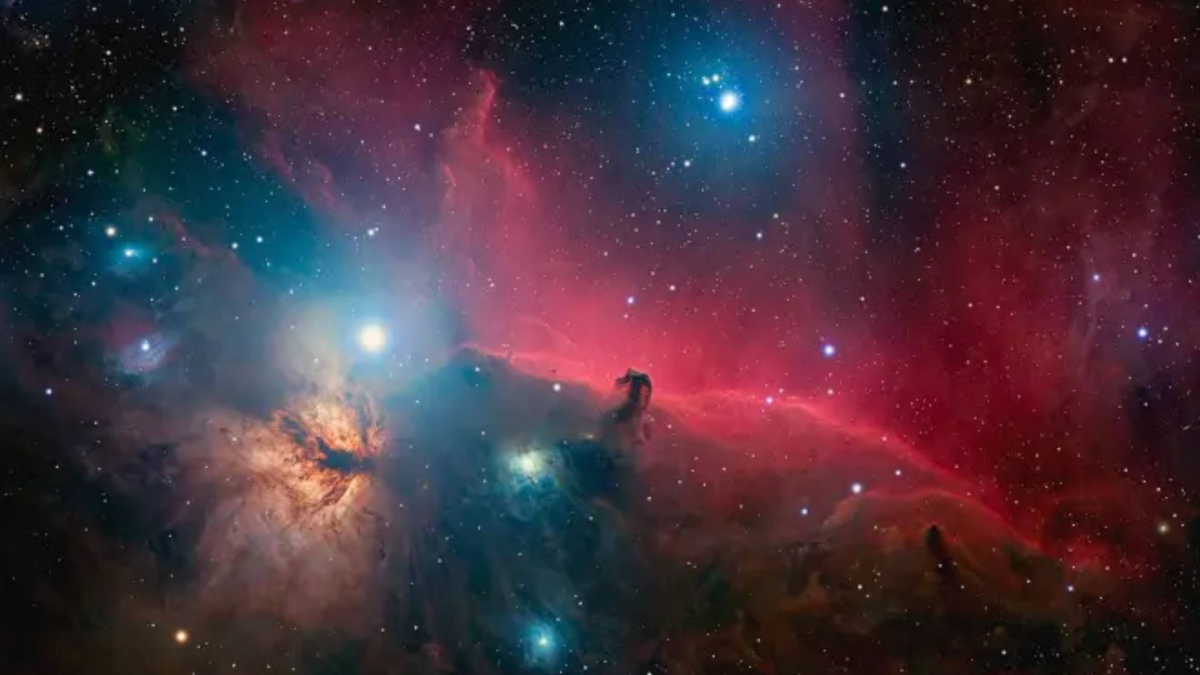
To the left of the Horsehead sits the Flame Nebula, identifiable by its bright orange clouds interlaced with dark filaments. Further details in the frame include the blue reflection nebula NGC 2023, where star formation is actively underway, and the blue triple star system Alnitak, also known as the Girdle, which marks the easternmost point of Orion’s Belt and shines brightly just left of the composition’s center.
The daily feature is a service of the Astrophysics Science Division at NASA Goddard Space Flight Center alongside Michigan Tech and NASA Science Activation. Editorial oversight for the publication involves authors and editors Cecilia Chirenti, Robert Nemiroff, Jerry Bonnell, and Keighley Rockcliffe, with Dana Bolles serving as the NASA Official.
Earlier coverage: Astronomy Picture of the Day Features Horsehead, Flame Nebulas