Nearly 700,000 women across the UK are being invited to join a £10 million trial testing whether artificial intelligence can safely review routine mammograms, in what NHS England calls the world’s largest evaluation of its kind.
EDITH Trial Launches at 30 Sites Across the UK
Women aged 50 to 71 normally receive invitations for routine breast screening every three years. NHS figures show 2.75 million women were invited for breast screening in 2024/25, representing a 10% increase from the previous year, with about 70% taking up the offer.
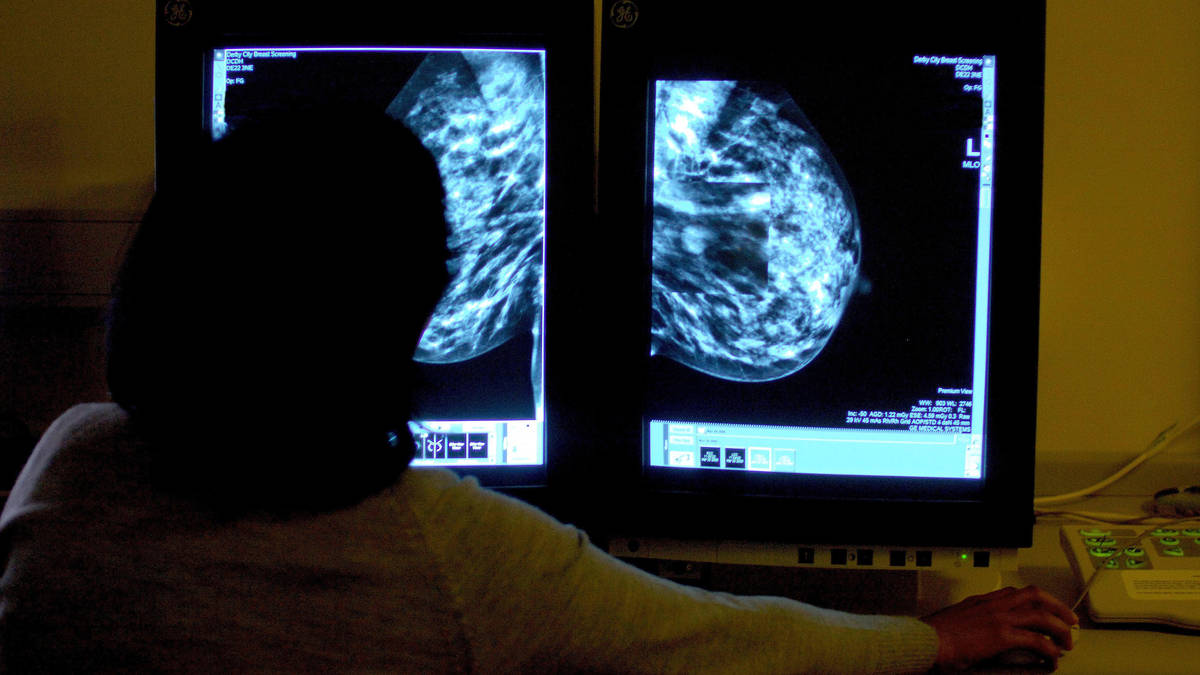
More than two million people attend annually. Two human specialists independently review every breast X-ray under standard clinical practice. The Edith trial tests whether an AI tool can act as one of those readers to assist a single specialist, easing workforce pressures while maintaining diagnostic safety.
The trial will not change what happens during a woman’s screening appointment, as mammograms can still take place at local clinics in GP practices, hospitals, or mobile screening vans located in supermarket or community car parks, and every mammogram is still reviewed by at least one human radiologist.

Health Secretary Cooper Reviews Edith Trial Safeguards
Human experts retain final control over every case. All clinical decisions remain strictly with NHS staff.
Health Secretary Yvette Cooper visited the trial team and met with leaders including Professor Fiona Gilbert from the University of Cambridge and Addenbrooke’s Hospital and Professor Sian Taylor-Phillips at the University of Warwick, alongside a participant named Shirley, at the Breast Unit at Addenbrooke’s Hospital to review the rollout and discuss potential safeguards.
“Importantly, all clinical decisions during Edith will remain with NHS staff,” said Sian Taylor-Phillips, National Institute for Health and Care Research professor and professor of population health at the University of Warwick.
If successful, this technology could help women get a breast cancer diagnosis and start treatment much more quickly, giving them the best possible chance of recovery.
Yvette Cooper, Secretary of State for Health and Social Care
Researchers evaluated multiple software options to ensure accurate performance.
AI-assisted technology could support staff by flagging areas of a mammogram where cancer might be missed to improve early cancer detection.
Sian Taylor-Phillips, National Institute for Health and Care Research professor and professor of population health at the University of Warwick
Taylor-Phillips said investigators want to avoid the overdiagnosis of milder disease “that would never have caused symptoms”. Participating women receive standard screening invitations that include details about the trial alongside an option to opt out. Professor Kevin Dunbar, deputy director of public health at NHS England, said that the project will help build evidence while keeping patient safety, quality, and professional expertise at the center of the service.
Workforce Pressures Shape Clinical Reality
Hannah Maybour from the charity Breast Cancer Now called the trial hugely encouraging. Screening services face operational strains, and roughly one third of all breast cancers in England are diagnosed via screening, predominantly at an early stage.
Dr Stephen Harden, president of the Royal College of Radiologists, said that more than a fifth of the breast radiology workforce is projected to retire by 2030, while the workforce has grown by an average of only 2% over the past five years. The trial is led jointly by the University of Warwick, the University of Cambridge, and Cambridge University Hospitals NHS Foundation Trust.
Health Secretary Yvette Cooper has served in the Burnham ministry since July 2026, following prior cabinet roles that included serving as Home Secretary from 2024 to 2025 and Foreign Secretary from 2025 to 2026. Bringing extensive parliamentary and ministerial experience dating back to her election as a Member of Parliament in 1997, Cooper has engaged directly with the healthcare sector by visiting the Breast Unit at Addenbrooke’s Hospital.
During this visit, Health Secretary Yvette Cooper met with trial leaders and participants to review the rollout of the artificial intelligence project and discuss potential safeguards. Her oversight ensures that while artificial intelligence assists radiologists by reviewing routine mammograms, all clinical decisions and final control remain strictly with National Health Service staff.
Breast screening mammograms are usually read by two highly trained clinical radiologists, and this research could show how AI can safely act as a second pair of eyes, increasing capacity and helping us deliver faster, more effective care.
Dr Stephen Harden, president of the Royal College of Radiologists
Harden said that patients continue to experience anxious waits for scan results due to the shortage of specialists, meaning the new trial is an investigative step rather than an immediate fix for daily service backlogs.