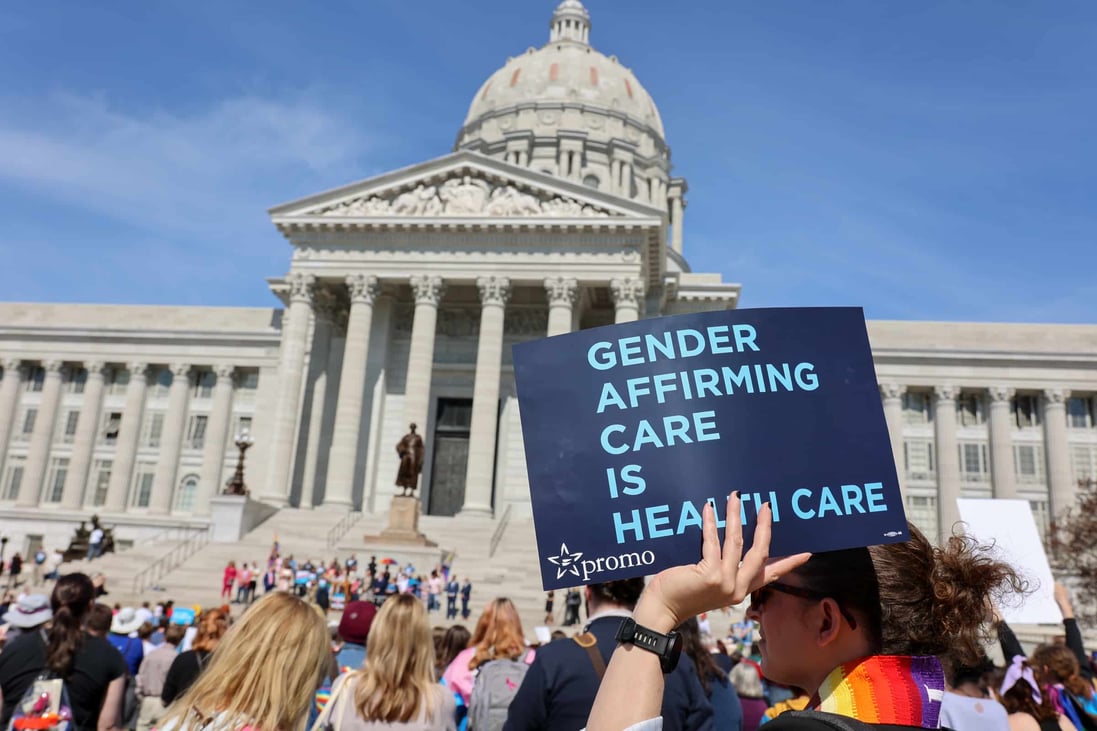
Rhode Island Hospital challenges Justice Department subpoena for transgender patient records
Rhode Island Hospital is fighting a federal order that would force the facility to hand over sensitive medical records of transgender youth to the Department of Justice. In a move before a three-judge panel of the Fifth Circuit, the hospital is asking to reverse a ruling that requires it to comply with a sweeping administrative subpoena. The legal battle centers on whether the federal government is conducting a legitimate investigation into drug promotion or if it is using its subpoena power to target specific medical treatments.
As Courthouse News reported, the hospital’s attorney, Matthew Fitzgerald, argued that the subpoena was issued for an improper purpose: to pressure medical providers into ending gender-affirming care. The hospital contends that the government has already reached settlements with at least six other medical institutions to achieve this exact result.
The stakes involve more than just administrative paperwork; they touch on the privacy of minors and the legal boundaries of federal oversight. If the hospital is forced to comply, it would mean turning over extensive documentation, including patient files and personnel records, to federal investigators.
The DOJ argues food and drug regulations justify the probe
The Justice Department maintains that its actions are strictly within the bounds of its authority to enforce the Food, Drug, and Cosmetic Act. According to Department of Justice attorney John Bailey, the investigation is focused on whether drug manufacturers and distributors are illegally promoting the “off-label” use of puberty-blocking drugs and cross-sex hormones. While these treatments are legal for doctors in Rhode Island to prescribe for gender dysphoria—even though they lack specific FDA approval for that use—the government argues it is illegal for companies to actively market them for such purposes.

However, the scope of the government’s request has drawn skepticism from the bench. During the hearing, U.S. Circuit Judge Irma Ramirez, a Biden appointee, questioned why an investigation into drug misbranding would require the personal files of hospital employees and the private medical records of patients. She suggested that if the target is the manufacturers, the government could limit its inquiry to communications between those companies and the hospital, rather than digging into individual patient histories.
The government has countered this by stating that the hospital is currently producing responsive records with patient information anonymized. These files are being held privately by a federal court in Texas while the various legal challenges move through the appellate system.
Conflicting rulings create a legal tug-of-war
The case has become a complex web of parallel proceedings across different jurisdictions. Although the hospital is located in Rhode Island, the government filed its enforcement petition in the Northern District of Texas, a venue known for its conservative judicial bench. This move led to a direct clash between two different federal courts.
In Texas, Chief U.S. District Judge Reed O’Connor, a George W. Bush appointee, entered an order enforcing the subpoena. Shortly after, however, U.S. District Judge Mary McElroy in Rhode Island—a Donald Trump appointee—granted motions to quash the subpoena. Judge McElroy ruled that the request violated the constitutional privacy rights of minor patients and found no legal basis for the demand, noting that the hospital’s prescribing practices were not illegal under state law.
U.S. Circuit Judges Kyle Duncan and Kurt Engelhardt, both Trump appointees, criticized the hospital for filing a motion to quash in another court after O’Connor ruled. They described the hospital's approach as a "procedural conundrum" and a "sharp practice" that could raise ethical concerns regarding how the hospital followed the two competing court orders.
A broader federal crackdown on gender-affirming care
This specific dispute is part of a much larger, national legal confrontation regarding medical care for transgender minors. The tension stems from a July 2025 announcement by the Trump administration, which revealed that more than 20 subpoenas had been issued to various doctors and clinics providing these services. This move followed a presidential executive order aimed at ending such treatments, which the administration characterized as harmful to children.
The legal landscape remains highly fractured:
- The Ninth Circuit: A divided panel recently overturned an order that had quashed a similar subpoena, suggesting a path for government enforcement.
- The Fifth Circuit: Currently reviewing the Rhode Island Hospital case.
- District Courts: Judges in various states continue to issue conflicting rulings on whether these subpoenas violate the privacy rights of minors.
For hospitals, the dilemma is one of both ethics and survival.
The Fifth Circuit must now decide if the government’s interest in regulating drug promotion outweighs the privacy protections afforded to minor patients under the Constitution.