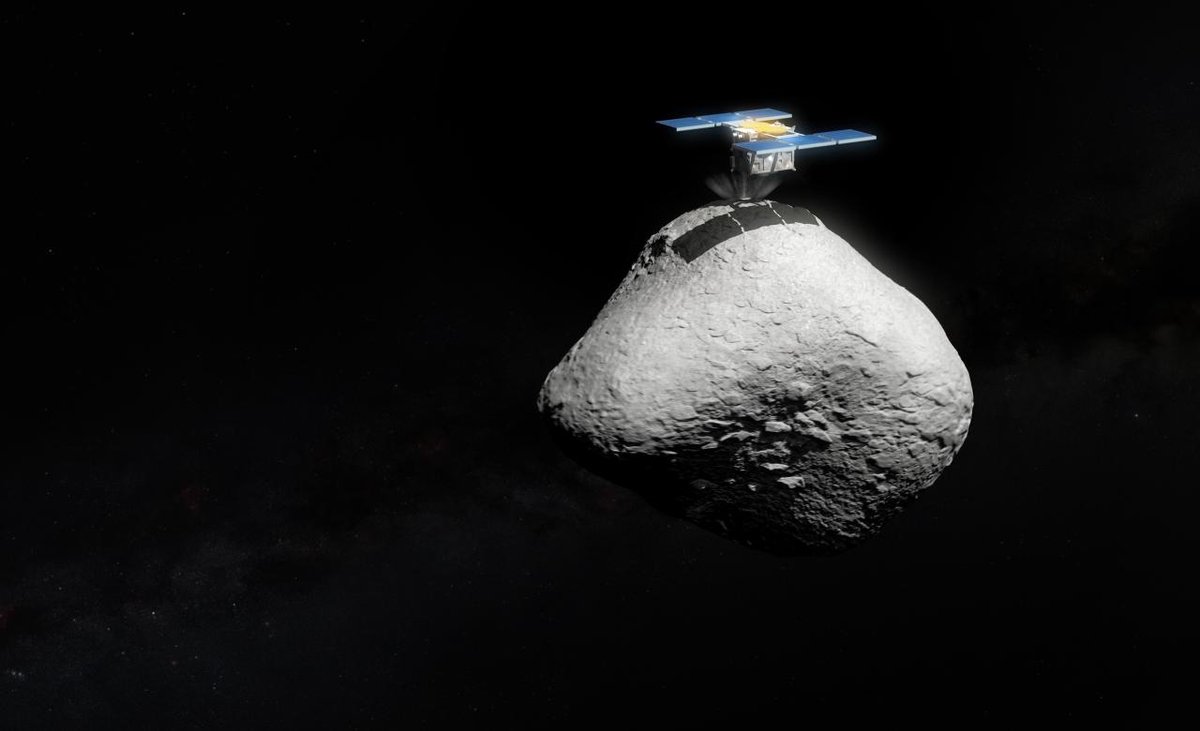
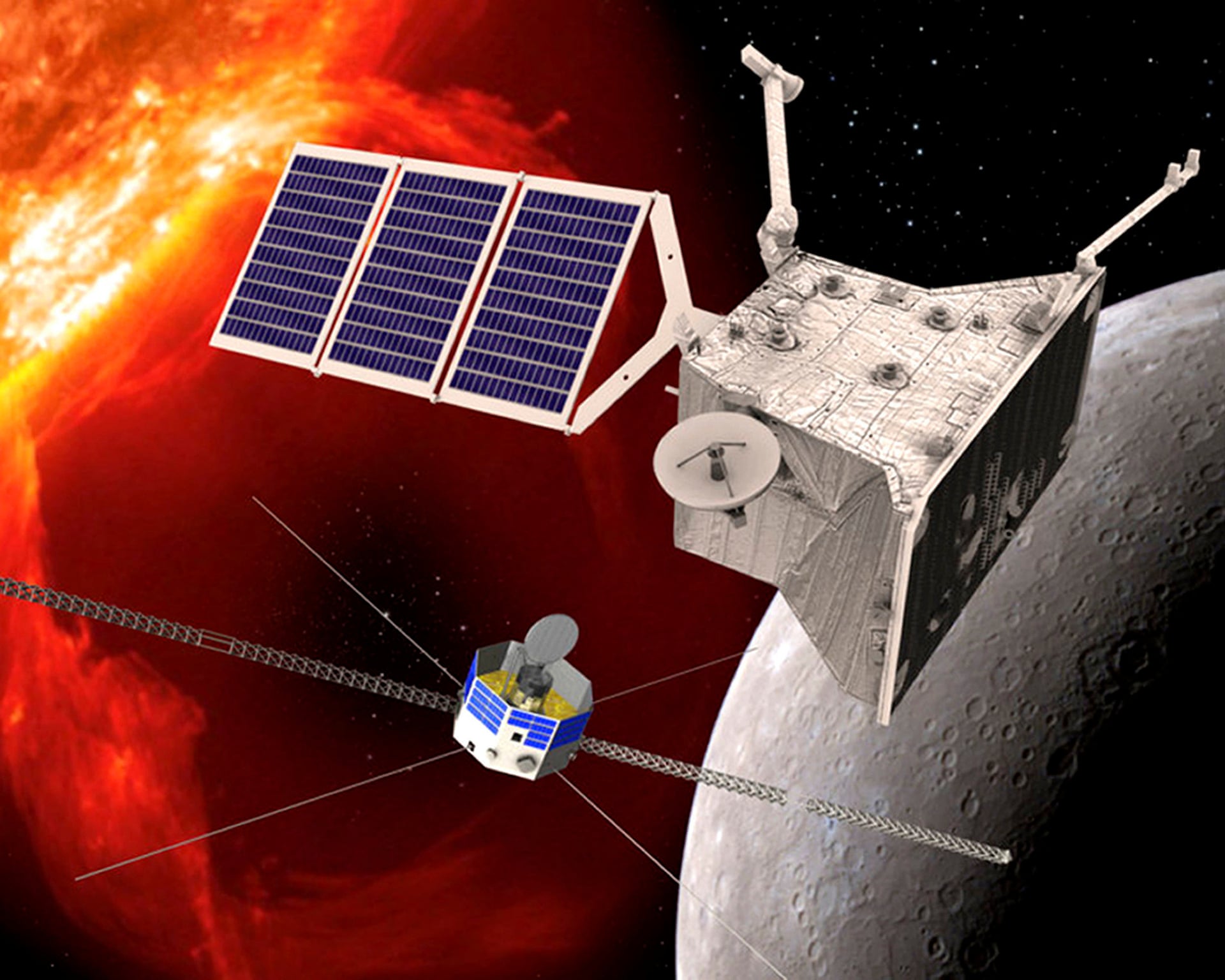
After a voyage of more than eight years and 6 billion miles, the joint European-Japanese BepiColombo mission has arrived at Mercury and is preparing to swing into orbit around the planet on Saturday.
The arrival makes BepiColombo only the second mission in history to orbit the solar system’s innermost rock, following NASA’s MESSENGER spacecraft, and the first dual-spacecraft system to reach the planet. Flight controllers are set to fire the spacecraft’s thrusters to achieve orbital capture, embarking on an intensive effort to unravel how Mercury formed so close to the sun.
Journey Across the Inner Solar System
Because Mercury sits near the center of the solar system, approaching spacecraft accelerate under the sun’s extreme gravity and must spend much of their transit braking to avoid shooting past their destination.
The mission utilizes trajectory maneuvers pioneered by its namesake, the Italian mathematician Giuseppe “Bepi” Colombo.
Ahead of orbital insertion, the British-built Mercury Imaging X-ray Spectrometer (MIXS) conducted calibration observations by imaging the Crab Nebula across 55 spacecraft slews and 39 hours of observation from September 11 to 12.
Emma Bunce is the principal investigator for MIXS and director of the Institute for Space at the University of Leicester. The instrument itself represents a lasting legacy of professor George Fraser, who served as the original principal investigator and mastermind behind the optic design before his death in March 2014.
Dual Spacecraft Separation and Scientific Instruments
Following capture, the composite spacecraft is scheduled to separate into two distinct orbiters on December 9–10, 2026. Meanwhile, the Japan Aerospace Exploration Agency’s Mio magnetospheric orbiter will measure Mercury’s magnetic field and its sodium exosphere.
Stefano Livi, a research professor of climate and space sciences and engineering, serves as the principal investigator for Strofio.
We know that the gas enveloping Mercury is very tenuous. As such, it will not be stable as an atmosphere, but will fall back onto the planet. Something must be producing it at all times.
Stefano Livi, Principal Investigator for Strofio, via University of Michigan News
Researchers note that examining these escaping gases will reveal the chemical imprint of the surface below. Jim Raines, an associate professor leading day-to-day operations for Strofio who previously worked on NASA’s MESSENGER mission, emphasized the unique value of the planet’s magnetic environment.
Mercury is the only other planet with a magnetic environment that’s really like Earth’s, but it’s also different enough that it kind of stretches out and tests our understanding of how Earth’s magnetic field works.
Jim Raines, University of Michigan, via University of Michigan News
Extreme Environment and Science Operations Schedule
Operating in the inner solar system exposes the probes to sunlight about 10 times stronger than on Earth. Mercury itself is a world of extreme contrasts, taking 58 Earth days to rotate on its axis while sitting close to the sun. Ground temperatures reach 450°C during the day and drop to -180°C at night.

The mission aims to resolve long-standing questions regarding why Mercury possesses an oversized metallic core, how it maintains a magnetic field despite its small size, and whether frozen water truly exists inside permanently shadowed polar craters where sunlight never reaches. After the two probes separate in December, they will occupy their respective orbits and begin science operations in April 2027.
Mercury is the smallest planet in the Solar System and the first from the Sun, holding the status of a classical planet observed and recognized throughout history.
Formed approximately 4.5 billion years ago, it was known to ancient Greeks as both a morning and evening star before they realized it was a single body, and it later took its English name from the ancient Roman messenger god. The first successful flyby of the rocky planet was conducted by Mariner 10 in 1974.
Full science operations for the €1.6 billion (£1.4 billion) mission are due to run for about three years.
We’re expecting to learn a huge amount, bringing more powerful instruments on two spacecraft to study all aspects of the planet – its interior, surface, and the space around it.
Prof Geraint Jones, lead project scientist on BepiColombo at the European Space Agency, via The Guardian