
Kyushu University Researchers Target Aging Muscle Repair Pathways
Skeletal muscles can begin losing strength and recovery ability surprisingly early in life, accumulating scar tissue and fat while shedding the specialized fibers required for rapid, powerful movements. A team led by Professor Ryuichi Tatsumi at Kyushu University’s Faculty of Agriculture has identified a molecule capable of strengthening the body’s natural muscle repair system in laboratory experiments.
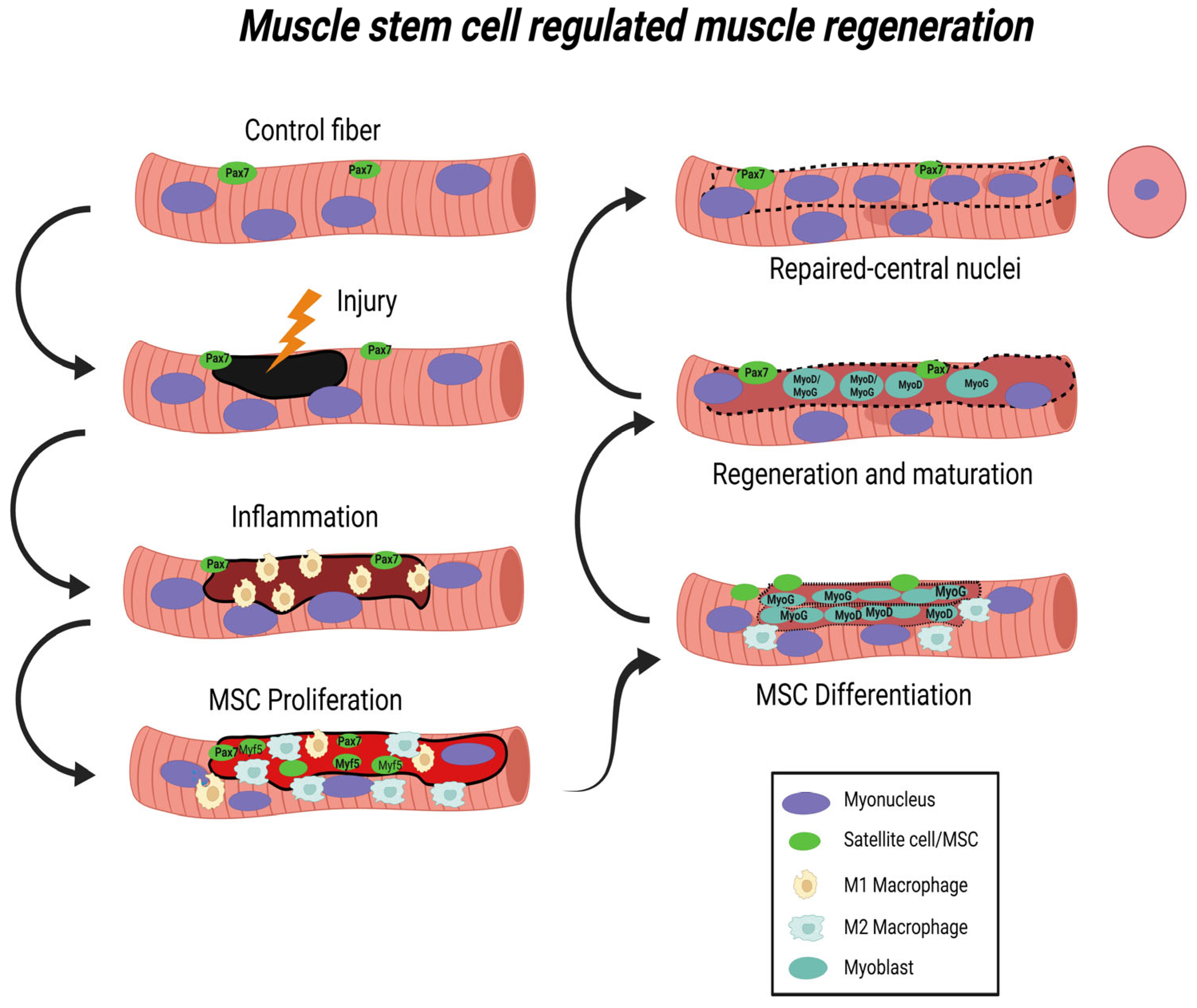
The findings, published in Scientific Reports, focus on the cellular changes that make aging muscles increasingly difficult to repair. Voluntary movements like walking, lifting, and maintaining posture depend on skeletal muscles. These tissues rely heavily on specialized stem cells called satellite cells for regeneration. Dormant satellite cells sit alongside muscle fibers until an injury or mechanical stimulation triggers a response.
A protein known as hepatocyte growth factor, or HGF, manages this activation process. HGF is stored within the supportive material surrounding muscle fibers and is released during physical activity. The protein then attaches to a receptor called c-met on the surface of satellite cells, awakening them to multiply, mature, and repair damaged muscle fibers. However, this system loses reliability over time.
pretty amazing Scientists Discover Compound That Rejuvenates Aging Muscles Scientists find compound that may help muscles stay strong as we age. Sulfur based compound called LASSS protects and boosts a key muscle repair protein (HGF), helping aging muscles repair themselves… pic.twitter.com/EvTV3B1amX
Chemical Modifications Block HGF Binding in Older Tissue
Previous work by the Kyushu University team revealed that HGF undergoes a chemical modification known as nitration as the body ages. This process attaches a nitro group to specific locations on the protein, altering its structure and interfering with normal activity. Researchers identified two critical locations, Y198 and Y250, within the region responsible for attaching to the c-met receptor. When nitration occurs at these sites, HGF loses its capability to connect with its receptor.
HGF is not necessarily missing as we age,
Tatsumi explains in the published findings. Rather, it can be chemically altered after it is made. That led us to wonder whether a compound with strong antioxidant capacity might protect HGF, either by preventing nitration or by compensating for the functional loss it causes.

To investigate this protective strategy, the research team studied two antioxidant compounds belonging to a chemical family called trisulfides: glutathione trisulfide and lipoic acid trisulfide, abbreviated as LASSS. These substances feature a chain of three connected sulfur atoms, giving them an unusual capacity to participate in redox reactions involving electron transfer.
Laboratory Tests Produce Enhanced Super HGF
In initial experiments, both glutathione trisulfide and LASSS reduced nitration at the vulnerable Y198 and Y250 sites on HGF. Preventing this chemical modification alone, however, did not fully restore the protein’s receptor-binding ability. The scientists subsequently adjusted the molar ratio of the trisulfide relative to HGF from 1:4000 to 1:8000.
Scientists have found a compound that could supercharge muscle repair in aging bodies. A sulfur based molecule called LASSS protects and enhances hepatocyte growth factor (HGF), a key protein that activates muscle stem cells after injury. With age, HGF often becomes chemically… pic.twitter.com/xfJYg5rDQk
At the higher concentration, LASSS delivered an unexpected result. The protein exposed to LASSS showed more than twice the binding affinity for c-met compared to untreated HGF. The treatment also increased the protein’s resistance to functional loss from nitration at the Y198 site. While glutathione trisulfide reduced nitration in earlier tests, it did not produce this enhanced receptor binding.
This exceeded our expectations,
Tatsumi states. We knew trisulfides had diverse biological functions, but we never expected that simply mixing HGF with LASSS would produce such a striking effect.
The researchers suspect that LASSS interacts directly with HGF to induce a subtle structural change in the protein’s three-dimensional shape, creating what the team terms “Super HGF.” Additional experiments remain necessary to determine whether this enhanced molecular binding translates directly into improved muscle healing and strength.
Mouse Experiments Test Protection Against Muscle Atrophy
Following the laboratory discoveries, the research team evaluated whether LASSS could protect HGF inside living tissue. They utilized mice subjected to tail suspension, an established experimental model that reduces normal weight-bearing and muscle use to simulate prolonged inactivity and deterioration.
A Sulfur Compound Could Protect Aging Muscle Japanese researchers identified LASSS, a compound that strengthens a key muscle-repair signal. – Increased HGF receptor binding by over 100% – Protected HGF from age-related nitration – Reduced HGF damage in a mouse disuse model… pic.twitter.com/x62svStQDY
Mice receiving LASSS before the tail-suspension period showed significantly less HGF nitration than untreated animals. Glutathione trisulfide failed to produce the same protective outcome in the living subjects. These results confirm that LASSS can influence the chemical processes affecting HGF within an organism, though the experiments demonstrated protection against nitration rather than a direct restoration of lost muscle mass or physical strength.
The research team emphasizes that further studies involving aging animals are necessary to establish the safety and effectiveness of LASSS in vivo. Muscle deterioration affects individuals not only through aging but also during extended periods of bed rest or reduced activity when recovery of lost strength presents a significant challenge.