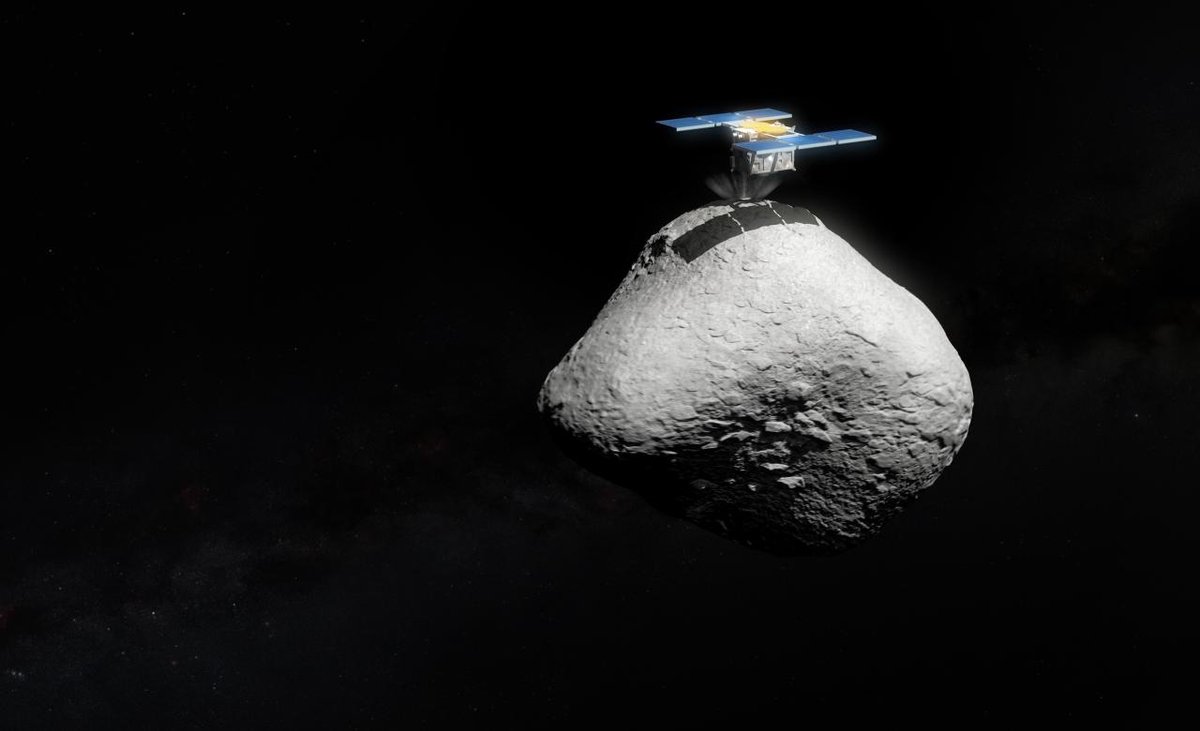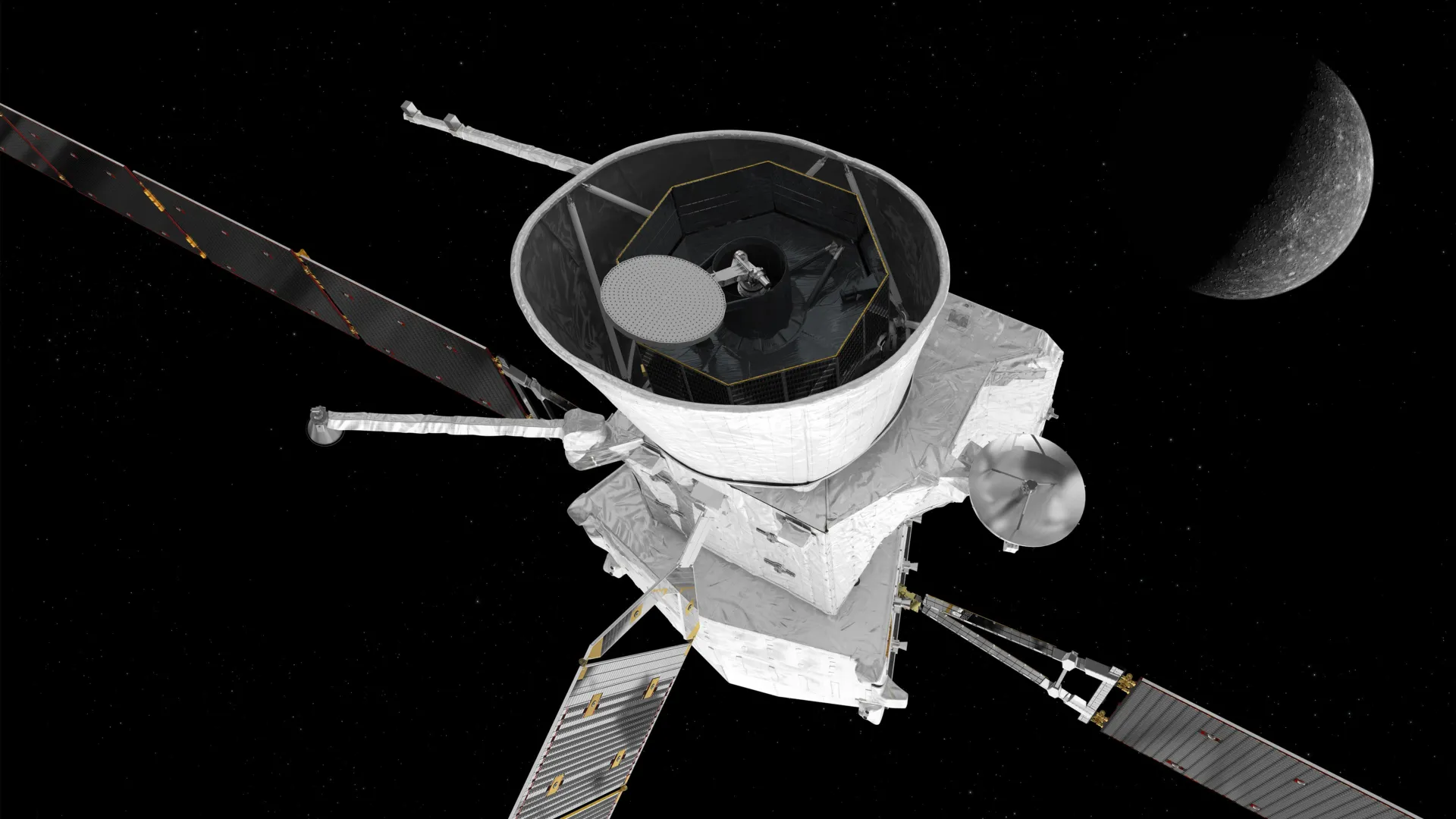
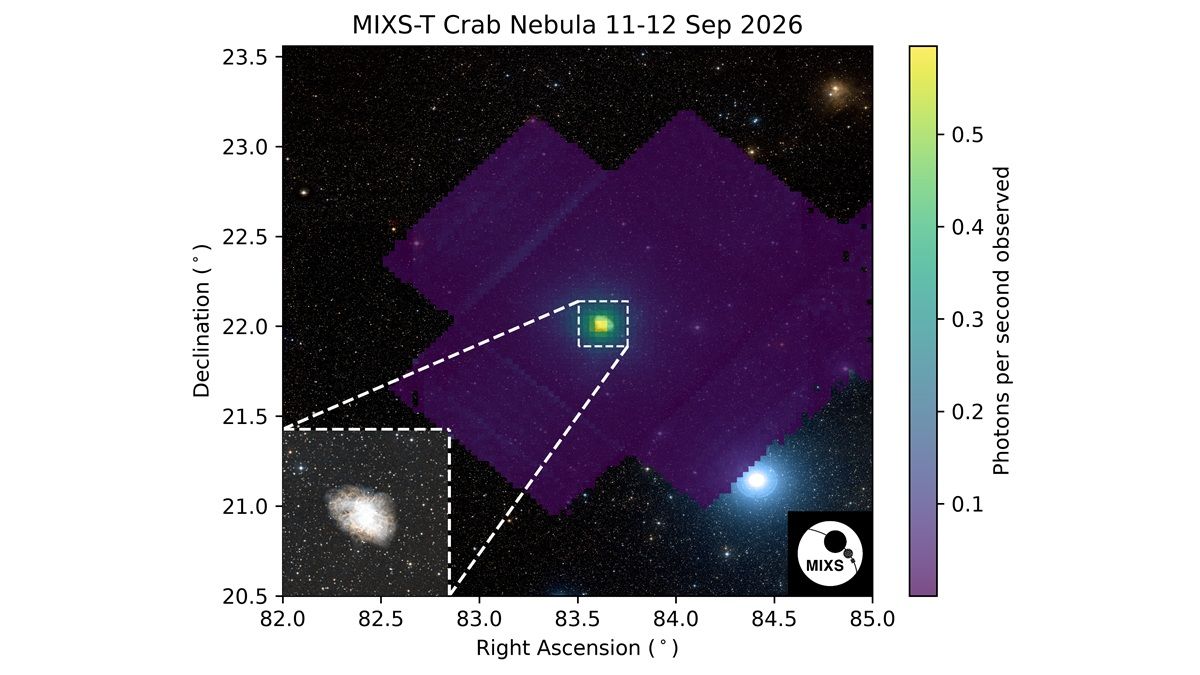
After traveling 10 billion kilometers through space, the Mercury Imaging X-ray Spectrometer captured its first observations of the Crab Nebula on September 11 and 12.
Engineers obtained an unobstructed view after the Mercury Transfer Module separated from the science orbiters on September 3.
The instrument spent eight years sealed away during the journey to the inner solar system. Researchers selected the Crab Nebula located 6,500 light-years away as a reference target. Its predictable X-ray signal allows teams to check equipment performance against baseline laboratory measurements collected in 2015.
The spacecraft executed 55 carefully controlled changes in orientation over 39 hours of data collection.
Scientists measured the angular resolution by examining how widely the X-ray signal spread across the detector. They discovered that the hardware delivered slightly sharper performance in space than it did during its pre-launch testing.
Initial evaluations show no unwanted visible light interfering with the optics. They confirm that the detector suffered no radiation damage during the eight-year transit.
Teams detected minor self-fluorescence when sunlight illuminates the optics and continue to filter out galactic cosmic rays.
Researchers expect these factors will not impact dayside planetary observations.
We have waited a long time to make measurements with MIXS and it is fantastic to see it operating brilliantly in space. This is testament to our engineering and technical team, and our international partners who we have worked with over many years to build this incredible instrument. 80% of the technology on MIXS is new!
Professor Emma Bunce, Principal Investigator and Director of the Institute for Space at the University of Leicester, via ScienceDaily
The instrument honors the scientific legacy of Professor George Fraser. He was the original principal investigator and designer of the novel optic who passed away in March 2014.
BepiColombo, and MIXS in particular, are like part of my family. I’ve been involved since I was an undergraduate and touched almost every part of the instrument before it was launched.
Dr. Adrian Martindale, MIXS Instrument Scientist at the University of Leicester’s School of Physics and Astronomy, via ScienceDaily
The European Space Agency and Japan Aerospace Exploration Agency mission reaches Mercury on November 21 for its orbital insertion phase.
Following the arrival, the Mercury Planetary Orbiter and Mio are scheduled to separate on December 9 to 10.
The instrument will analyze surface composition by measuring fluorescent X-rays emitted when solar radiation strikes surface rocks. It will work alongside the Solar Intensity X-ray and particle Spectrometer.
The mission’s primary science phase is scheduled to begin in April 2027.