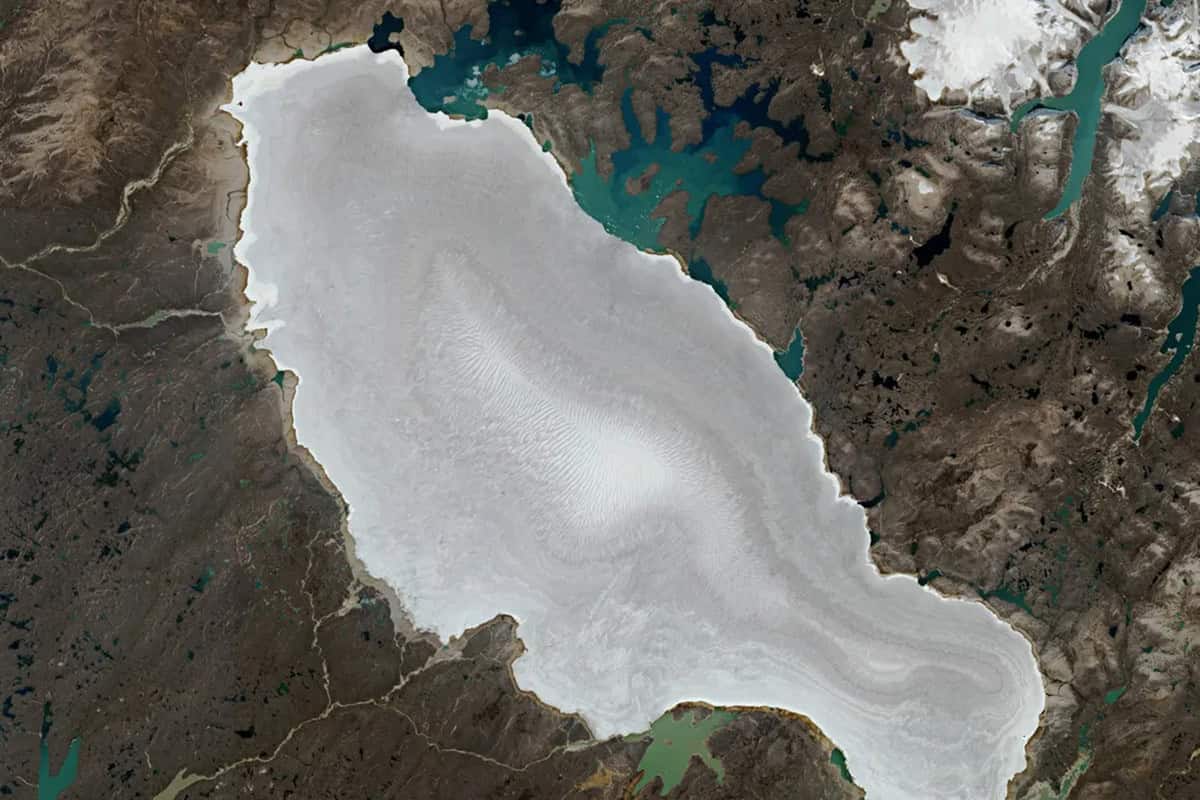
Published in the journal Science, a new study reveals that human-driven greenhouse gas emissions halted an ice age that began expanding across Canada’s Baffin Island approximately 2,000 years ago. Researchers tracked ancient vegetation exposed by the retreating Barnes Ice Cap to reconstruct how global warming abruptly reversed natural glacial growth in the 1960s.
On the remote plateau of Baffin Island in Nunavut, Canada, the retreating edge of the Barnes Ice Cap is exposing long-dead mosses that have remained buried beneath ice since the Roman Empire, as noted by ZME Science. These preserved plants tell a startling story: Earth was well on its way toward another ice age before human industrial activity short-circuited the process.
The Barnes Ice Cap is the last surviving remnant of the massive Laurentide Ice Sheet. That immense glacial expanse once stretched from the Arctic Circle as far south as Illinois. It reached thicknesses of up to two miles during the Pleistocene. A small fragment endured in the Canadian Arctic when that massive sheet largely vanished as temperatures climbed at the end of the last major glacial period approximately 11,700 years ago.
Radiocarbon Dating Reveals Ancient Glacial Advance on Baffin Island
To uncover the history of this surviving ice mass, a research team led by scientists from Columbia University’s Lamont-Doherty Earth Observatory and other institutions examined ancient vegetation and bedrock. The team reconstructed the precise timeline of the region’s climate history by analyzing organic material left behind by shrinking ice, a technique detailed in research published by the University of Colorado Boulder’s INSTAAR.

Radiocarbon dating provided a precise mortality date for each plant sample. This marked the exact moment permanent ice advanced across the terrain. The ice cap began a slow, steady expansion about 2,000 years ago that entombed every plant in its path.
We can actually track the expansion of the ice margin as it’s progressively covering mosses and killing (them).
Nicolás Young, geochemist at Columbia University
The researchers also tested nearby rocks for a rare, radioactive isotope that accumulates once a rock is exposed to air. This combination of atomic dating and plant chronology allowed the scientific team to map out how the ice cap advanced across the tundra for nearly two millennia.
Industrial Greenhouse Gas Emissions Overpower Orbital Cooling
That centuries-long growth period came to an abrupt halt around 1960. Summer temperatures in the Arctic rose enough to break the delicate balance between winter snow accumulation and summer melt as human-driven climate change pumped unprecedented volumes of carbon dioxide and other greenhouse gases into the atmosphere.
The ice cap rapidly began to shrink rather than continuing to inch forward. Climate pollution has essentially overpowered the natural orbital mechanisms that should have kept the region cool, according to reporting from CNN. The study’s authors argue that this two-millennia expansion marked the birth of a new glaciation—an ice age that was terminated in its infancy before continental sheets could form.
Nicolás Young is a study author and a geochemist at the Lamont-Doherty Earth Observatory, part of the Columbia Climate School. Nicolás Young said it was just getting started, everything was normal, the next glaciation was about to happen — and yet it stopped. He added that it is a very powerful example of how we have jolted the system.
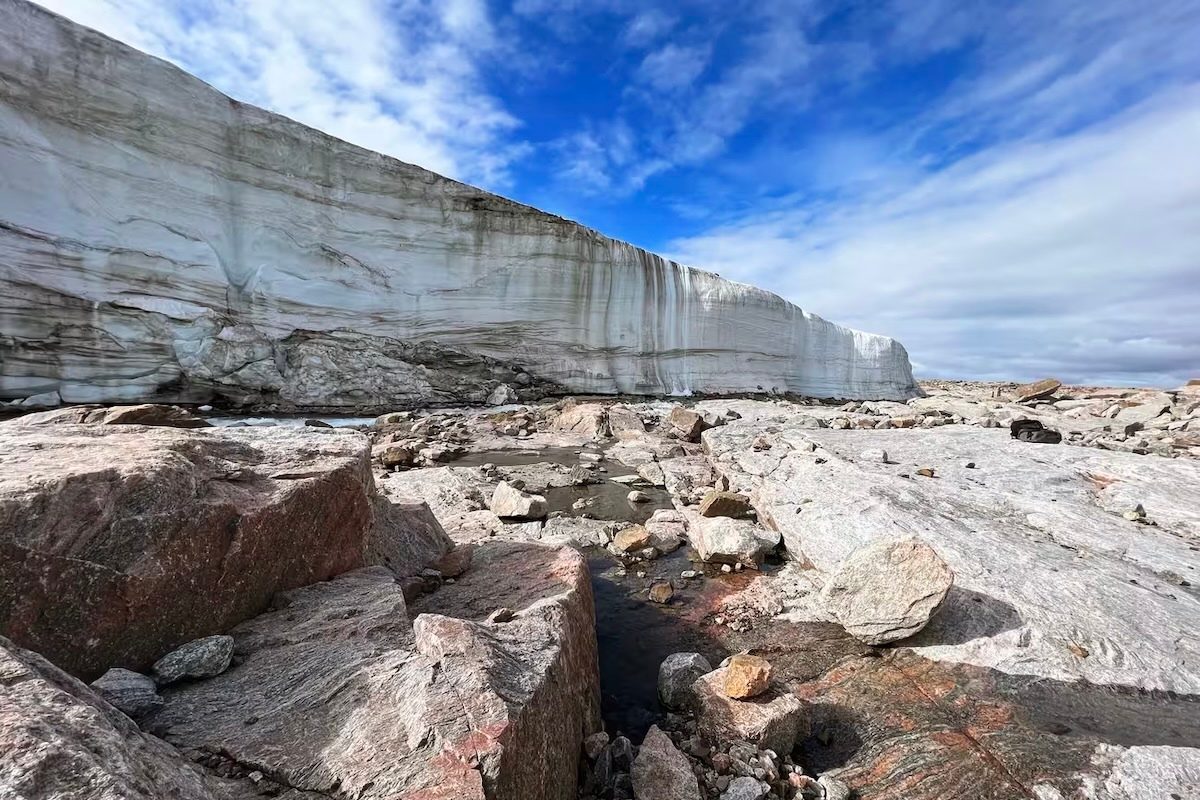
Traditional definitions used by paleoclimate researchers require massive ice sheets locking up enough water to drop global sea levels by several meters before declaring that a new ice age has begun. This interpretation challenges those definitions. Physicist Andrey Ganopolski of the Potsdam Institute for Climate Impact Research and other external experts have argued that the Barnes Ice Cap’s modest growth is insufficient to confirm an aborted glacial cycle. Yet Nicolás Young and his coauthors maintain that waiting for colossal ice sheets ignores the actual moment of birth.
Researchers Revisit 1970s Global Cooling Debates
Summers across parts of the Arctic cooled noticeably during the 1950s through the 1960s. Field researchers observing advancing glaciers at the time—including INSTAAR fellow Gifford Miller during his early Arctic expeditions—wondered if an ice age was imminent. This inspired popular media reports about coming glaciations, as documented by the University of Colorado Boulder.
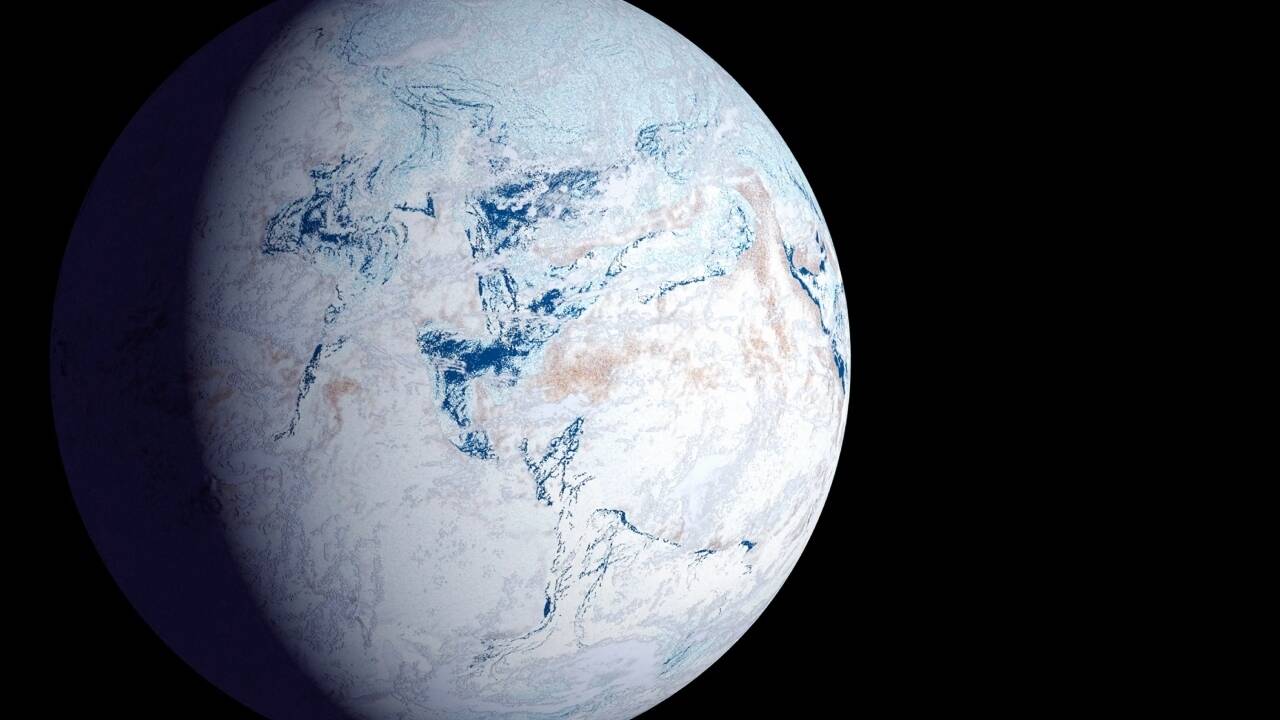
Accumulating evidence of global temperature increases caused by greenhouse gas emissions made it clear by the late 1970s that warming was dominating the planet’s trajectory. Yet the new study suggests those early environmental scientists were observing a real physical phenomenon. Natural conditions had indeed favored renewed ice expansion for two thousand years, as reported by The Debrief, giving physical backing to a debate that scientists could not fully prove at the time.
Humanity’s heavy reliance on fossil fuels has fundamentally altered the planet’s baseline climate rules instead of entering that predicted cooler era. The researchers conclude that human activity has likely postponed any future glacial cycle for an exceptionally long duration by disrupting these deep planetary rhythms.