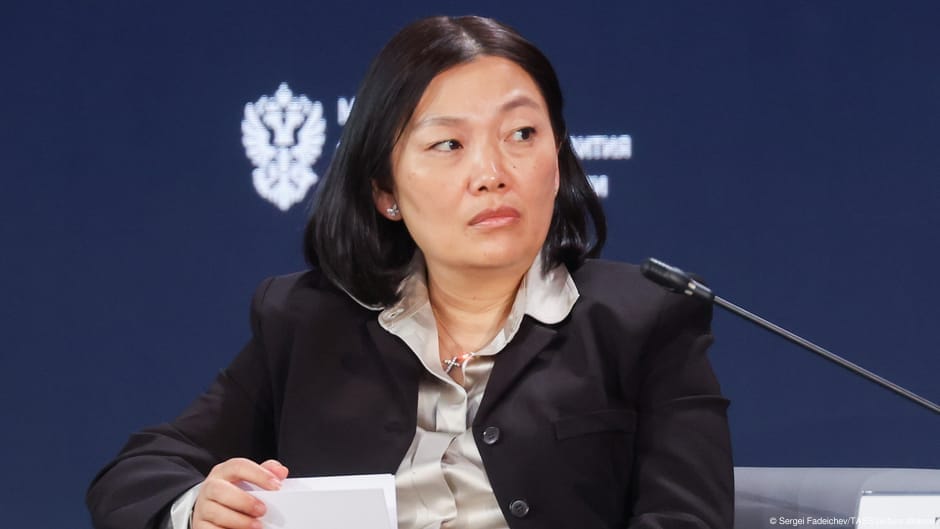
The European Union added Tatyana Kim, the owner and CEO of Russia’s largest e-commerce retailer Wildberries, to its sanctions blacklist on Monday, intensifying pressure on the business figures and financial networks supporting Moscow’s war effort.
Following Russia’s full-scale invasion in February 2022, the conflict has become Europe’s largest and deadliest since World War II, prompting Brussels to impose more than 20 sanctions packages aimed at pressuring President Vladimir Putin to end the assault.
The move, part of a broader package targeting 113 individuals and entities, subjects Kim to an asset freeze and a travel ban across the bloc. EU officials allege that Wildberries “functions as a supply network for the Russian military by facilitating the sale of military and dual-use goods,”
85% less EU money flowing into Russia's energy sector since 2021. And the pressure continues. Russia is trying to rebuild its oil refineries. EU sanctions, restrict access to European goods and services needed for reconstruction. Less revenue. More barriers to rebuilding. Read… pic.twitter.com/6jHI3BEBLo
The latest measures, approved by the Council of the European Union on November 16, 2026, target sectors identified as vital revenue streams for the Kremlin. Beyond the e-commerce sector, the sanctions list includes nearly 50 Russian banks and financial institutions, as well as approximately 20 oil refineries.
These financial entities are targeted because many provide loan repayment holidays to Russian soldiers, participate in the “digital rouble” pilot project, or hold Federal Security Service licenses for cryptographic activities.

“By progressively tightening and expanding sanctions on Russia's banking sector, the EU is cutting off the financial channels that process state revenues and fund Russia's war effort,” the Council of the EU said.
Wildberries, which operates as Russia’s largest e-commerce retailer, dismissed the impact of the measures. The company said that Brussels’ sanctions would have no effect since it has no assets in the bloc and does not conduct business there.
I welcome the adoption of new EU decisions to strengthen sanctions pressure on Russia. Those who undermine Ukraine’s territorial integrity, destabilise Europe, and conduct cyberattacks must face consequences. Russia’s aggression does not stop at Ukraine’s borders. Sanctions… pic.twitter.com/WAR8Fb9Wm6
The company’s international expansion efforts, such as a November 2025 cooperation agreement with Ethiopian Investment Holdings to explore logistics and digital infrastructure, have also come under scrutiny as the EU seeks to limit the reach of sanctioned firms.
Billionaire Ruslan Baisarov, who acquired a majority stake in the gold mining company now known as BTS-Gold, was also added to the list.
If Russia is betting on our fatigue, it will be disappointed. Today, we adopted over 140 new sanctions listings. They target Russian refineries, banks, e-commerce and companies in the Gulf and East Asia that also support Russia’s shadow fleet. These measures include the… pic.twitter.com/LMkCBGPxlU
A significant portion of the new designations focuses on the Russian shadow fleet, a network of aging tankers used to bypass international oil price caps. The EU targeted companies based in the United Arab Emirates, Oman, the Seychelles, and China that are accused of purchasing Russian oil or managing vessels involved in high-risk shipping practices.
The sanctions specifically name Dubai-based entities including Lidoil DMCC, Spikoil DMCC, Lynx Ship Management, Stalwart Shipmanagement, Grace Shipmanagement, and Greenlight Shipmanagement. Russian nationals Igor Konfino and Daniil Mosin were also sanctioned for managing companies that own vessels in this shadow fleet.
Simultaneously, the bloc moved against Russian hybrid threats. The Social Design Agency (SDA) was specifically cited for its role in carrying out large-scale information manipulation and interference projects funded, directed and supervised by the Russian Presidential Administration.
The expansion of the sanctions list coincides with heightened diplomatic friction. The bloc intends to introduce another sweeping sanctions package by the end of the year.
The EU remains committed to an open, stable, and secure cyberspace, having established a horizontal cyber sanctions framework in May 2019. As the bloc prepares a 22nd package of sectoral sanctions, it continues to monitor the financial mechanisms supporting Russia’s war.
Foreign Affairs Minister Helen McEntee, speaking in Brussels, reiterated that the measures are designed to target the financial systems backing Russia’s military efforts. While the EU seeks to pressure Moscow into negotiations, officials acknowledge that Russia has shown no signs of easing its attacks on civilians and infrastructure.