European leaders gathered in Berlin on Thursday for a summit of the Coalition of the Willing as diplomats prepare for potential peace negotiations alongside the United States and Russia.
European Participation in Berlin Peace Talks
Federal Chancellor Friedrich Merz hosted representatives from dozens of nations at the Federal Chancellery on Thursday. Merz told reporters that new Ukraine peace talks will take place soon. He dismissed past models of great-power diplomacy.
A Yalta format cannot bring peace.
Friedrich Merz, Federal Chancellor
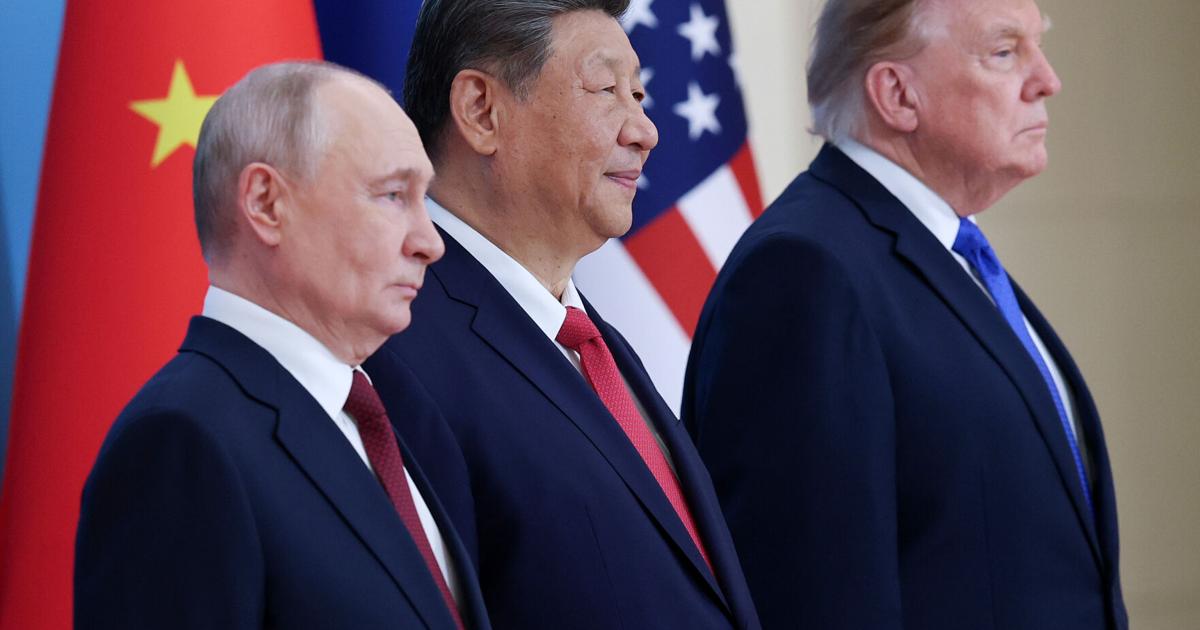
The Berlin gathering coincided with an unprecedented three-way meeting in Shenzhen, China, on Thursday. U.S. President Donald Trump, Chinese President Xi Jinping, and Russian President Vladimir Putin met there. British Prime Minister Andy Burnham warned against any exclusion of European interests on Thursday. He said the continent will stand at the side of Ukraine and not falter for as long as it takes.
The summit brought together a total of 44 delegations on Thursday. These included 26 heads of state or government alongside the leaders of the European Union and NATO. They operated under the motto ‘Together for Peace in Ukraine and European Security’. French President Emmanuel Macron and Ukrainian President Volodymyr Zelenskyy joined the high-level consultations in the German capital.
For peace in Ukraine. For a secure Europe. For a better world. Welcome to Berlin. pic.twitter.com/vTRaHhoDwd
The trilateral talks in China had drawn comparisons to the 1945 Yalta summit. Russian President Vladimir Putin stated through diplomatic channels on Thursday that Moscow had invited European leaders to visit Moscow to clarify their positions before any continuation of the dialogue with Ukraine. Putin said that discussing European security issues without European participation is pointless. He maintained that military cooperation between Ukraine and Europe remains a problem for Moscow.
U.S. President Donald Trump placed a phone call from aboard Air Force One on Thursday while returning from Shenzhen. Special peace envoys Jared Kushner and Steve Witkoff represented Washington at the summit.

During the Berlin proceedings, U.S. President Donald Trump placed a phone call from aboard Air Force One while returning from Shenzhen, and special peace envoys Jared Kushner and Steve Witkoff represented Washington at the summit, updating Chancellor Merz on discussions held in China and previous trilateral meetings in the United Arab Emirates.
Security Guarantees and Diplomatic Demands
Discussions in Berlin centered on establishing security guarantees for postwar Ukraine. U.S. peace envoy Jared Kushner told reporters on Thursday that Russia is comfortable with security guarantees modelled on NATO’s Article 5. Under that article, an attack on one member is treated as an attack on all.
Kushner said that President Trump remains open to the concept as part of a security package that serves American interests. European officials maintained that discussions regarding European security must follow a peace agreement between Ukraine and Russia. They rejected Moscow’s maximalist demands.
Polish Prime Minister Donald Tusk rejected descriptions of Putin as a friend after the Shenzhen meetings on Thursday. He said that Putin is not a friend and will never be. British Prime Minister Andy Burnham said Europe is ready for serious discussions on European security provided a peace agreement between Ukraine and Russia comes first.
European Commission President Ursula von der Leyen said that peace depends on putting Ukraine in a position of strength. She announced that the EU will maintain pressure on Moscow until it engages in negotiations.

Military Exercise and Financial Support for Ukraine
Allies highlighted practical measures to support Kyiv through the winter months. Leaders pointed to the ongoing Koalicja-2026 military exercise running from November 9 to 22 in Poland as evidence of preparations for a proposed multinational force to support Ukraine following a ceasefire.
The Coalition of the Willing also reaffirmed commitments to provide financial and military backing. NATO allies pledged €70 billion ($77 billion) in military equipment, assistance, and training for Ukraine in 2026. The European Union provided a separate €90 billion ($99 billion) support loan.
In a joint statement released after the summit on Thursday, leaders said that the starting point for any territorial settlement must be the existing line of contact. They affirmed Ukraine’s right to pursue its path toward European integration. They called for an end to Russian attacks on critical energy infrastructure ahead of the winter season. They urged the implementation of a separate Black Sea ceasefire.
The outcome of this war will shape security in Europe for a long time to come. Together with our partners, we continue our support for peace in Ukraine. That's why we came together today for the Coalition of the Willing. pic.twitter.com/xqnKp5aAaH
Friedrich Merz, born in 1955 in Brilon, North Rhine-Westphalia, worked as a judge and corporate lawyer before entering politics in 1989 as a member of the European Parliament. He led the CDU/CSU parliamentary group from 2000 to 2002, then left parliament in 2009 to become a senior counsel at Mayer Brown and serve on corporate boards, including BlackRock Germany.
He returned to the Bundestag in 2021, won the CDU leadership in December 2021, and became Chancellor on 6 May 2025 after a historic two-round vote, the first time a German chancellor election required a second ballot.
Participating governments agreed to tighten restrictions on Russian energy revenues, shadow fleet operations, and cryptocurrency financial flows on Thursday. Leaders confirmed that frozen Russian sovereign assets will remain immobilized until Moscow ceases its aggression and pays compensation for the destruction inflicted upon Ukraine.
Earlier coverage: EU Leaders Agree to Send Delegation to Russia-Ukraine Peace Talks