
Iranian threats to target undersea internet cables running through the Persian Gulf and Strait of Hormuz have alarmed regional governments, raising concerns that a military escalation could disrupt global digital communications, financial transactions, and major cloud services across the Middle East.
As tensions build over potential military confrontations, state officials and strategic analysts are increasingly viewing digital infrastructure as a primary lever of pressure. The discussion centers on critical subsea pathways that carry massive amounts of international data traffic past vital regional chokepoints.
Tehran’s Threats Against Subsea Data Pathways
The warnings regarding undersea telecommunications lines emerged from high-level political discourse in Iran. Mohsen Rezaei, secretary of the Supreme National Security Council, stated that the country could target communication cables, data centers, and artificial intelligence facilities if conflict renews, according to regional reporting.
That position received backing from Hossein Shariatmadari, managing director of the Kayhan newspaper and representative of the Iranian Supreme Leader. He described targeting fiber-optic cables in Gulf waters as a legitimate right, suggesting they serve as useful pressure against the United States and its allies. Strategic analysts observe that these threats mark a clear shift toward expanding pressure tactics into digital infrastructure, moving beyond conventional military installations and energy networks.
Strait of Hormuz Cable Networks and Global Connectivity Stakes
Roughly seven primary cable systems traverse the floor of the Persian Gulf and the Strait of Hormuz, linking regional hubs in countries such as Kuwait and Iraq to global networks. Additional routes run between the Persian Gulf, the Red Sea, and the Bab al-Mandab Strait. Analysts note that while some lines fall outside direct reach, others remain exposed to regional conflict dynamics.
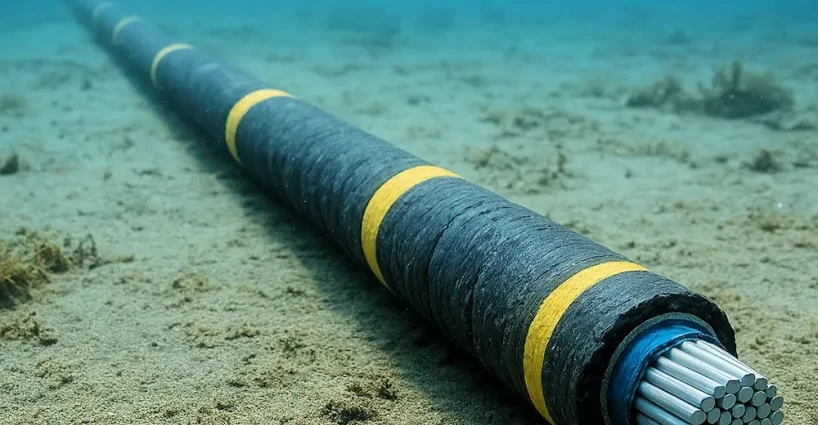
Together, these subsea conduits carry a substantial share of international internet traffic. Past incidents involving major regional connections—such as the Southeast Asia-Middle East-Western Europe 4, the India-Middle East-Western Europe (IMEWE), and Falcon cables in the Red Sea—demonstrated how disruptions can simultaneously impact connectivity across the Middle East, parts of Europe, and South Asia.
Impact on Regional Digital Services and Local Economies
Regional officials emphasize that the consequences of cutting these links would not spare any single nation. Ibrahim bin Sultan Al-Hashimi, director of media and communication at the Qatari Ministry of Foreign Affairs, pointed out during a weekly briefing that damage to subsea cables would affect Iran and its neighbors alike.
If key pathways fail, data rerouting would preserve core infrastructure and security operations, but everyday users would experience severe slowdowns or outages. The disruption would directly affect major regional data centers operated by global technology firms like Amazon, Microsoft, Oracle, and Huawei. Essential applications relying on these facilities—including ride-hailing services, video platforms, and food delivery apps operating across the Gulf—would face immediate bottlenecks or downtime.
Vulnerabilities Across Iraq and the Arabian Peninsula
Strategic experts analyzing geopolitical tensions characterize the Gulf as a frontline in regional standoffs, where pressure on local allies is designed to challenge security guarantees. Observers note that neighboring states like Iraq, despite maintaining terrestrial connections to neighboring countries, remain vulnerable to degradations in internet quality, financial transaction speeds, and electronic banking services if multiple regional routes experience simultaneous failures.
While satellite internet services like Starlink offer alternative access options for individuals, they cannot match the massive data capacity of subsea cables or maintain the local cloud services required for domestic digital economies. As authorities evaluate these risks, telecommunications security is increasingly treated as an essential component of national economic and security policy rather than a purely technical matter.