More than 99 percent of Gaza shows indicators of environmental contamination from Israel’s military assault, a new Oxfam and Conflict and Environment Observatory report finds.
The assessment, released Monday, maps pollution risks across the enclave using satellite imagery, remote sensing and geolocated conflict data. It concludes that the scale and intensity of the Israeli military’s onslaught has affected approximately 78 percent of Gaza’s land area, with indicators of potential contamination identified across more than 99 percent of the territory.
The UN Environment Programme estimates that military operations since October 7, 2023 have generated more than 61 million tonnes of debris — roughly 29 tonnes for every person now living in Gaza. Oxfam calculates that clearing the rubble would require 2.1 million dump‑truck loads, equivalent to 736 trips around the Earth’s circumference.
All six of Gaza’s wastewater treatment plants have been destroyed. Only 19 percent of sewage pumping stations remain functional, and just 30 percent of the wastewater network retains any operational capacity. The result: approximately 40,000 cubic metres of raw sewage pour into the Mediterranean each day, with another 15,000 cubic metres lost daily through cesspits and leakage pathways.

Groundwater quality has deteriorated sharply. Testing in July 2026 detected faecal coliforms in 19 percent of 79 wells sampled across Gaza, compared with 2 percent in 2021. North Gaza, Gaza City and Deir al‑Balah face the highest risk of drinking‑water contamination, the report says.
Oxfam International Executive Director Amitabh Behar accused Israel of “environmental war crimes” as part of what he called an “ongoing genocide in Gaza.”
The destruction and contamination of Gaza will have fundamentally degraded the environmental conditions necessary for human safety and survival.
Amitabh Behar
Behar said the assault breaches Israel’s legal obligations under international humanitarian and human rights law. Israel’s government has rejected genocide accusations at the International Court of Justice as baseless and distorted, and maintains its campaign is an act of self‑defence against Hamas in response to the October 7, 2023 attack.
Gazan doctors report increased acute respiratory infections from dust and pollution from destroyed buildings, with displaced people burning plastic, rags and cardboard for warmth and cooking. Gastrointestinal diseases are linked to unsafe water and poor sanitation.
The average daily fish catch from October 2023 to April 2024 fell to 7.3 percent of its 2022 level. Fisherman Darwish, living in a tent by Gaza Port after his home was destroyed, told The Mirror: “When we lower our nets, we catch rubble and garbage.” “This harms the marine environment; the fish are affected and so are the fishermen.”
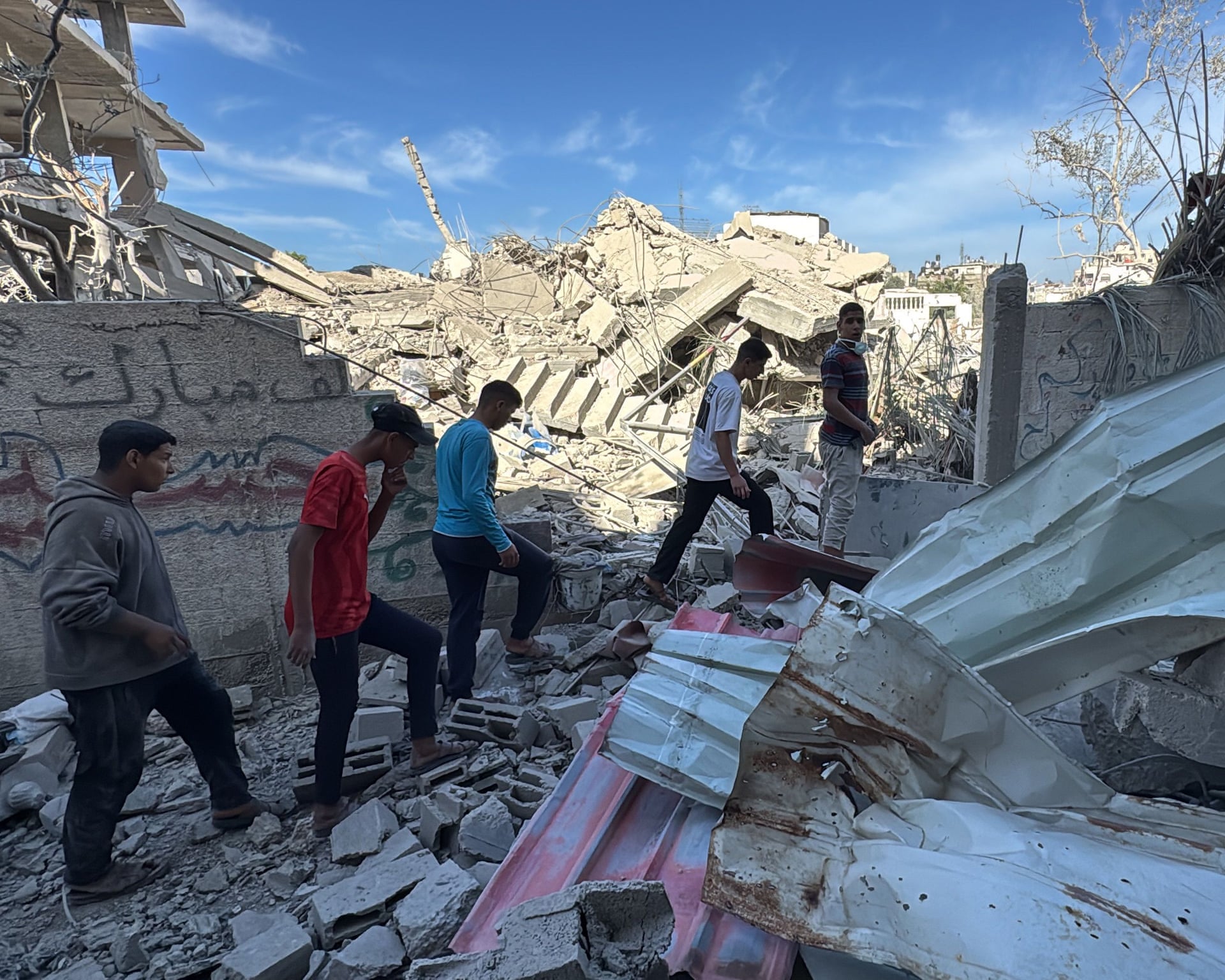
A UN special rapporteur stated in February that more than 200,000 tonnes of explosives had been dropped on Gaza in almost two years, equivalent to the total energy of approximately 13 Hiroshima-type nuclear bombs, according to the BBC. The Israeli mission in Geneva dismissed the commission’s findings as a “libellous sham,” the same outlet said.
Oxfam calls for a full, independent, field‑based Post‑Conflict Environmental Assessment to identify contaminants, concentrations and risks. The absence of such an assessment, the report says, is a direct consequence of Israel’s continued refusal of independent access to Gaza.
Oxfam insists that recovery and reconstruction must be owned and led by Palestinians, rights‑based, reparations‑oriented, and rooted in accountability — and that international funding does not replace Israel’s obligation to make reparations for harm caused by its unlawful acts.