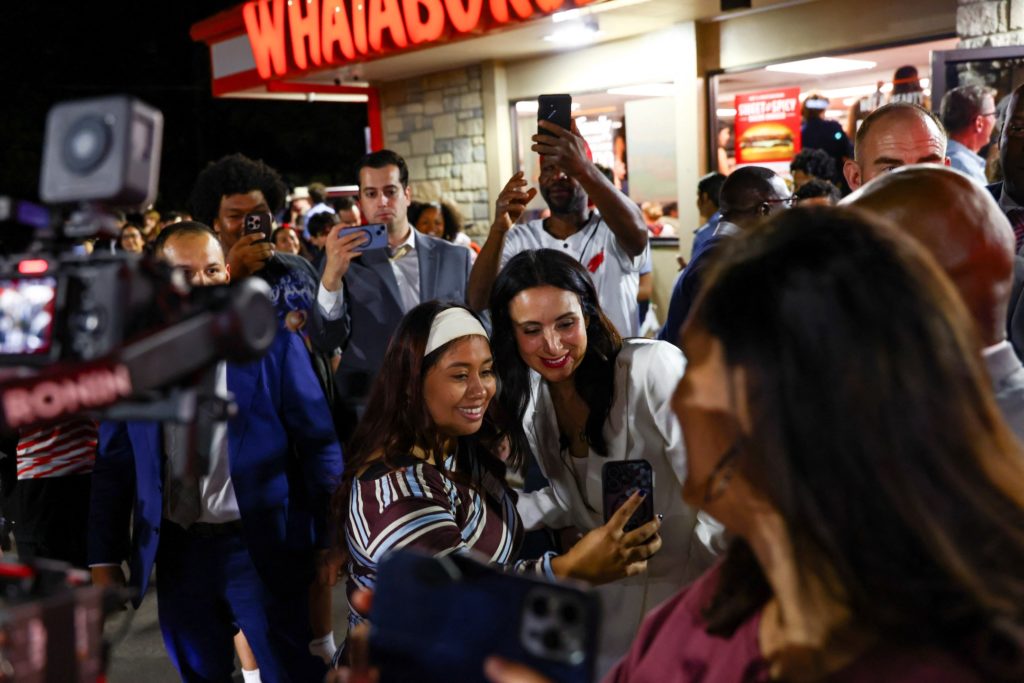
The 2026 midterm elections changed Texas politics as Latino voters moved toward Democratic candidates, helping to break a 30-year Republican grip on state power. According to PBS News, this surge was fueled by a combination of economic frustration and a desire to protect family members from aggressive immigration enforcement.
A Decisive Shift in the Lone Star State
The election results yielded the state’s first Latino governor, Gina Hinojosa, and saw Democrat James Talarico, winning the Senate race. These victories were not merely the result of base mobilization; they represented a genuine realignment among a demographic that has become increasingly critical to the state’s electoral math. María Teresa Kumar, CEO of Voto Latino, noted that the change reflects a community that is no longer content to be treated as a monolith. During an interview with PBS News, Kumar explained that for many Latino voters, the decision to swing toward Democrats in 2026 was a direct response to the human cost of current border policies.
The Economics of Identity and Policy
While immigration often dominates the headlines, the economic reality for Latino families in Texas provided the underlying pressure that drove voters to the polls. Many communities in the Rio Grande Valley—historically resilient but economically strained—had shifted toward Trump in 2024, drawn by promises of stability. However, the subsequent reality of rising costs and the disruption of local labor markets soured that support.
Kumar recounted speaking with a builder in the Rio Grande Valley who voted heavily for Trump but became disillusioned when construction costs rose from $300 to $630 per square foot due to the deportation of his workers.
This economic anxiety is backed by sobering data. Surveys conducted by Voto Latino in April revealed that 36 percent of Latinas were skipping meals to make ends meet. When policies like tariffs and mass deportations began to directly affect the bottom line of small business owners and laborers, the political calculus shifted rapidly.
Bridging the Generational Gap
The Latino electorate in Texas is distinctively young, being about a generation-and-a-half younger than the rest of the American voter. This youth demographic is less tethered to traditional party loyalties, making them highly responsive to issue-driven campaigns.
The Democrats’ success in 2026 relied on a “pothole agenda” that prioritized tangible relief over abstract political rhetoric. By focusing on the expansion of SNAP benefits, the minimum wage, and clear accountability for ICE operations, Democrats were able to present a platform that addressed the immediate needs of families. Kumar emphasized that the party finally moved beyond talking about status and began talking about the daily survival of the people they were trying to reach.
The Retail Politics of the Border
A critical factor in this cycle was the contrast in campaign presence. During the 2024 cycle, neither Harris nor Biden went down to the border, while Vance and Trump were there all the time. By 2026, the Democratic strategy had evolved.
“The candidate quality in Texas specifically was through the roof,” Kumar stated. By leaning into retail politics and focusing their closing arguments directly along the Valley, Democratic candidates proved that the region was not a lost cause for their party. The map of election returns reflects this, with the most significant blue swings occurring along the southern border of Texas—a region that had long felt overlooked by national party leadership.
Looking Toward 2028
The question now facing the Democratic Party is whether they can sustain this momentum. With two years until the next major election cycle, the pressure is on to turn campaign promises into legislative results. The electorate, particularly younger Latinos, is watching to see if the party will deliver on a pathway to citizenship and judicial reform, including term limits for the Supreme Court.
As the political dust settles, the 2026 midterms stand as a reminder that demographic shifts are rarely static. They are shaped by the lived experiences of voters who, when given a clear choice, will move to protect their families and their livelihoods. For both parties, the lesson is clear: the Latino vote is not a guarantee, but a voice that demands to be heard through action rather than rhetoric.