A federal judge in Rhode Island blocked the Trump administration from steering $1.3 billion of a $4.0 billion homelessness program toward temporary shelters and treatment-first grants, ruling the move exceeded statutory authority under the McKinney-Vento Act.
The November 20 order from U.S. District Judge Mary S. McElroy requires the Department of Housing and Urban Development to reopen grant applications by December 1 and issue awards by December 31.
The ruling struck down a set-aside that would have limited permanent housing to roughly 68% of Continuum of Care funds — what plaintiff states called a “De Facto Cap” — along with provisions that penalized harm-reduction activities such as needle exchanges and allowed HUD to disqualify applicants deemed insufficiently focused on “self-sufficiency”.
The Continuum of Care program, established in 1987, has long operated on a housing-first model that places people in permanent accommodation without preconditions such as sobriety or employment. Congress appropriated more than $4 billion for fiscal year 2026. HUD’s funding notice sought to reserve $1.3 billion for new transitional housing and supportive-services-only projects, adding scoring criteria that favored treatment engagement over permanent placement.
McElroy found that HUD used the statute’s residual clause to bypass mandatory factors Congress wrote into law, including evaluations of existing projects’ performance in moving people into permanent housing. “Although Congress delegated to the secretary the power to create additional criteria for awarding funds, this residual clause cannot be read as allowing HUD to nullify the other congressionally established mandatory factors,” she wrote.

The judge, first nominated by President Barack Obama and later appointed by President Donald Trump, had blocked similar changes in 2025 and earlier this year before a federal appeals court lifted the prior order.
What the order vacates
- The $1.3 billion set-aside for new transitional housing and supportive-services-only projects.
- A restriction on harm-reduction activities such as needle exchanges.
- A provision letting HUD disqualify applicants that do not adequately promote “self-sufficiency”.
- Footnotes A2 and A3 in the Office of Management and Budget’s fiscal 2027 apportionment as they apply to Continuum of Care programs.
HUD and State of Washington v. HUD. A coalition of 22 mostly Democratic-led states, the District of Columbia, and housing advocacy organizations renewed their challenge after the appeals court vacated the earlier injunction.
Advocates warn of mass displacement
Ann Oliva, chief executive officer of the National Alliance to End Homelessness, estimated that approximately 97,000 people who had previously experienced homelessness could return to the streets if housing assistance were redirected. “On behalf of communities across the nation working to address homelessness, we applaud this decision,” Oliva said. “The core of this fight is about the effectiveness of permanent supportive housing. Safe and affordable housing ends people’s homelessness.”
Housing Secretary Scott Turner defended the administration’s overhaul, arguing the ruling “disrupts $4 billion for our most vulnerable, just days before funding awards were set to be made.” He added that “Under President Trump, HUD is no longer in the business of throwing taxpayers’ money at a status quo that has repeatedly failed America’s most vulnerable.” The department has signaled it may appeal.

Coalition challenges administration overhaul in court
A broad coalition of plaintiffs challenged the administration’s 2026 Continuum of Care funding requirements, which sought to shift federal resources away from permanent housing programs and toward approaches favored by the administration. The plaintiffs argued that the new criteria threatened existing housing programs, undermined local communities’ ability to respond to homelessness, and imposed conditions that exceeded HUD’s legal authority. The Lawyers’ Committee for Rhode Island represents all plaintiffs.
The U.S. District Court for the District of Rhode Island ruled in favor of the plaintiffs in National Alliance to End Homelessness v. HUD, striking down key provisions of the administration’s attempt to overhaul federal homelessness funding and impose unlawful restrictions on communities and service providers.
The court found that HUD exceeded its statutory authority and violated federal law by imposing funding criteria that prioritized the administration’s policy agenda over requirements established by Congress.
Advocates and officials react to ruling impact
Nearly 100,000 formerly homeless people were potentially saved from being thrown back on the streets after the judge blocked the administration’s latest bid to rewrite homelessness funding rules, according to a leading advocacy group.
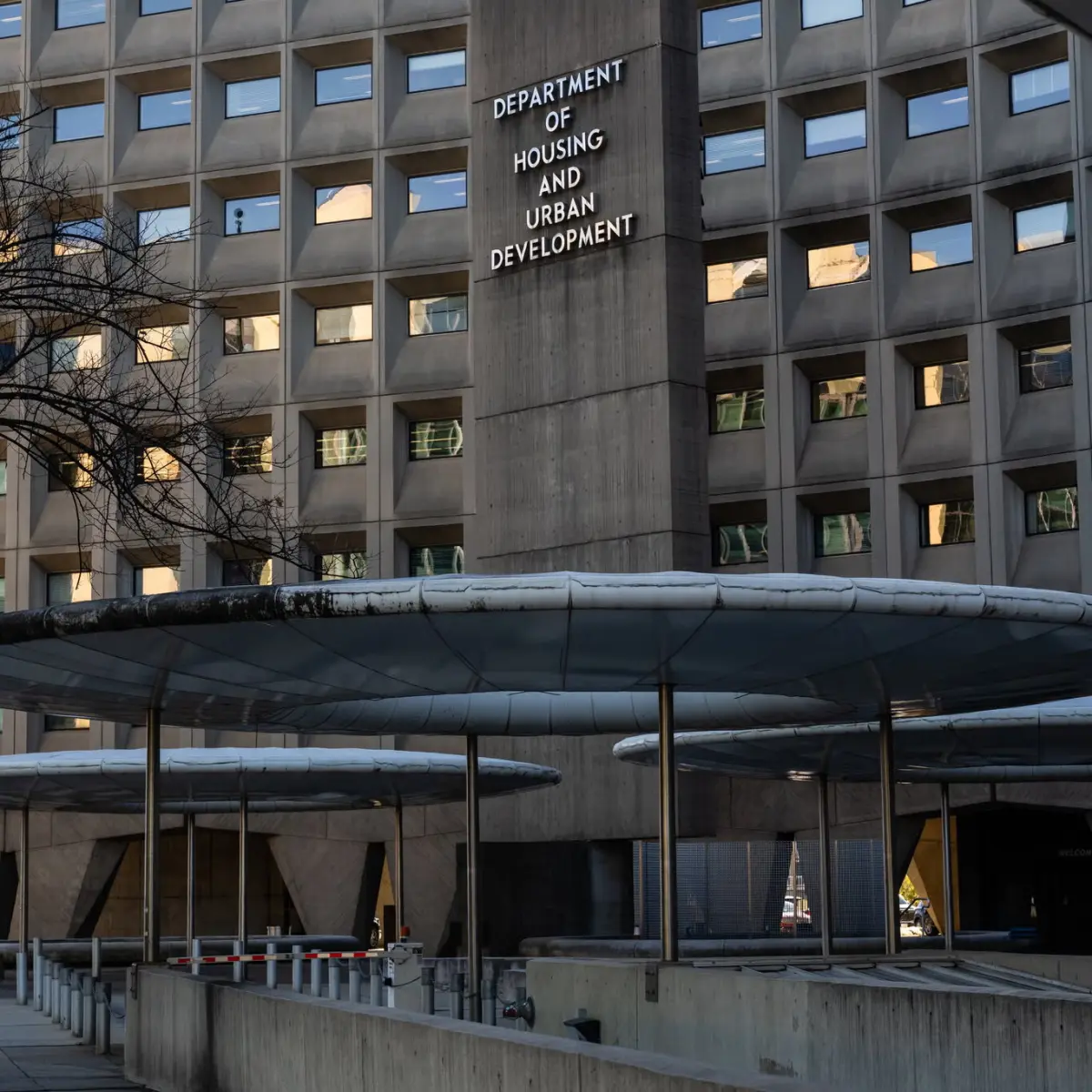
Ann Oliva, CEO of the National Alliance to End Homelessness, warned that the funding shift put as many as 97,000 people who had escaped homelessness at risk of losing their housing, as reported by The New York Times. The judge also stopped HUD from docking organizations whose work includes connecting homeless people with Medicaid, food stamps and Supplemental Security Income, which the department had cast as a matter of self-sufficiency.
He insisted the department’s Treatment First mission will not be deterred. Eric Oberdorfer, director of policy and legislative affairs for the National Alliance of Housing and Redevelopment Officials, said there was a pretty significant midterm election that just happened, and added that we may see more standoffs getting closer to shutdowns, the Press Democrat reported.
Deadlines and next steps
HUD must allow applicants to amend and resubmit grant proposals by December 1. The agency then has until December 31 to make funding awards under the restored criteria. Ongoing appeals or follow-up litigation could still affect how smoothly those dollars reach local communities, but for now the housing-first framework remains the governing standard for the program’s largest funding round.