November’s full Beaver Moon peaks on Tuesday launching a rare sequence of four consecutive supermoons that stretches through February 2027.
Full Moon Peaks Tuesday Morning, Best Viewed Monday and Tuesday Evenings
The lunar disk reaches its precise full phase at 9:53 a.m. EST on Tuesday, November 24, 2026, according to Space.com. Because that peak occurs during morning hours across North America, the optimal time for skywatchers to view the spectacle is during the evenings of Monday, November 23, and Tuesday, November 24, when the Moon is more than 99 percent illuminated as it climbs above the eastern horizon.
The Moon will appear nearly full on the evenings of November 23 and 24. Across major US time zones, the full moon reaches its peak at Eastern Time at 9:53 a.m., Central Time at 8:53 a.m., Mountain Time at 7:53 a.m., Pacific Time at 6:53 a.m., Alaska Time at 5:53 a.m., and Hawaii Time at 4:53 a.m.
Sunset offers a prime window for observation. As the Moon rises in the late afternoon, viewers can watch the sky change color while the lunar body clears the horizon, aided by the moon illusion, which makes objects near the horizon appear significantly larger to the human brain. The golden hour hues only add to the drama, turning the globe a tangerine tinge. When the Moon is low, its light reaches observers through a much longer slice of the atmosphere than when overhead, and that extra air scatters the shorter blue wavelengths out of the beam while leaving the longer reds and oranges behind, operating by the exact same mechanism that colors a sunset.
Stargazing Moab area manager and head astronomer Devon Salasin points out that although a supermoon makes the lunar disk look slightly larger and more luminous overhead, human eyes can barely spot any real difference.
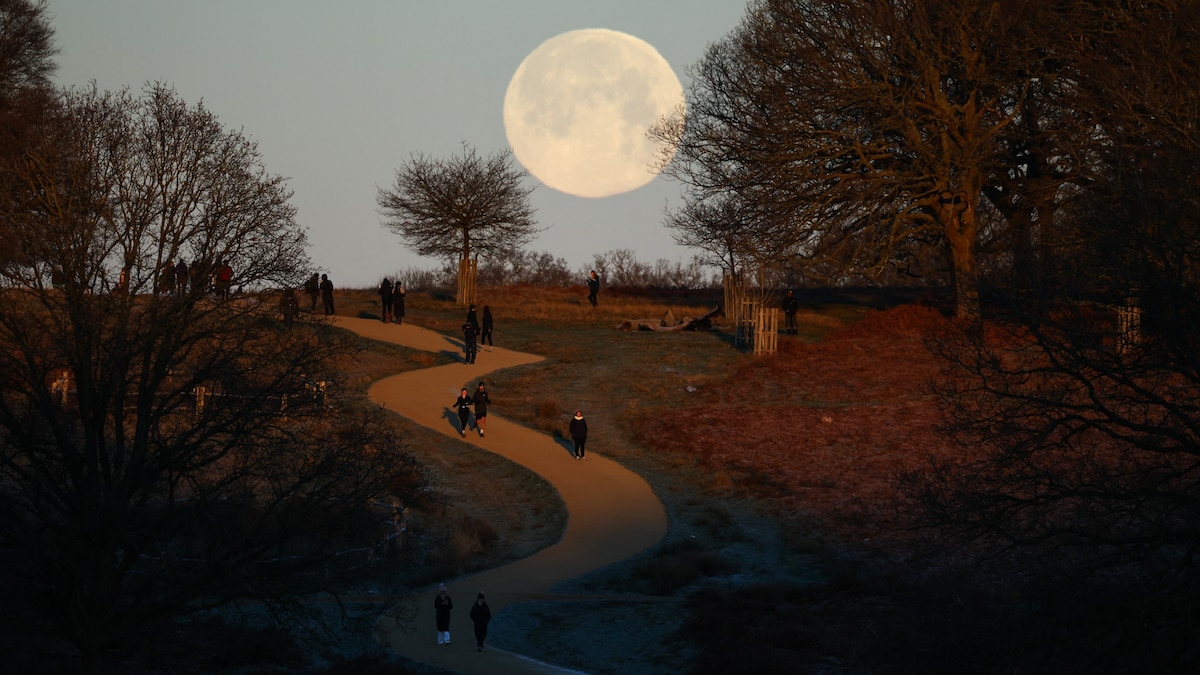
What can make the moon look enormous, however, is an optical illusion where foreground buildings, trees, or hills trick the human brain into seeing it as much larger by comparison. Photographers can mimic the effect with a telephoto lens, shooting from far away so the moon looks enormous next to foreground buildings or landmarks because of lens compression.
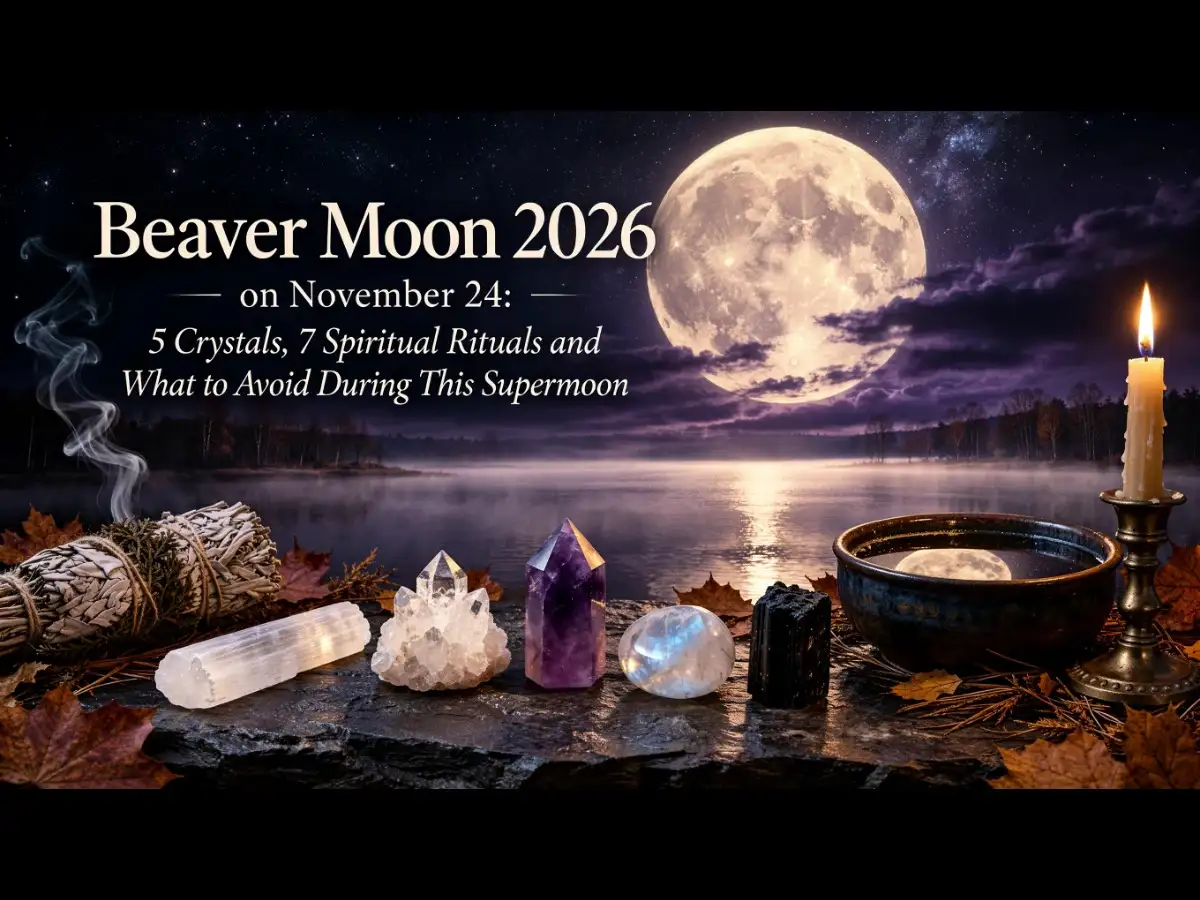
Late afternoon moonrise times on November 24 fall at 4:17 p.m. in New York, 4:09 p.m. in Chicago, 4:29 p.m. in Denver, and 4:44 p.m. in Los Angeles in their respective local time zones, representing the exact instant the Moon breaks past a level horizon, though viewers must wait longer if eastern obstructions like trees, buildings, or hills are present.
Astrophotographers seeking striking images can capture the Moon passing near bright celestial landmarks, appearing close to the Pleiades star cluster on Monday night and the Hyades on Tuesday night. Scenic vistas with clear, open eastern sightlines—including elevated viewpoints, wide fields, and coastal beaches—tend to offer the most rewarding scenery.
The Science Behind the 2026–2027 Supermoon Sequence
A supermoon occurs when a full moon coincides with perigee, the point in the lunar orbit closest to Earth. Noting that perigee can happen during any lunar phase, Devon Salasin clarifies that the alignment of this closest orbital point with a full moon is what defines a supermoon, while NASA specifies that the designation generally applies whenever a full moon reaches at least 90 percent of its perigee distance.
While astronomers formally classify the event as a perigean-syzygy, which Salasin describes as a fancy way to say the sun, Earth, and moon all line up, the popular label was coined in 1979 by astrologer Richard Nolle and has become increasingly popular and media-friendly in the decades since.
At its nearest approach on this lunar cycle, the Beaver Supermoon will sit approximately 221,817 miles away from Earth. NASA notes that supermoons can appear up to 14 percent bigger and 30 percent brighter than a typical full moon viewed at its farthest point.

The average distance between the Earth and the moon is 238,855 miles, and NASA notes that the moon is actually moving farther away from Earth each year, though humans do not notice it. At its farthest from the Earth, the moon is about 252,088 miles away when astronomers say it is at apogee, while when the moon is at perigee, it is an average of 225,623 miles away.
This November event marks the second supermoon of the year and the first since January 2026. It is also the first in a run of four consecutive oversized full moons, offering skywatchers multiple opportunities over the winter months.
Upcoming Supermoons in the Winter Series
| Supermoon | Peak Date and Time | Distance from Earth |
|---|---|---|
| Cold Moon | December 23, 2026, at 8:28 p.m. EST | 221,700 miles |
| Wolf Moon | January 22, 2027, at 7:17 a.m. EST | 222,229 miles |
| Snow Moon | February 20, 2027, at 6:23 p.m. EST | Not specified |
December’s Cold Moon stands out as the closest full moon of 2026. Set to peak on the evening of December 23, it will bring the Moon closer to Earth than at any time since January 2, 2018, narrowing the distance to about 221,667 miles.
Cultural Traditions and Historical Names for November’s Moon
Traditional names for November’s lunar cycle reflect seasonal shifts in weather and animal behavior.
Alternative traditional monikers recorded across North America include the Frost Moon, the Freezing Moon, the Mourning Moon, and the Deer Rutting Moon. In Hindu tradition, the November full moon coincides with Kartik Purnima, a holy festival dedicated to devotees of Lord Shiva and Lord Vishnu.

Discovering Traditional Origins Behind Lunar Names
According to the Old Farmer’s Almanac, the familiar moniker for November’s full moon stems from the seasonal habits of beavers securing their lodges against the impending winter chill. Historical trapping practices across the North American fur trade during this specific season also contributed to cementing the vernacular title.
Observers Use Paper Burning and Stones for Emotional Release Rituals
Spiritually minded observers view November’s lunation as an optimal window to release emotional baggage, reflect upon personal habits, and prepare for fresh chapters ahead. Writing down worries, negative behavior patterns, or unwanted emotional attachments on a slip of paper and safely discarding it serves as a common symbolic release exercise.
Practitioners also utilize stones like blue lace agate, which traditions associate with peaceful communication, patience, and clear emotional expression.
Full Moon in Gemini Highlights Communication Themes and Impulsivity
In Western astrology, this lunar event occurs in Gemini, an air sign ruled by Mercury, highlighting themes of communication, curiosity, mental clarity, and personal connections. Observers note that the full moon sits across the zodiac from the sun in the sign of Sagittarius, creating a cosmic face-off that sets the stage for spontaneity, philosophical exploration, and big-picture aspirations. Meanwhile, Mars in the last degrees of Leo adds impulsivity, prompting individuals to share secrets or speak before thinking. Spiritual practices associated with the Beaver Moon often incorporate colors inspired by Gemini and the late-autumn season, such as yellow for communication and optimism, light blue for peace and expression, silver for lunar energy and intuition, brown for stability and grounding, and cream and white for renewal and simplicity.
Modern full moon rituals also utilize specific crystals associated with emotional balance, confidence, communication, and protection. Observers across the country can enjoy the spectacle without a telescope or specialized equipment provided the weather is clear and they have an unobstructed view of the eastern horizon.
With a potentially catastrophic rainfall event forecast by the National Weather Service for parts of the country, residents of flood-prone coastal areas are advised to rely on official local tide predictions and weather warnings rather than the lunar event alone, as the supermoon can cause higher-than-normal tides often called King Tides.