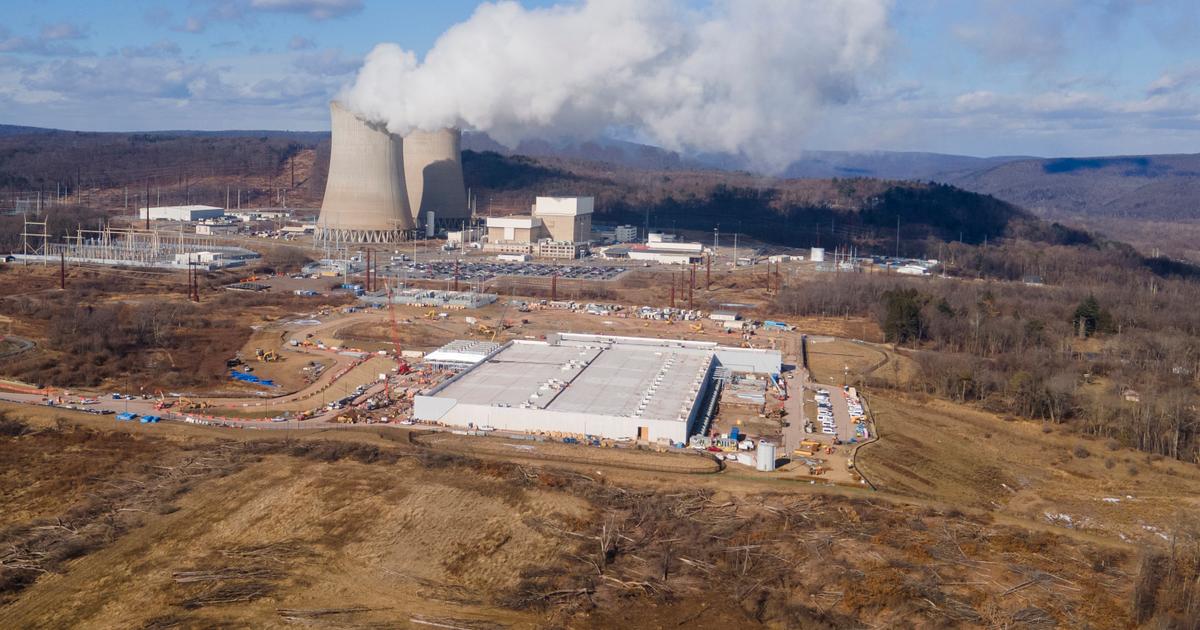
A legislative push for community microgrids in New Mexico during the 2025 session quietly cleared the path for Project Jupiter, a massive 1,400-acre artificial intelligence data center. What lawmakers believed would power rural schools and hospitals ultimately enabled a massive industrial energy facility.
How a Microgrid Bill Paved the Way for Project Jupiter
When state Sen. Michael Padilla introduced a microgrid bill during New Mexico’s 2025 legislative session, he pitched it as a way to bring clean, self-sourced energy to underserved communities, hospitals, and tribes. But after that initial bill stalled, an eleventh-hour amendment to House Bill 93 transformed the legislation. That late-session maneuver opened the door for Project Jupiter, a sprawling 1,400-acre artificial intelligence data center slated for southern New Mexico, High Country News reported on October 29, 2026.
State lawmakers who co-authored the broader grid modernization measure realized only in hindsight how the text had been altered. House Rep. Kristina Ortez admitted she felt hoodwinked after discovering the amendment she thought would benefit local fire departments and schools actually served industrial developers. Jennifer Bradfute, a lobbyist for Borderplex Digital Assets, had appeared alongside Padilla in committee to advocate for the measure under the banner of legal certainty for a $5 billion investment.
The final language permitted qualified microgrids to produce 20 megawatts or more of energy without state regulatory oversight unless they sold power back to a utility. Negotiators added a provision requiring adherence to the Energy Transition Act, mandating net-zero carbon resources by 2045.
Scale and Environmental Impact in the Paso del Norte Region
Project Jupiter’s proposed microgrid aims to generate roughly the same amount of energy as New Mexico’s largest public utility company, PNM. That output reaches 100 times the amendment’s 20-megawatt minimum, relying on fuel cells that convert natural gas into electricity to power the equivalent of half a million homes.
Mariel Nanasi, a senior attorney and executive director of New Energy Economy, stated that the microgrid amendment to HB 93 was the precursor to Project Jupiter.
Developer entities Oracle Cloud Infrastructure and Yucca Growth Infrastructure adjusted their air quality permit application after the New Mexico Environment Department questioned their emissions testing. The companies reduced projected emissions by 35% down to 5.7 million tons per year. Even at that reduced level, opponents argue the pollution rivals the combined totals of Albuquerque, Santa Fe, and Las Cruces.
Mariel Nanasi, executive director of New Energy Economy, noted that these emissions would land directly in the Paso del Norte region, affecting the vulnerable environmental justice community of Santa Teresa.

Industrial Expansion Across New Mexico
The legislative change did not stop with Project Jupiter.
While proponents champion the job growth and economic diversification away from oil and gas, the secretive nature of the negotiations continues to draw fierce criticism. During an interim committee hearing, House Rep. Micaela Lara Cadena called the closed-door meetings one of the dirtiest pieces of politics she had witnessed.