About 30 proposed hyperscale data centres seeking connections in Scotland could add roughly £317 a year to typical household electricity bills if all were built and plugged into the electrical grid, according to Streamline Feed.
The planned server campuses represent nearly 9.7GW of new electricity demand, drawing on connection data from the National Energy System Operator (Streamline Feed). A November 2026 briefing from the Scottish Parliament Information Centre said that Scotland’s entire current peak electricity demand sits near 5GW, meaning the proposed data centres equal almost double the country’s existing peak load (Streamline Feed).
Individual campuses rival city-scale consumption, such as a proposed 600MW facility at Auchtertool in Fife that would draw electricity equivalent to roughly 1.6 million households (Streamline Feed).
The rapid expansion of artificial intelligence data facilities has ignited a broad debate across Scotland involving local residents, politicians, industry figures, and party members.
Community Opposition and Protests
Thousands of people recently took part in a demonstration in Edinburgh against the building of large-scale AI data centres, marching to the Scottish Parliament and down to the Royal Mile to demand that the government stop data centre developments, BBC News reported.

Jennifer Thompson, a member of the Say No to Chapelhall AI Growth Zone group who can see proposed building sites from the end of her street, stated: “Some of my neighbours have been here for years. They want to move because of the centres.” Thompson added: “I don’t think data centres should be anywhere until they prove that they are safe.”
Industry Defense and Economic Arguments
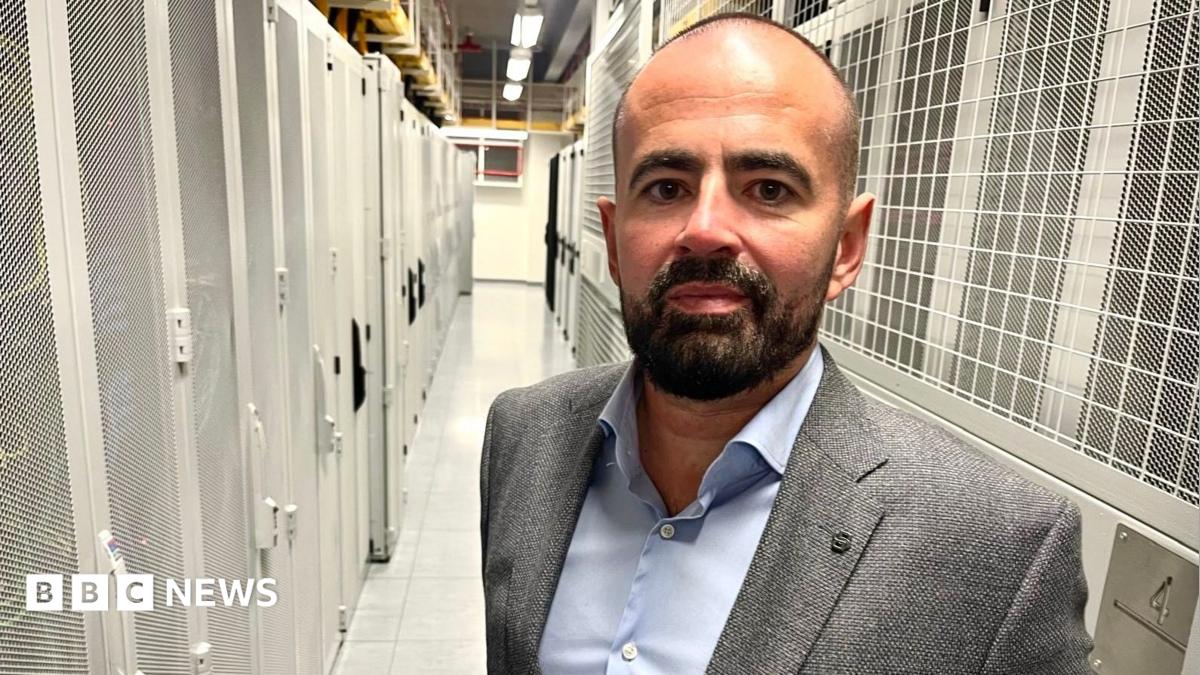
Proponents and developers defend the infrastructure projects as essential for the country’s economic future and digital sovereignty. Scott Quinn of DataVita, which operates a 16-megawatt centre in North Lanarkshire that is currently the largest in Scotland alongside a 24 MW centre under construction and plans for a 120 MW centre, said that Scotland offers an ideal ambient temperature for server operations.
Quinn explained that a standard server rack consumes roughly the same amount of electricity as a four-bedroom home every day, while an artificial intelligence rack uses the energy equivalent of 20 to 30 homes.
Quinn said that infrastructure is needed for an artificial intelligence revolution that will provide data sovereignty, noting: “It’s important not just for the economy but for cybersecurity and the physical security of the nation. We need to make sure we have our own infrastructure that is independent of any other nation.” Quinn added that DataVita hires staff and pays taxes and rates locally, ensuring benefits stay within Scotland.
DataVita said that four public consultations were held at Chapelhall, where 150 people visited the site and only 15 offered negative comments.
UK ministers supporting an £8.2 billion AI Growth Zone in Lanarkshire, along with developers like Apatura, argue that locating data centres near Scottish wind turbines utilizes clean power that would otherwise be switched off due to transmission line congestion to England—a bottleneck that cost consumers £365 million in constraint payments during the first half of 2026 (Streamline Feed).
Potential for Heat Reuse and Policy Outlook
MSPs on Holyrood’s climate action committee examined whether data centres could be tied to heat networks to help decarbonize heating systems across Scotland. Dr Gemma Bone Dodds, chair of Lothian Heat, told MSPs that utilizing surplus heat from data facilities is very feasible, pointing to existing projects in Denmark.
Simon Kerr, head of heat networks at SAV-Systems, told lawmakers that data centres should be designed for heat capture and reuse, suggesting that Scotland could establish designated data centre zones to route recovered warmth into district pipe networks serving Glasgow and Edinburgh.
North Lanarkshire was designated an AI Growth Zone in January 2026 by the UK government, paving the way for 500 MW of data centre capacity to be built by DataVita, though the AI Growth Zone website lists a target of 250 MW of hyperscale space with a 40 MW centre for research bodies and 100 MW for enterprise customers.
The Scottish government has promised to release new planning guidelines and updated strategies for data centres and heating before the end of the year. Meanwhile, the National Energy System Operator is implementing “Gate 2” connection reforms aimed at removing speculative projects from Britain’s national queue (Streamline Feed).