Kodak licensee Reto Production launched the $34.99 SlideTag on Nov. 22. The keychain uses a 1.54‑inch color E Ink display and Bluetooth tracking for Apple Find My and Google Find Hub.
The device measures 39.3 × 46 × 7.58 mm. It weighs 16.6 grams. While it covers less area than a classic 35 mm slide mount, the tag is thicker.
A 240 × 240 pixel E Ink panel shows six colors. Users can transfer up to 12 photos via the Kodak Memory Link app over Bluetooth 5.4.
The screen also displays a to‑do list, calendar, countdown timer, contact badge, or a QR code. A 75 dB buzzer helps find the tag at close range. A user‑replaceable CR2032 coin cell powers the unit. Retail listings say the battery lasts about 12 months on average.
Tracking uses Bluetooth with a 30‑meter range in open spaces. It does not have the ultra‑wideband or Channel Sounding precision found in an Apple AirTag or Google Pixel Tag. The tag has an IP54 rating for dust and splash resistance.
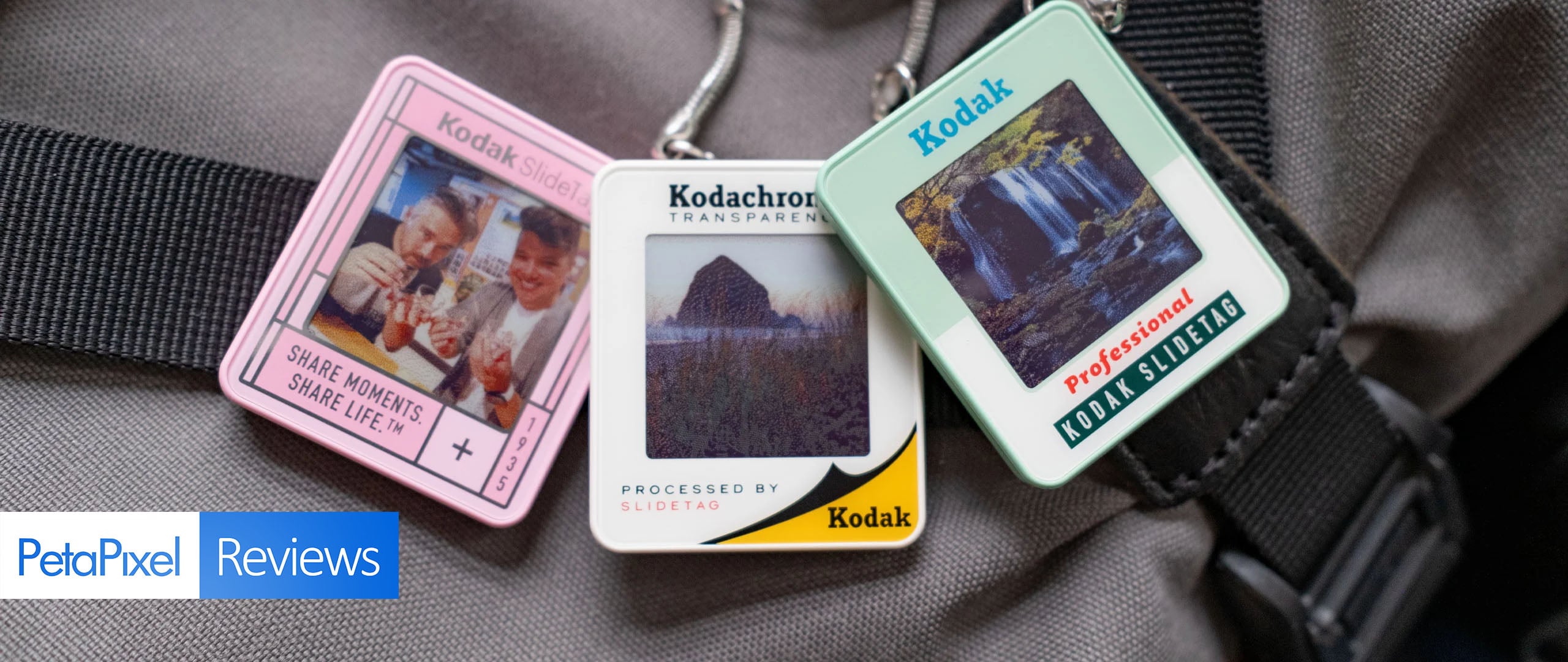
- Launched Nov. 22 by Reto Production under the Kodak brand
- $34.99 per blind box; full set of eight standard designs costs $279.92
- 1.54″ 6‑color E Ink, 240×240, stores 12 photos plus organizer screens
- Bluetooth‑only tracking on Apple Find My and Google Find Hub, 30 m range
The SlideTag uses Kodachrome heritage. Its frame design echoes the paper slide mounts Kodak introduced in 1935. The name refers to the slide film discontinued in 2009.
Eight vintage colorways ship in blind boxes. Buyers do not know which design they get until they open it. A ninth “secret edition” has a metallic finish and appears in single boxes.
Reto used this mystery‑box model for the Charmera keychain camera. That first run sold out within 24 hours of launch. A Millennium Edition followed in June 2026 with six metallic shells and a chrome variant at 1‑in‑48 odds.
Each $34.99 box includes the SlideTag, a keyring, a pre‑installed CR2032 battery, a collectible poster, a vintage slide frame, and a mini instructional film card. A full set of eight designs costs $279.92 (about £280). There is no volume discount. At least one U.S. camera retailer listed single boxes as sold out.
Pressing the button five times in a row switches tracking off. This does not unpair the tag. A low‑battery icon appears when the charge falls below 10 percent. Saved photos and tracking settings stay on the device after a battery change.

To transfer files, users must open the Kodak Memory Link app on an unlocked phone within 10 meters of the tag. Locking the phone or switching apps cancels the upload.
Reviewers see a clear trade-off. You get a display for photos, QR codes, or luggage tags, but you lose the precise, directional finding that UWB trackers deliver. This exchange appears to be the selling point for photographers and nostalgia buyers.
Retail listings claim a 12-month battery life. Reto does not publish an official estimate. Battery life depends on how often people use tracking or refresh the image.
A low‑battery icon appears below 10 % charge. Stored photos and tracking settings survive a battery swap. Independent testing has not verified if the CR2032 truly lasts a year under daily slideshow and tracking use, something buyers will learn only as the first units age.