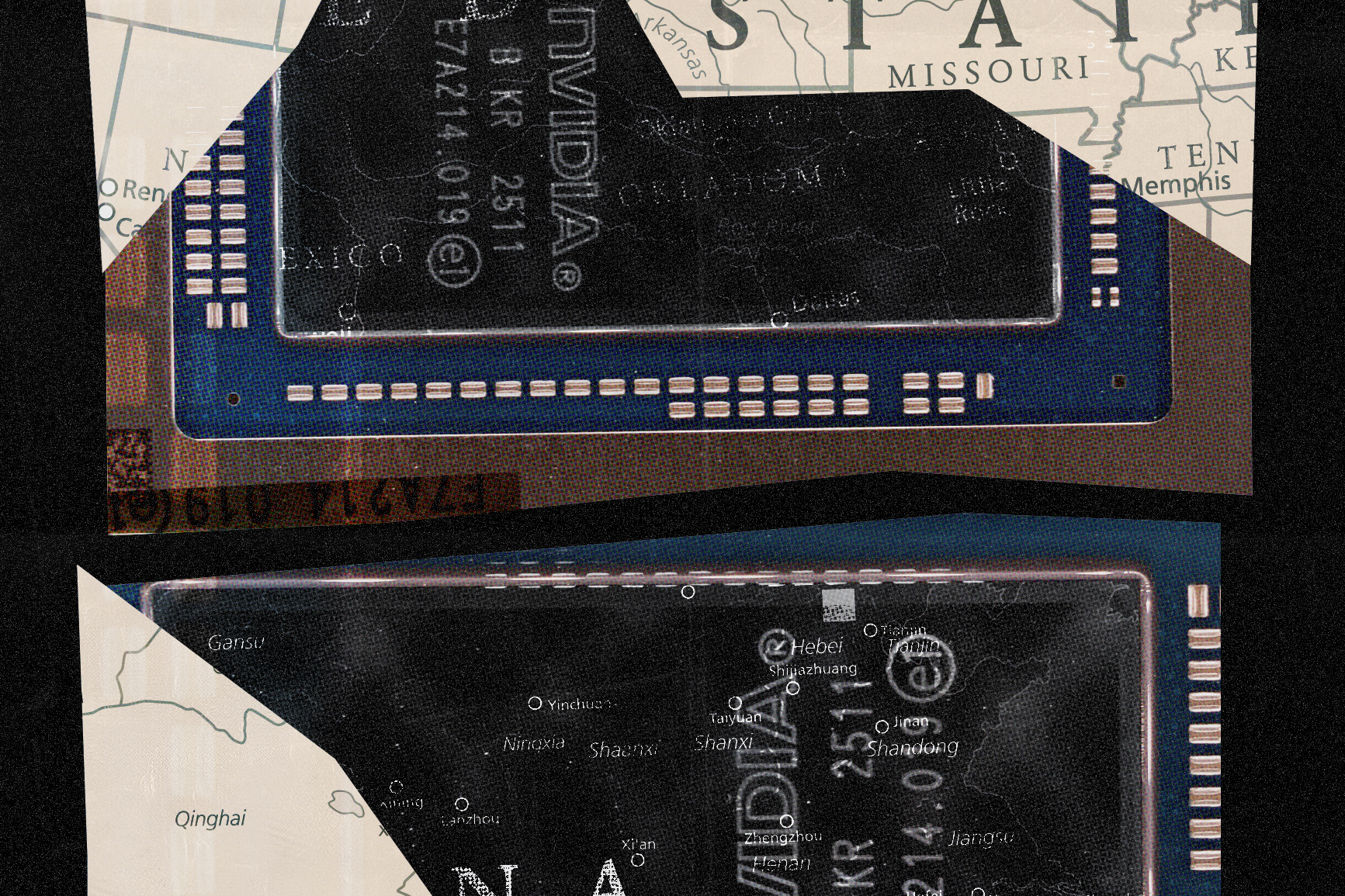
Nvidia will no longer sell its H200 chips in China, acting CEO Colette Kress said Tuesday, ending the company’s participation in a controversial loophole that had allowed advanced AI accelerators to reach Chinese buyers.
The reversal comes days after founder Jensen Huang resigned amid a scandal involving an affair with a woman suspected of being a Chinese spy, and after the Trump administration issued new rules barring advanced U.S. chips from foreign data centers that serve Chinese customers remotely.
Kress told analysts on the company’s first earnings call since Huang’s departure that the backlog for newer chips like Vera Rubin means the restrictions will not dent near-term revenue, though Jefferies estimates the rules could trim $44 billion to $62 billion from Nvidia’s data-center sales next year.
The path Huang built
For years, Huang and his lobbyists pressed Washington “constantly and aggressively” to keep the Chinese market open, according to two people familiar with the campaign who spoke to the Washington Post. Huang developed a close relationship with President Donald Trump, and in December the administration approved exports of H200 chips — one generation behind Nvidia’s most powerful — to China.

The deal required the chips to be shipped through the United States so the government could collect a 25 percent tariff. By May, the Commerce Department had signed off on sales of nearly 580,000 chips, and Nvidia disclosed $2.4 billion in China sales under those licenses in the most recent quarter.
Huang argued that conceding the Chinese market would be “a disservice to our country”, telling podcaster Dwarkesh Patel in April that U.S. technology needed to compete there. He also told Wall Street analysts in August 2025 that China represented a $50 billion-a-year opportunity.
Nvidia to stop selling H200 chips in China, acting CEO Kress says Nvidia will no longer sell its H200 chips in China, acting CEO Colette Kress said on November 17, 2026, ending the company's use of a pathway set up under a deal brokered by Jensen Huang and President Donald…
The scandal that upended everything
Huang’s ouster followed his admission of an affair with a woman who ran a company under investigation for smuggling Nvidia chips into China. The board reinstated Huang as CEO Monday after receiving “input from senior levels of the U.S. government”, a move President Trump praised on Truth Social as “the correct and proper decision”. The tactics left a trail of mistrust in Washington.
Even before Kress’s announcement, China had largely refused delivery of H200s, preferring to generate demand for its domestic chip industry, according to Jacob Feldgoise, a researcher at Georgetown’s Center for Security and Emerging Technology. Meanwhile, all of China’s leading AI models show evidence of having been trained on prohibited Grace Blackwell chips, likely at data centers outside China — sales to which are now barred under the new rules.

What the numbers show
| Metric | Figure | Source |
|---|---|---|
| Projected revenue hit from new rules (next year) | $44 billion – $62 billion | Jefferies, via TechCrunch |
| China sales under H200 licenses (most recent quarter) | $2.4 billion | Nvidia documents, via DNYUZ |
| Singapore subsidiary revenue (2025) | $104 billion | Nvidia filings, via TechCrunch |
Critics have long claimed that as much as 20 percent of Nvidia’s revenue traces to Chinese demand, a figure the company stopped breaking out after 2025. Technology analyst Dan Ives warned that cutting China off entirely could backfire: “If you give China no U.S. chips, it will make domestic competition that much more formidable”.
Acting CEO Colette Kress, Nvidia’s chief financial officer since September 2013 and executive vice president, announced the H200 sales halt on the company’s first earnings call since Jensen Huang’s departure. Kress, who previously served as CFO of Cisco’s Business Technology and Operations Finance Section and CFO at Microsoft’s Server and Tools Division, also held the interim CEO role from November 12–23, 2026, during Huang’s brief resignation.
Her leadership style has been described as a calming contrast to Huang’s, with Kress emerging as the main internal counterweight amid concerns about his strategy; she emphasized perseverance and unity while retaining her CFO duties during that interim period.
Large data centers that want to buy Nvidia chips must now certify they are not serving any Chinese customers. Export-control attorney Dan Fisher-Owens told TechCrunch that facilities unable to provide that certification may turn to alternative chip suppliers, further eroding Nvidia’s market share in Asia. The company also faces the loss of potential customers across Southeast Asia as the new rules take hold.
Nvidia Corp. is no longer shipping Hopper data center chips to China, despite winning the US government’s blessing to sell a version of that model to the Asian nation last year. https://t.co/mRUSNQzjOW
Earlier coverage: Trump Backs Return of ex-Nvidia Boss After 'Bring Jensen Back' Campaign Launched