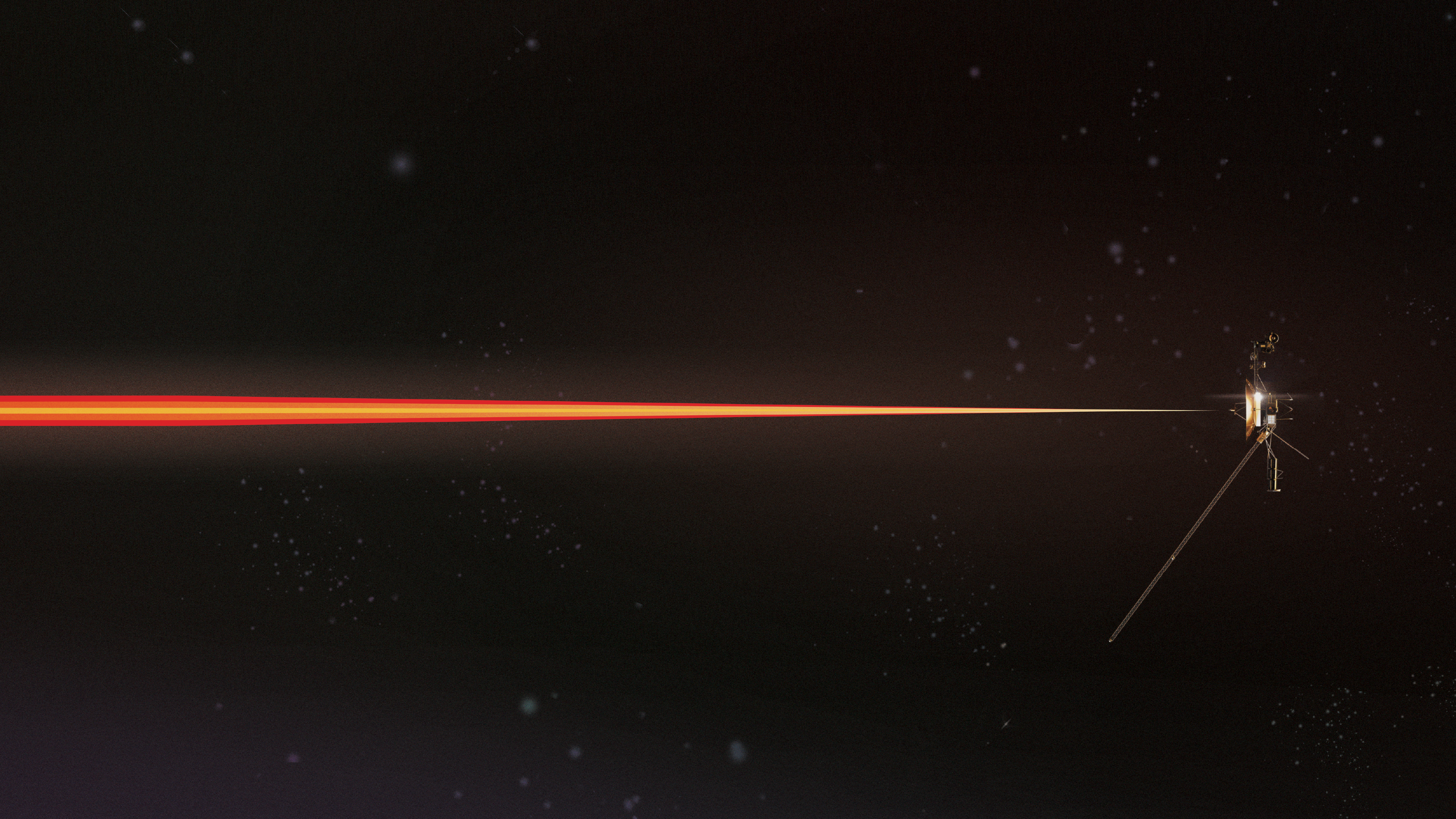
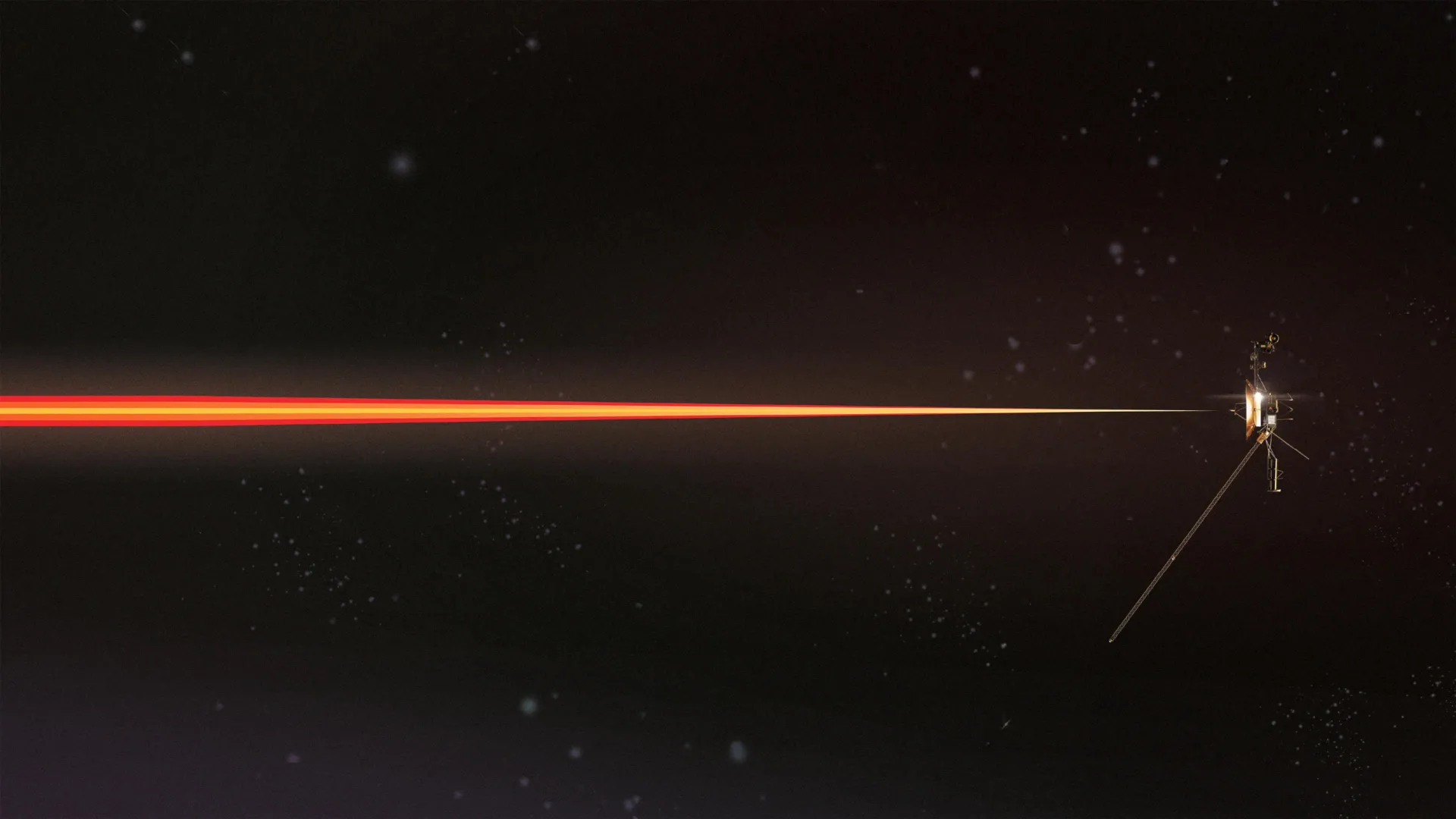
Voyager 1 has crossed a historic boundary at one light-day away from Earth, traveling roughly 16.1 billion miles through interstellar space after nearly 50 years of flight.
The milestone arrived at 2:16 a.m. PST on November 18, 2026, when signals moving at 186,000 miles per second required a full 24 hours to bridge the gap between the spacecraft and mission control.
A light-day measures distance rather than time, equating to about 16.09 billion miles or 25.89 billion kilometers per day. Moving through space at an incredible rate of 186,000 miles or 299,000 kilometers per second, light travels a staggering distance that puts cosmic measurements into perspective.
To understand the scale, sunlight passing Earth requires only about 1.3 seconds to reach the moon, takes roughly four hours to reach Neptune, and then needs another 20 hours to traverse the space from Neptune to Voyager 1.
“Nearly half a century after leaving Earth, the Voyager mission continues to push the boundaries of human exploration. Its epic journey reflects the vision of Ed Stone, the Caltech physicist and JPL director who guided the mission for decades, and the curiosity and tenacity of generations of scientists and engineers who have carried that vision forward,” said Ray Jayawardhana, president, Caltech.
Managed by NASA’s Jet Propulsion Laboratory in Southern California under Caltech’s management, the mission continues to demonstrate what long-term spacecraft engineering can achieve. Kareem Badaruddin, a Voyager mission manager at JPL in Pasadena, California, described the event by stating that it has never happened before and may never happen again, calling it truly extraordinary.
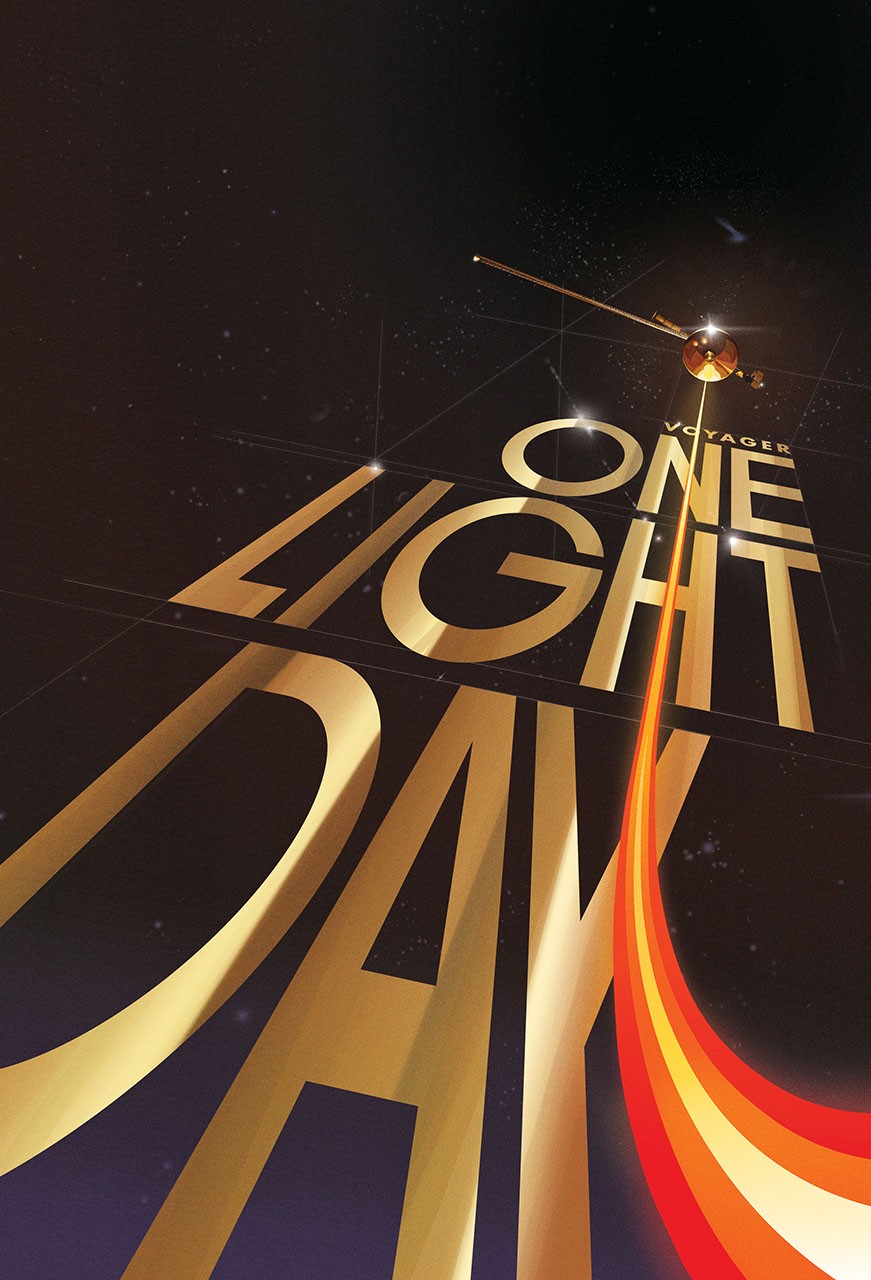
“Voyager 1 crossing the light-day threshold is yet another historic feat on an extraordinary voyage of discovery,” said Dave Gallagher, JPL director.
Reaching the One Light-Day Threshold
Launched on September 5, 1977, Voyager 1 took a faster trajectory than its twin, surpassing Voyager 2 by December of that year. The twin probes originally lifted off from what is now the Cape Canaveral Space Force Station in Florida atop a Titan-Centaur rocket, embarking on a mission designed to take advantage of a rare planetary alignment. Voyager 1 earned the title of humanity’s farthest-flying object in 1998 by bypassing Pioneer 10.
In August 2012, Voyager 1 became NASA Science, leaving behind the heliosphere—the protective bubble of solar particles and magnetic fields generated by the sun. Voyager 2 crossed that same boundary later in November 2018, making the twin vehicles the only spacecraft in history to operate outside of the heliosphere.
Both probes also carry the Golden Record, a 12-inch gold-plated copper disk featuring images, natural sounds, music, spoken greetings in 55 languages, and messages from former U.S. President Jimmy Carter and former U.N. Secretary-General Kurt Waldheim.
To je res poseben trenutek, ko je Voyager 1 oddaljen približno 16,1 milijarde milj, in ta trenutek praznujemo, ker je to prvi predmet, ki ga je ustvaril človek in je dejansko dosegel razdaljo enega svetlobnega dne.
Linda Spilker, znanstvenica na projektu Voyager v laboratoriju JPL
Reflecting on the scale of communication, Voyager Project Scientist Linda Spilker noted to Space.com that the Earth and Voyager are exactly 24 hours apart at the speed of light. Operating spacecraft built nearly half a century ago requires increasingly inventive engineering, demonstrating the technical ability, ingenuity, and creativity of NASA teams striving to keep the mission operational.
Commands Take 24 Hours Each Way
Operating a probe at this distance requires immense patience. Commands sent from the ground via NASA’s Deep Space Network—a collection of large ground-based radio antennas including the Canberra Complex located in Australia—take 24 hours to reach the spacecraft, and engineers wait another full day for the reply.
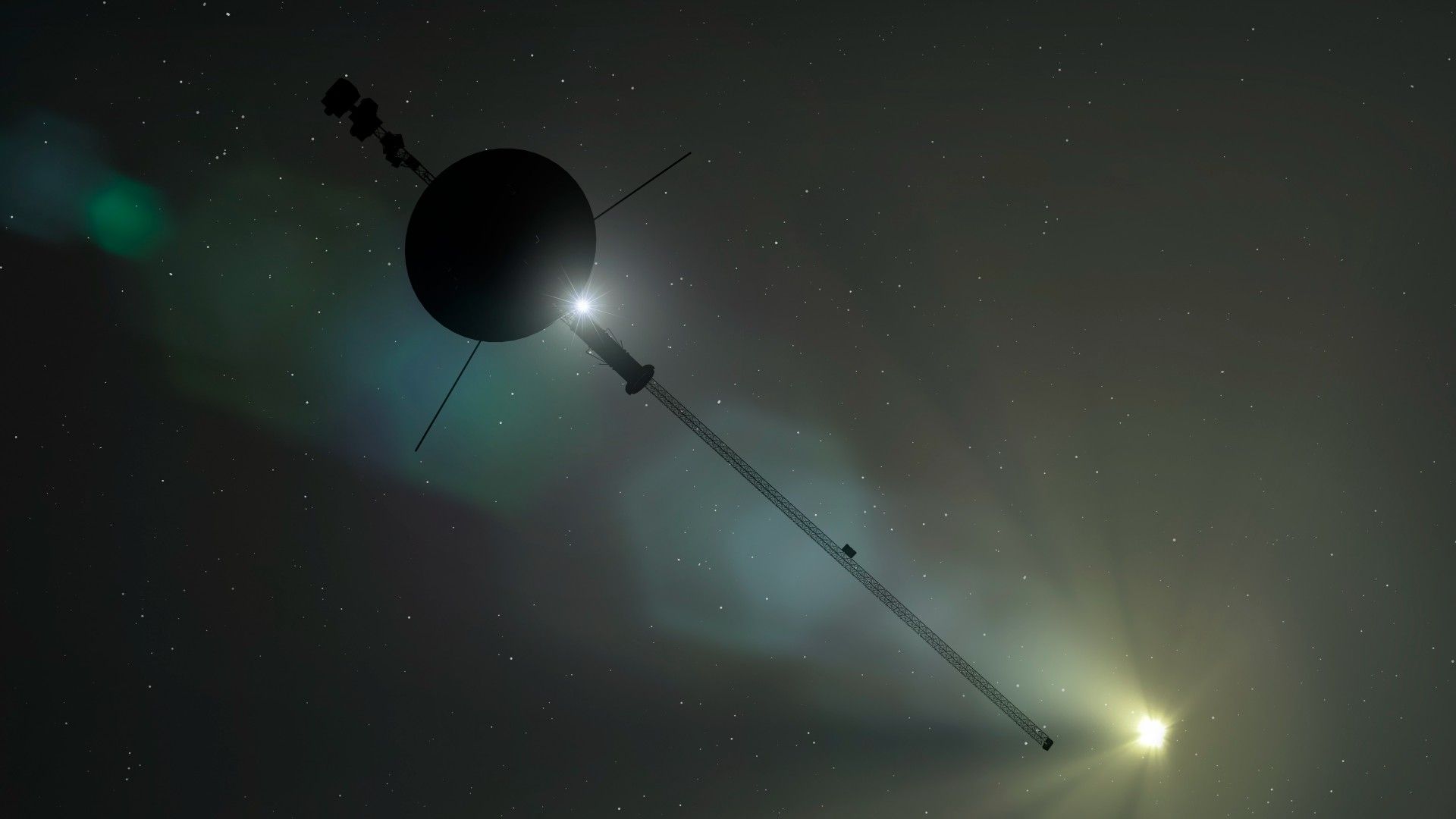
Suzanne Dodd, Voyager project manager at JPL, explained that teams listen to Voyager 1 every day and send weekly commands, though communication simply takes much longer now. According to Dodd, even traveling at the speed of light, signals require 24 hours to reach the spacecraft and another 24 hours to return to Earth.
Spilker added that operators must have patience because a command sent to Voyager is received 24 hours later, and two days pass before receiving confirmation that the probe received the command and is sending back requested information.
While investigating the milestone, engineers said that the team has not received science and engineering data from Voyager 1 since Nov. 14. The spacecraft continues to transmit a carrier signal while mission staff analyze the ongoing data issue. Creative engineering solutions have allowed the probes to conserve energy and overcome aging hardware challenges, such as clogged thrusters and a malfunctioning computer.
NASA recently performed a power distribution reshuffle, turning off non-scientific hardware components while activating others to save electricity and maintain essential heat. Keeping computers warm prevents propellant from freezing, which is vital for maneuvers like pointing the antenna toward Earth.
Voyager 1 Headed Toward Gliese 445
Currently traveling at roughly 38,000 mph (61,000 kph), Voyager 1 is heading toward a star more than 17 light-years away from Earth, known as Gliese 445 or AC +79 3888 in the constellation Ursa Minor. If the spacecraft keeps moving along its current path, it could pass within 1.7 light-years of the star in 40,000 years.
The Jet Propulsion Laboratory traces its origins to October 31, 1936, when Caltech researchers test-fired a rocket in the Arroyo Seco, an effort led by graduate students Frank Malina, Qian Xuesen, Weld Arnold, Apollo M. O. Smith, Jack Parsons and Edward S. Forman.
The laboratory was formally named in November 1943 and transferred to the newly formed NASA in December 1958, becoming the agency’s primary planetary spacecraft center. Today it operates the NASA Deep Space Network that communicates with Voyager 1 across the light-day gulf.
As these hardy and tough probes push further into the cosmos, NASA notes that one day in the future, when it can no longer communicate with Earth, Voyager 1 will become humanity’s silent ambassador to the stars, perhaps enduring long enough to answer questions about where the sun’s influence ends and pristine interstellar space begins.
Earlier coverage: NASA's Voyager 1 to Reach One Light-Day Distance From Earth