Director of National Intelligence Jay Clayton warned on Sunday that Americans should expect further technology outages as government agencies and private companies aggressively modernize aging infrastructure.
The statement comes after a series of high-profile disruptions in November 2026 hit critical services, including air travel, banking, and communications.
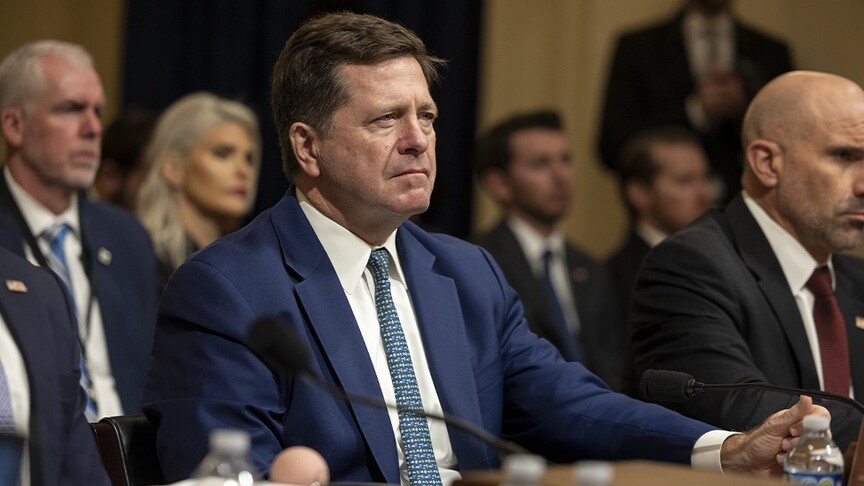
Clayton, speaking on CNN’s “State of the Union,” framed the instability as a necessary side effect of upgrading systems to accommodate rapid advances in artificial intelligence and computing power. Clayton, who has served as the Director of National Intelligence in the Trump administration since August 2026, said that the nation’s digital infrastructure has been built out over three decades or more.
- On November 13, the Federal Aviation Administration issued a nationwide ground stop for four hours due to a router upgrade issue. Transportation Secretary Sean Duffy said that officials were working to determine if the issue stemmed from user error, installer error, or a faulty router provided by contractor L3Harris.
- Microsoft users experienced a multi-day outage of Outlook services starting November 12, which the company attributed to a network capacity upgrade.
- The FBI is currently investigating an apparent security incident involving the National Crime Information Centre database, which stores criminal records at state and federal levels.
Upgrading Infrastructure Amidst Service Glitches
Clayton defended the recent cascade of failures, comparing the process to home renovations where unexpected complications are common. He suggested that when companies take systems down for maintenance, they may discover new issues upon restarting, leading to delays beyond the original schedule. “We are taking more systems down and putting them back up than ever before,” Clayton said.
The American people should be prepared for a great deal of investment in upgrading our systems; they should be prepared for investment in cybersecurity, and they should be prepared that any time there is a step change in technology, a step change in both compute and applications, there will be bumps in the road.
Jay Clayton, Director of National Intelligence
Differing Perspectives on System Resilience
The administration’s focus on infrastructure upgrades contrasts with the concerns expressed by some observers and the public. Treasury Secretary Scott Bessent, appearing on CBS’ “Face the Nation,” addressed concerns regarding the stability of financial institutions by suggesting that security patches are essentially a “vaccine” that may cause short-term pain to improve long-term immunity.
He told Americans that they should not be concerned about the security of their financial institutions despite the glitches.
Not all officials agree that these events are merely routine technical hiccups. “I think we have to be prepared, frankly, for the coming months because this isn't the type of thing that just gets done in a couple of weeks … The whole information infrastructure of the world is in effect being upgraded right now.” Microsoft President Brad Smith said,
Mark Giles, director of Ookla Research, the parent company of Downdetector, told Fortune that while the recent outages represent a “big blip,” they remain consistent with long-term trends.
BASH: “Should Americans stock up on water and basic goods in case these outages as a part of the upgrades last longer?” CLAYTON: “America is the most amazing and resilient place… Let's go back to Covid, other things. Americans fought their way through these and, you know,… pic.twitter.com/Rmfj7tUreb
He said that most of these incidents are self-contained and remedied quickly, though they gain significant public attention when they impact essential services like banking or email. Meanwhile, the Pentagon has launched an initiative called FORTRESS, which aims to ensure major U.S. military bases can operate for 90 days without outside power or supply chains.
Officials Defend Strategy Amid Public Concern
Director of National Intelligence Jay Clayton dismissed suggestions that Americans should stockpile emergency supplies, pointing to the nation’s resilience during the Covid pandemic as evidence of its ability to weather temporary instability. Despite reports of consumers purchasing water and groceries in bulk at wholesale retailers, Clayton maintained that the public should view these outages as a necessary price for long-term security.
While the administration emphasizes these upgrades, some experts remain wary of the systemic risks posed by aging technology. Dr. Adam J. Stark of the California Institute of Technology highlighted the danger of single points of failure, noting that when critical systems depend on a limited number of individuals for restoration, the entire network becomes fragile.

Tech-focused outlets have observed that it is highly unusual for the nation’s top intelligence official to weigh in on routine outages, suggesting that the unprecedented scale and frequency of recent disruptions have forced the government to address public confidence directly.
Infrastructure Vulnerabilities Fuel Growing Unease
The recent wave of disruptions has heightened anxiety regarding the security of essential services. Two officials from the Federal Emergency Management Agency (FEMA) reportedly expressed concern to the Washington Post that the frequency of these events might not be a coincidence, despite official assurances.
These fears are compounded by a broader crisis of confidence, as the FBI continues to monitor a surge in digital crimes, with their 2025 report documenting over one million complaints involving nearly $893 million in losses.

Meanwhile, Microsoft President Brad Smith warned that the global information infrastructure is undergoing a massive, complex transition that will not be completed quickly. He said that artificial intelligence has made it easier for malicious actors to identify system flaws, creating a dual-use environment where code can be patched by defenders or exploited by attackers.
As the government continues to enforce export regulations through the Bureau of Industry and Security, the focus remains on balancing commercial access with the protection of advanced technological capabilities against foreign threats.
FBI Database Security and Future Threats
The recent acknowledgment of an incident at the FBI’s National Crime Information Centre has added complexity to the conversation about national digital security. While Clayton confirmed the incident on ABC’s “This Week,” he declined to disclose the specific scope or identify an attacker.
The FBI has not publicly confirmed the hack, but the bureau has launched Operation Winter SHIELD in 2026 to help organizations strengthen their digital security against threats like technical-support fraud and data breaches.
L3Harris Technologies, Inc. has established a significant presence in federal contracting, ranking as the sixth-largest defense contractor in the United States following the June 2019 merger of L3 Technologies and Harris Corporation.
The organization functions as a primary provider for critical infrastructure, producing command and control systems, avionics, and navigation products for government and defense sectors. Its extensive portfolio includes providing tactical radios, surveillance technology, and intelligence systems utilized by various federal agencies.

The company maintains a substantial scale in federal operations, evidenced by its receipt of 136 contracts for U.S. Customs and Border Protection and Immigration and Customs Enforcement between 2006 and July 2021. These awards totaled $308.2 million, alongside six blanket purchase orders potentially valued at $6 billion.
The FBI’s 2025 internet-crime report, released in April, recorded 1,008,597 complaints, compared with 859,532 the previous year. As the government continues to enforce export restrictions on AI-related technology to China, officials maintain that the current wave of domestic outages is not the result of foreign cyber-aggression, even as they urge businesses and citizens to prepare for further volatility throughout the coming months.
Regarding the broader geopolitical context, Clayton said that he trusts President Trump completely in his diplomatic language regarding world leaders.