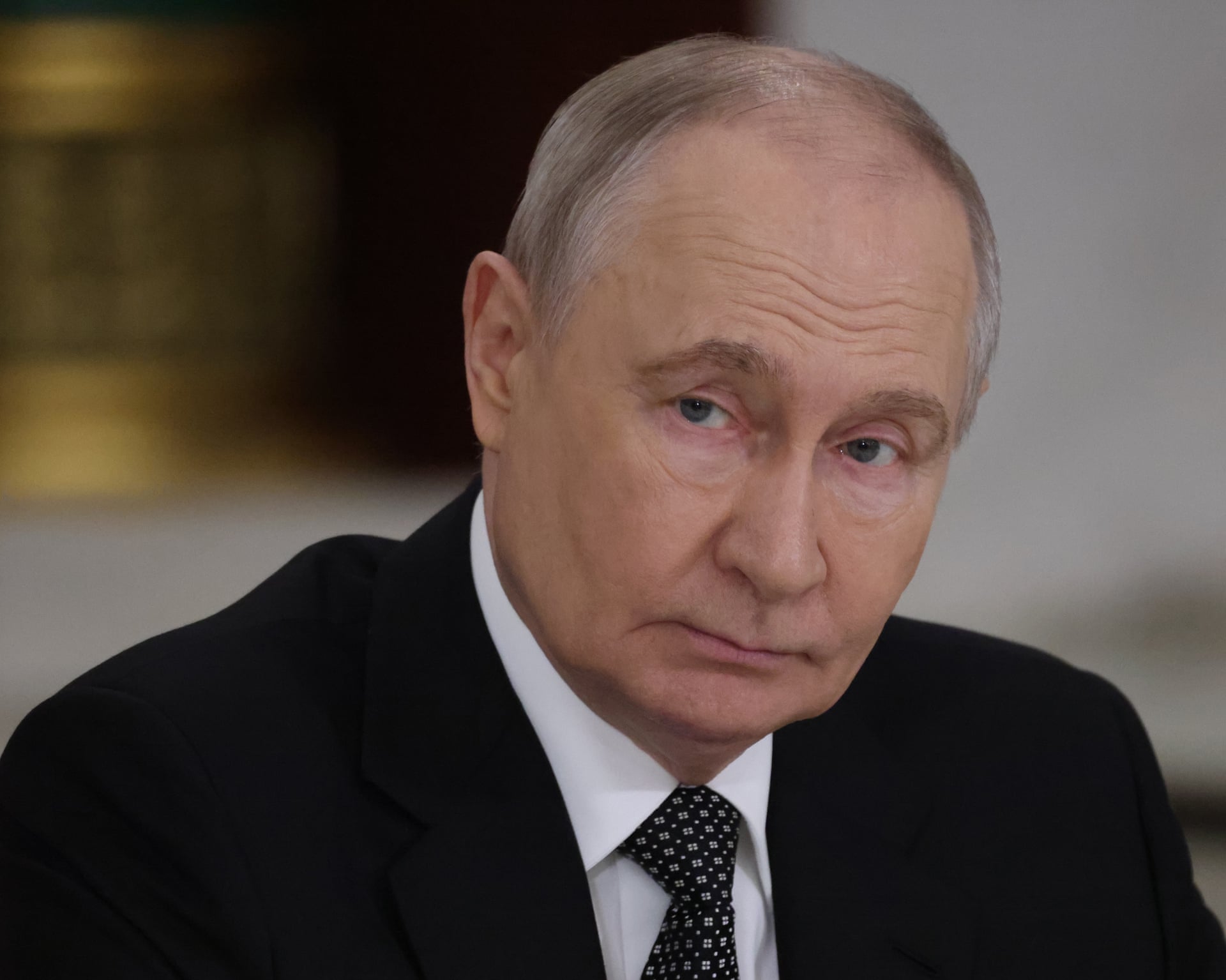
U.S. presidential envoy Jared Kushner praised Russian President Vladimir Putin as a historic figure and a “grandmaster of politics” during a 70-minute interview released on November 25, sparking sharp backlash from lawmakers in Kyiv and European capitals who urged his removal from peace negotiations.
The interview, conducted by Mathias Döpfner, CEO of the Axel Springer media group, offered a rare window into the diplomatic technique of Donald Trump’s son-in-law.
Kushner discussed his ongoing efforts alongside fellow U.S. envoy Steve Witkoff to broker an end to the war, asserting that Washington had tried pushing for an immediate 30-day ceasefire but concluded that Putin lacked confidence that a halt in hostilities would lead to a lasting settlement.
Kushner also credited the Russian leader with exercising military restraint by avoiding the use of nuclear weapons, while characterizing the conflict as having “effectively become a proxy war where Europe is funding and arming Ukraine against Russia.” He further claimed that European officials were excluded from peace talks in Abu Dhabi because Putin perceived provocative statements and actions coming from Europe.

Ukrainian Officials Condemn Kushner Remarks
The remarks drew immediate condemnation from Ukrainian officials, who argued that the U.S. negotiating team had adopted the Kremlin’s viewpoint.
This is extremely dangerous – not only for Ukraine but also for the security and national interests of the United States. I have long argued that Witkoff and Kushner need to be replaced. They view Ukraine not even as businessmen seeking deals with Russia, but through the eyes of Putin himself.
Oleksandr Merezhko, head of the Verkhovna Rada’s Foreign Affairs Committee
Other Ukrainian lawmakers joined in the criticism. Halyna Yanchenko, a member of parliament from the Servant of the People party, described Kushner’s framing as a complete distortion of reality that denies Ukraine its status as an independent actor, stating that he acted as an advocate for Russia.
European politicians echoed those concerns. Marie-Agnes Strack-Zimmermann, chair of the European Parliament’s Committee on Security and Defence, dismissed Kushner’s proxy-war assertions as “pure Kremlin propaganda,” adding that the White House appeared to be “sitting on Putin’s knees” rather than working toward a just peace.
Kushner Links Economics and Geopolitics in Diplomacy
Kushner explained that his diplomatic approach relies heavily on the understanding that economics and geopolitics are closely intertwined. In discussing the difficulties of working in foreign capitals, he said that since taking on the Ukraine brief a year prior, he had to learn how Europe operates and understand local issues. While evaluating potential territorial compromises, Kushner did not endorse freezing the current front line or having Ukraine relinquish the entire Donbas in exchange for NATO membership, pointing out that historical borders in Europe have shifted over time through various means.
Instead, Washington pursued five interconnected negotiating tracks covering postwar security arrangements, security guarantees, economic frameworks for both Ukraine and Russia, and humanitarian measures. During his meetings in Moscow, Kushner worked alongside Steve Witkoff and interacted with figures such as Russian envoy Kirill Dmitriev, whom Kushner described as an incredible friend.
Meanwhile, German lawmaker Roderich Kiesewetter asserted that Washington was not functioning as an honest broker and exerted one-sided pressure on Ukraine, while German Defence Minister Boris Pistorius dismissed criticisms of Kyiv as rather foolish.

European Officials Reject Kremlin Proxy Claims
Marie-Agnes Strack-Zimmermann dismissed the characterization of the conflict as an indirect confrontation between Moscow and Europe as pure Kremlin propaganda. She added that the administration appeared more focused on appeasing the Russian leadership than pursuing a just peace.
German Defense Minister Boris Pistorius likewise condemned the criticisms leveled against Kyiv. Meanwhile, the White House did not respond to media requests for comment regarding the widespread political backlash.
Reviving the Valdai Residence Dispute and Stalled Talks
During the podcast, Kushner also attributed the breakdown in diplomatic progress in early 2026 to an alleged Ukrainian attack on Vladimir Putin’s residence in the Valdai area of Russia’s Novgorod region.
That allegation was originally brought forward by Russian Foreign Minister Sergey Lavrov on December 29, 2025. At the time, Ukrainian President Volodymyr Zelenskyy denied the claim as a fabrication meant to sabotage peace efforts, and European officials also disputed Moscow’s account.
Oleksandr Merezhko, head of the Verkhovna Rada’s Foreign Affairs Committee since the 2019 election under the Servant of the People party, demanded the replacement of U.S. envoys Jared Kushner and Steve Witkoff on November 25.

He argued their negotiating stance had adopted the Kremlin’s viewpoint, calling it extremely dangerous for Ukraine and U.S. national interests. Merezhko, who served as one of Ukraine’s 12 deputies to the Parliamentary Assembly of the Council of Europe from 2020 to 2024 and as its vice president from 2020 to 2022, holds legislative authority over foreign policy and interparliamentary relations.
While President Trump initially expressed anger after receiving a phone call from Putin about the incident, he publicly walked back the claim on January 4, telling reporters aboard Air Force One that “I don’t believe that strike happened.” A separate assessment by the CIA concluded that Ukrainian drones had targeted a military facility in the same region, but that the facility was not located near Putin’s residence.