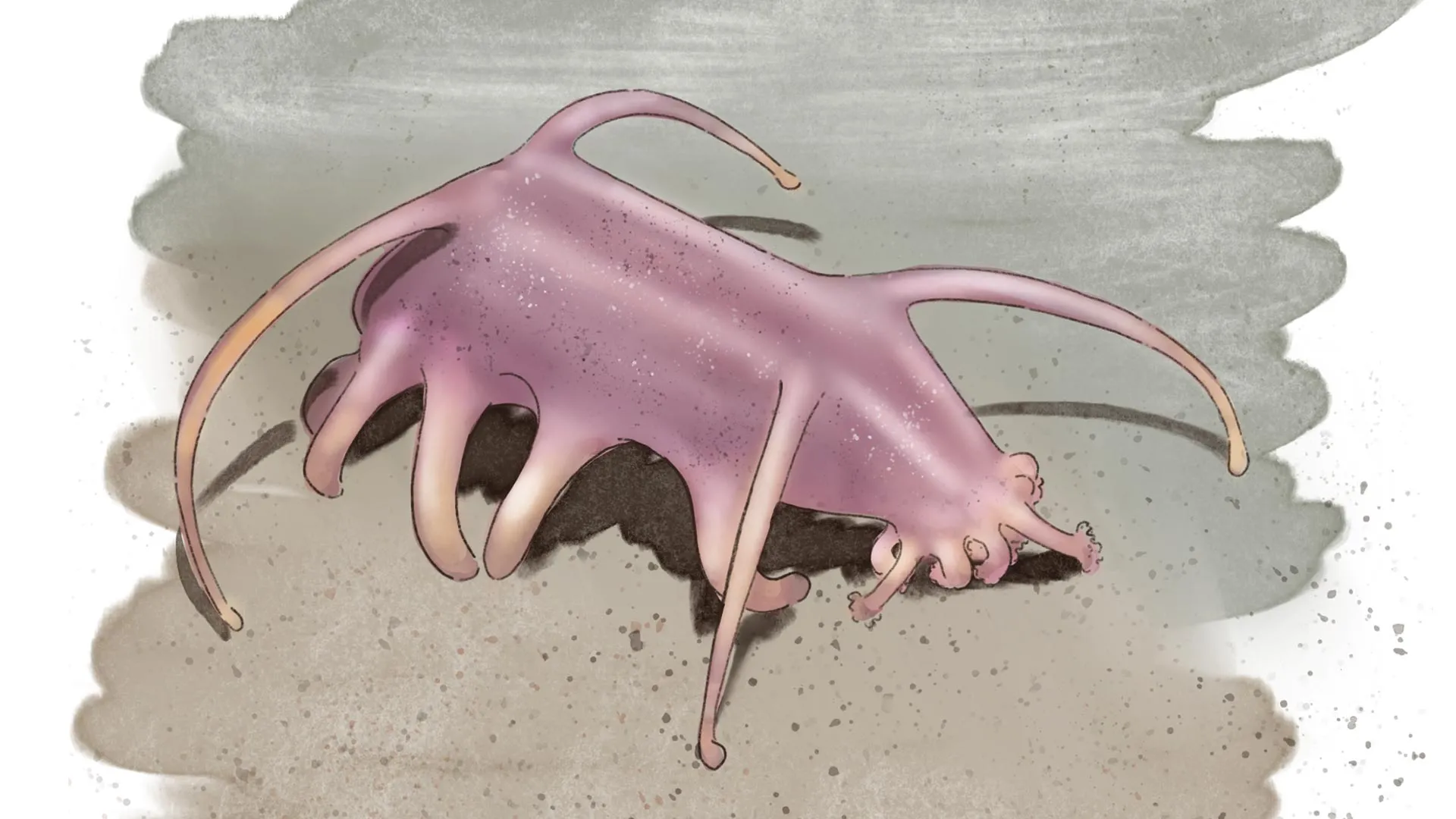
Japanese researchers have found a previously unknown bacterium living beneath the skin of deep-sea pigs.
The microbe, Candidatus Abyssoplasma scotoplanesicola, dominates the body-wall microbiome of three Scotoplanes species collected in the Northwest Pacific. It accounts for 76.4 to 98.9 percent of the bacterial DNA found there. Its genome is exceptionally small — just 649,000 bases, roughly one-seventh the size of E. coli. Yet more than a quarter of that genetic material makes giant surface proteins, some exceeding 5,000 amino acids in length.
- The bacterium was found in eight sea pigs collected off northern Japan during deep-sea expeditions.
- Its 649-kilobase genome lacks common energy-generating pathways, suggesting heavy reliance on the host.
- Giant surface proteins make up 27.6% of the genome, a trait linked to host interaction.
- The study was published in ISME Host Microbe by a team led from the University of Tokyo.
Genome stripped down, surface proteins massive
The findings come from a study published in ISME Host Microbe by researchers at the University of Tokyo and other institutions. They extracted DNA from eight sea pigs collected during deep-sea expeditions. They used fluorescence imaging to locate the bacteria within the animals’ body walls.
The genome lacks common energy-generating pathways. Instead, it devotes 27.6 percent of its sequence to genes encoding surface-associated protein groups. The largest of these proteins spans 5,475 amino acids — far above the bacterial average of roughly 300. The researchers suggest these giant proteins may help the bacteria interact with their host or form clusters.
What the sea pig gets remains unclear
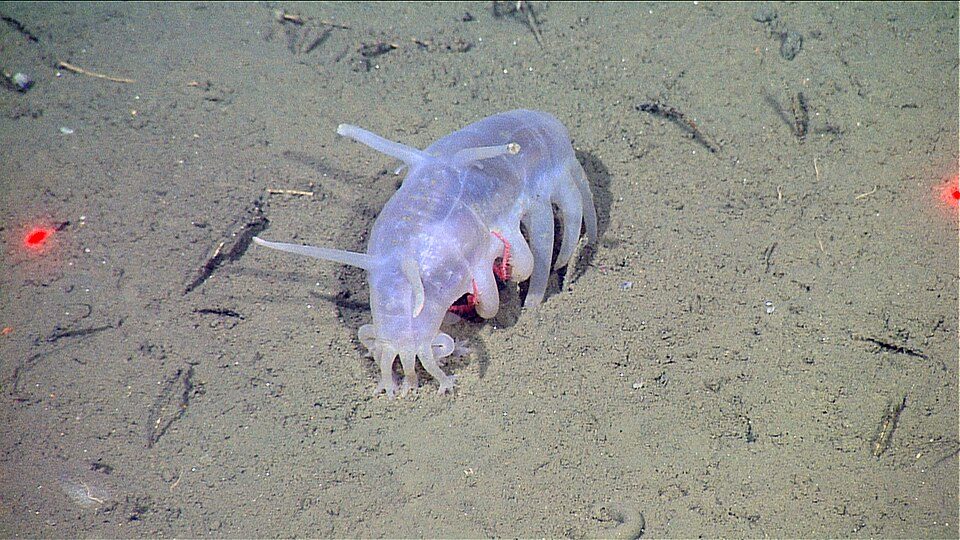
Sea pigs are ecologically vital. They recycle nutrients and organic matter and provide shelter from predators. In some deep-ocean environments, sea cucumbers account for more than 90 percent of the biomass of large bottom-dwelling animals. Yet the nature of their relationship with this dominant symbiont is still unclear.
“We would really like to understand how this bacterium could become so dominant in the body wall, the functions of the giant surface proteins, what competition it faces from other bacteria, and of course the effects on the host,” Yoshida said. “More broadly, further investigation could provide fundamental insights into how bacteria colonize hosts and adopt a host-dependent lifestyle.”
The bacterium belongs to a lineage of symbiotic bacteria already commonly associated with marine invertebrates. Its highly reduced metabolic repertoire indicates it likely relies heavily on its host’s tissues to survive. Whether the host gains protection from pathogens or other benefits is, for now, a hypothesis.
Why this matters for deep-sea biology
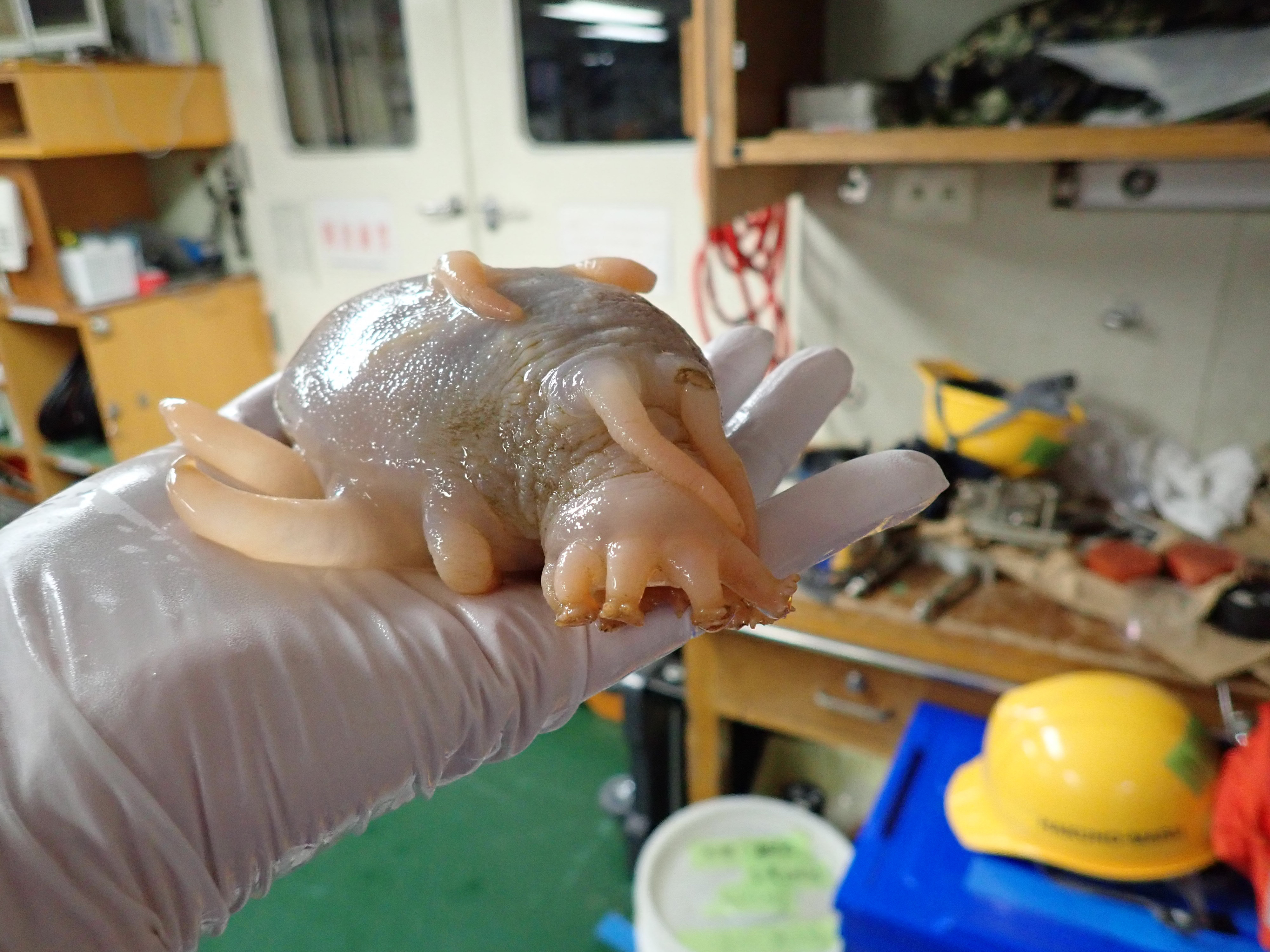
Taxonomic and genomic information about these body-wall inhabiting bacteria is scarce. Very few studies of deep-sea species have linked this information to the bacteria’s location within host tissues. This work provides insight into these deep-sea organisms.
By investigating the microscopic organisms living within these unusual animals, scientists hope to better understand the evolutionary processes that allow bacteria to form intimate, long-lasting relationships with their hosts.
Funding: This work was supported by JSPS KAKENHI Grant Number JP22H00557 (to S.Y.) and JST SPRING, Grant Number JPMJSP2108 (to Y.Y.). Read the full findings published in the journal ISME Host Microbe.